

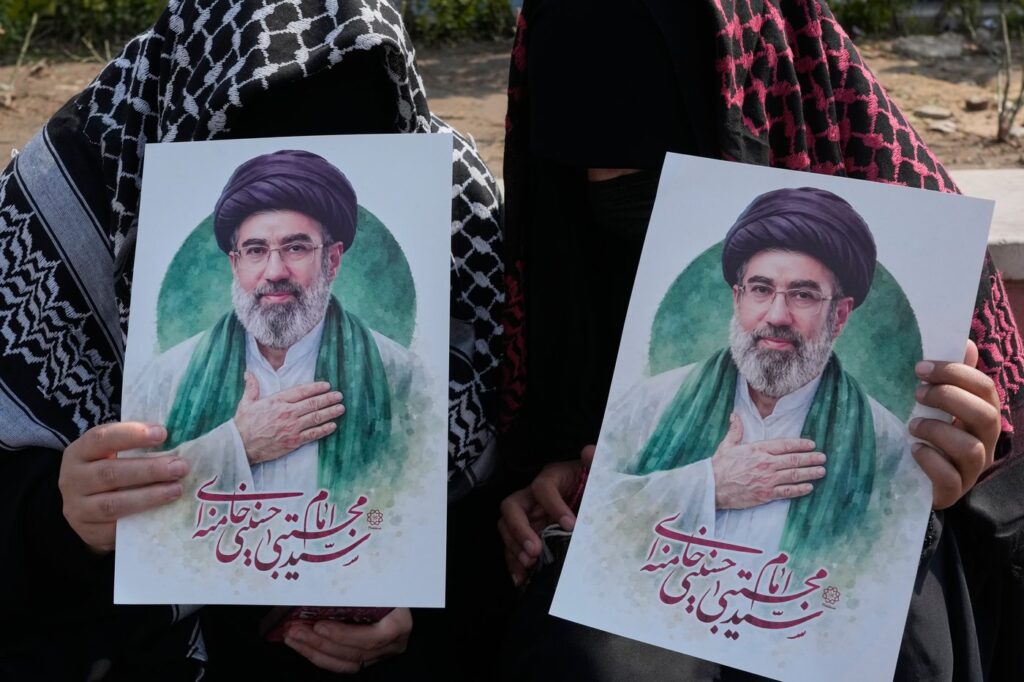
In the ongoing conflict in the Middle East, Israel has conducted significant strikes against Iranian leadership, resulting in the deaths of key figures. After the assassination of Supreme Leader Ayatollah Ali Khamenei early in the war, Ali Larijani, the secretary of Iran’s Supreme National Security Council, was also killed, alongside many other prominent military and political leaders, marking a significant blow to the Iranian power structure.
Following Khamenei's death, his son, Mojtaba Khamenei, was quickly appointed as the new Supreme Leader of Iran. At 56 years old, Mojtaba is a secretive figure who has not been publicly seen since the airstrike that killed his father. Although he has been regarded as a potential successor, he has never held any formal government position and is believed to have more hard-line views than his father. Mojtaba now holds control over Iran's armed forces and any decisions related to its nuclear program.
Israeli Prime Minister Benjamin Netanyahu has expressed uncertainty regarding who is effectively running Iran, noting that Mojtaba has not displayed any public leadership. His wife, Zahra Haddad Adel, was also killed in the same airstrike as Khamenei, and reports suggest that Mojtaba may have been wounded. Netanyahu remarked that Iran's command and control structure appears to be in "utter chaos."
Experts believe that the removal of so many high-ranking officials will lead to transformative changes within the Iranian theocracy, but these changes may take time to manifest. Burcu Ozcelik, a senior research fellow at the Royal United Services Institute, commented that while the leadership vacuum created by the deaths of key figures will have significant implications, the pace of change will likely be gradual.
Amid the turmoil, the Iranian Islamic Revolutionary Guard has emerged as a central power in the country. Ali Vaez from the International Crisis Group noted that the Guard, which traditionally operated alongside Iran's regular armed forces, has now assumed the role of the state itself. With the elder Khamenei gone and his son lacking the same authority, the Revolutionary Guard is perceived as effectively running the country.
Furthermore, Iranian Foreign Minister Abbas Araghchi suggested that military units are operating independently from the centralized government during the conflict. He indicated that these military units are following "general instructions" rather than directives from central command, raising concerns about the coordinated actions of Iranian forces in the region.
Despite the chaos, analysts caution against assumptions that removing top leaders will lead to the collapse of the Iranian regime. Vaez emphasized that Iran’s governance has multiple layers, and lower-level leaders can continue operations even if senior figures are eliminated. He expressed skepticism about the belief that decapitating the regime would result in its paralysis, stating that this perspective overlooks the complexity and resilience of Iran's state structure.








