

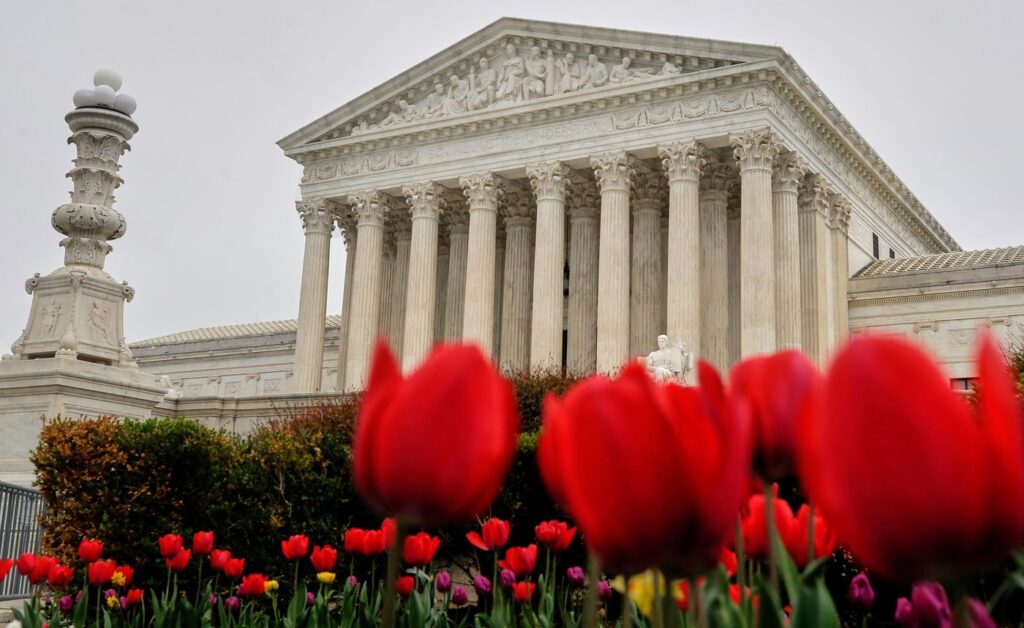
MONTGOMERY, Ala. (AP) – Republican governors in Alabama and Tennessee have convened special legislative sessions in light of a recent U.S. Supreme Court ruling that has weakened a key provision of the Voting Rights Act. The Court's decision has prompted these states to consider redistricting congressional maps in an effort to gain political advantage ahead of the upcoming elections.
Alabama Governor Kay Ivey has called the state's legislature back to Montgomery for a special session starting Monday. The aim is to create contingency plans for special primary elections, hoping to modify congressional maps in time for the November midterms. Republican leaders in Alabama stated that these changes could enhance their chances of securing seven Republican seats in Congress, up from the current two held by Democrats in the seven-member delegation.
Meanwhile, in Tennessee, Governor Bill Lee has also summoned lawmakers into a special session, commencing Tuesday. The session’s primary focus is to dismantle the state’s only Democratic-held House district, which is largely centered around Memphis, a city with a majority Black population. This move is seen as a strategic effort to reshape the state's political landscape.
The Supreme Court's ruling that struck down a majority-Black congressional district in Louisiana has sent shockwaves throughout statehouses in the South. The decision articulated that the creation of such districts relied excessively on race, opening the door for Republican officials to potentially redraw voting districts unfavorably toward Black voters. States such as Florida and Louisiana have already taken rapid action to adjust their congressional maps in response, with Louisiana postponing its May 16 congressional primary amidst increased legal scrutiny.
Former President Donald Trump inflamed the redistricting conversation by suggesting on social media that his party could gain 20 more seats in the House if states were allowed to modify their districts. He urged state legislatures to comply with the Supreme Court’s direction, prioritizing political gain over administrative convenience.
In light of the ruling, Alabama is pursuing a reversal of a federal court order that mandated a congressional map containing a significant number of Black voters until after the 2030 Census. The state is appealing the decision, hoping the courts will permit a return to the 2023 congressional map drawn by lawmakers, which would help further Republican interests in the state.
Trump's influence also extends to Tennessee, where his support for redefining the 9th Congressional District has galvanized Republican lawmakers. Historically encumbered by the Voting Rights Act in their efforts to dilute Democratic voter representation, Tennessee Republicans now see a potential pathway to reshape the district’s demographics.
Governor Lee has stated, "We owe it to Tennesseans to ensure our congressional districts accurately reflect the will of Tennessee voters." This sentiment echoes Trump's previous calls for Republicans to work toward gaining additional seats in Congress, with the pressure mounting for the GOP-controlled Legislature to act swiftly.
Despite these changes, Democrats are voicing concerns over the timing and transparency of the redistricting efforts. The Tennessee State Supreme Court previously blocked any redistricting efforts too close to an election period, which has led Democrats to hope for a similar outcome this time. In Alabama, Democratic leaders have criticized the special session as a strategic move by Republican leadership, labeling it a "blatant power grab" intended to undermine Black representation in Congress.
Overall, the Supreme Court's ruling has intensified the already fierce national debate over redistricting, as Republican-controlled states seek to leverage this opportunity to gain electoral advantages. The unfolding events in Alabama and Tennessee illustrate the potential ramifications of the ruling, as both states rush to implement changes that could reshape their political landscapes ahead of crucial elections.








