

CAIRO (AP) – President Donald Trump issued a stark warning to Iran, stating that the United States would “obliterate” power plants in the country if the Islamic Republic did not fully open the strategic Strait of Hormuz within 48 hours. This ultimatum came as Iranian missiles targeted communities near Israel's main nuclear research site late Saturday, resulting in considerable destruction and leaving dozens injured.
These developments indicate a dangerous escalation in the conflict, which has now entered its fourth week. Trump, expressing his ultimatum through a social media platform from his Florida residence, emphasized that the U.S. would initiate a new wave of attacks if Iran did not comply, starting with the largest power plants.
In response, Iranian officials warned that any attack on its energy facilities would lead to retaliation against U.S. and Israeli energy and infrastructure assets throughout the region. This statement was made through state media and by an Iranian military spokesperson. The Strait of Hormuz is a pivotal global trade route, essential for the oil supply, with recent attacks disrupting tanker operations and causing significant declines in oil output from some of the world’s biggest producers.
Amid the rising tensions, Israeli military sources reported that Iranian missiles struck the southern cities of Dimona and Arad. This incident marked the first successful Iranian missile penetration of Israel’s air defense systems in proximity to the nuclear site, raising alarms among Israeli officials. Mohammad Bagher Ghalibaf, the Speaker of Iran’s Parliament, noted that Israel's failure to intercept missiles in the heavily fortified Dimona area was an indication of a new phase in the ongoing conflict.
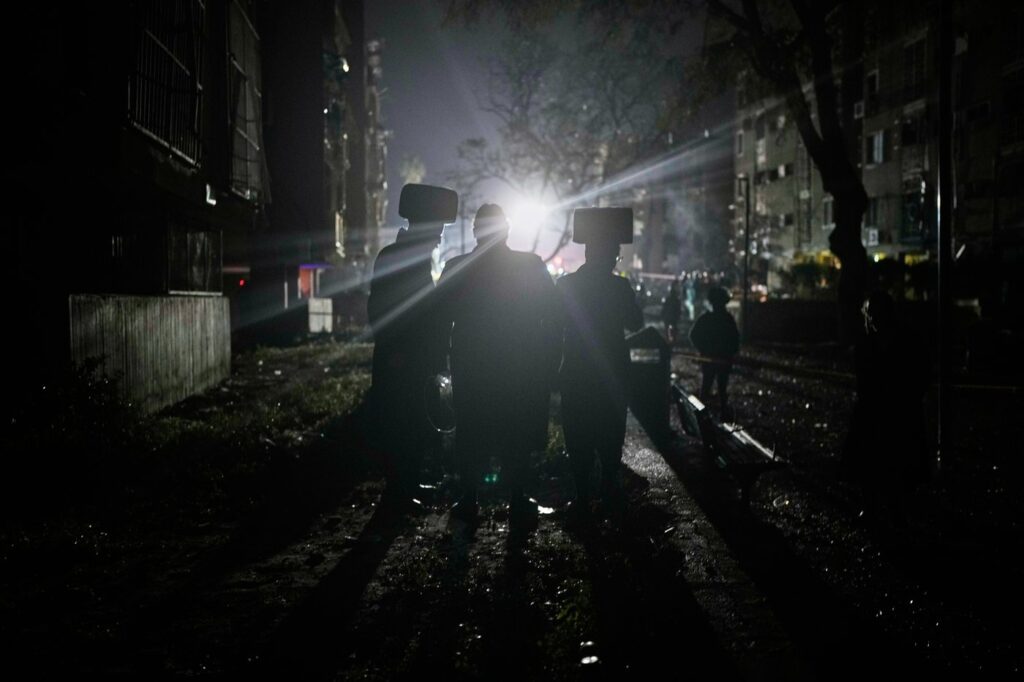
Reports from Arad indicated that the missile strikes resulted in severe damage to at least ten apartment buildings, with three of them at risk of collapsing. Rescue workers confirmed that at least 64 individuals required hospitalization due to the attacks. Dimona is situated approximately 20 kilometers (12 miles) west of the nuclear research facility, while Arad is about 35 kilometers (22 miles) north.
Israel is widely believed to be the sole Middle Eastern nation possessing nuclear weapons, although its leaders have not officially confirmed or denied this. The International Atomic Energy Agency stated it had not received any reports of damage to the Israeli nuclear center or abnormal radiation levels following the missile strikes. Furthermore, the Iranian attacks were preceded by events at Natanz, where Iran’s main nuclear enrichment site was also targeted.
On the day of the missile strikes, Israel denied responsibility for the assault on Natanz, located nearly 220 kilometers (135 miles) southeast of Tehran. The Iranian judiciary's media affiliates, notably Mizan, claimed that there was no leakage from the site following the strike. The bulk of Iran's estimated 970 pounds (440 kilograms) of enriched uranium is reported to be housed at the Isfahan facility, where the international monitoring agency is currently investigating the strike.
The Pentagon refrained from commenting on the Natanz incident, which had already been subjected to attacks during the previous week and in a preceding conflict in June. Russian officials expressed concerns over the potential catastrophic consequences that such military actions could have throughout the Middle East.
Meanwhile, the war's ramifications extend beyond the geographic confines of the conflict, as food and fuel prices continue to climb globally. The U.S. and Israel have articulated various justifications for their military actions, aimed at destabilizing Iran's leadership and diminishing its missile and nuclear capabilities, yet there is little evidence to suggest that an uprising within Iran is forthcoming. Internet restrictions continue to hamper the flow of information from the country.
In summary, the situation remains volatile, with key military operations and international tensions escalating, having significant implications for regional and global stability.








