

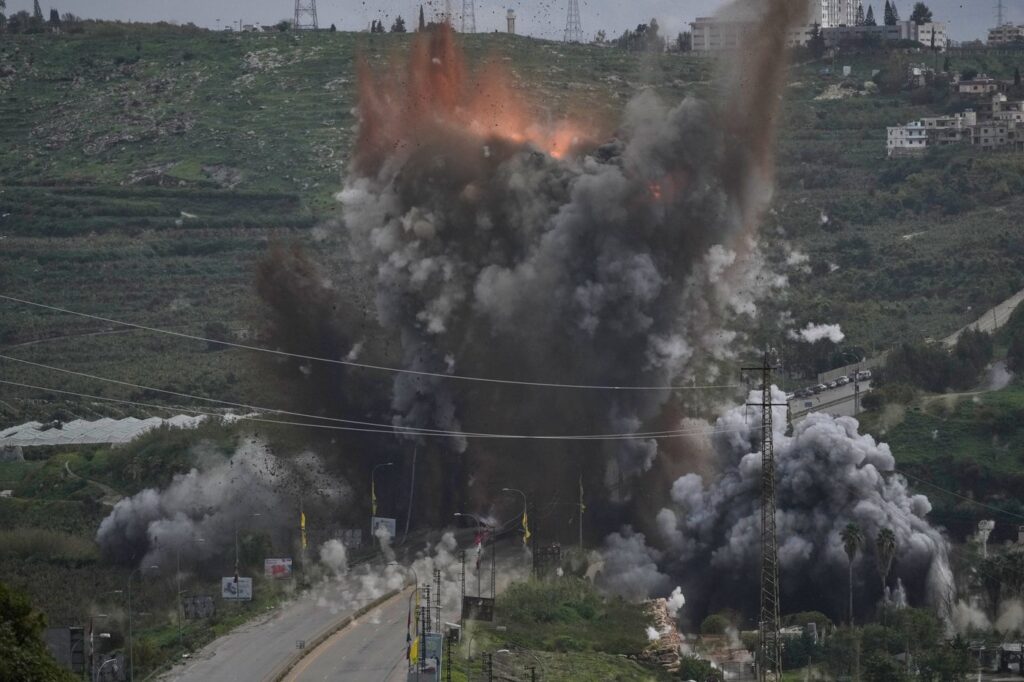
The ongoing conflict between the United States and Israel against Iran has intensified, entering its fourth week with a significant escalation of violence across the region. The situation has led to a rise in airstrikes and missile attacks, causing widespread devastation and humanitarian distress. Visual documentation of the conflict has emerged, showcasing both the impact on the local population and the destructive military actions being taken.
On March 22, 2026, an Israeli airstrike targeted the Qasmiyeh Bridge near the coastal city of Tyre, Lebanon, resulting in plumes of smoke and flames rising from the site. This airstrike highlights the continued Israeli military operations, which have intensified in response to the ongoing tensions and missile threats from Iran.
In a retaliatory move, Iranian missiles struck the city of Dimona in southern Israel on the same date. The aftermath of the strikes saw Israeli security forces examining the damaged sites, emphasizing the direct impacts on Israeli territory. Reports from the scene indicate significant concern regarding the potential escalation of missile attacks as civilians witness the destruction in their neighborhoods.
On the same day, efforts were made to assess and respond to missile strikes in various Israeli locations, including Arad, where security personnel and rescue teams worked tirelessly to aid impacted civilians. Images of the aftermath reveal the chaotic and traumatic environment that residents are forced to navigate amidst the ongoing hostilities.
As the conflict rages on, the human toll becomes apparent. In Tehran, Iran, a funeral procession took place for General Ali Mohammad Naeini, a spokesperson for Iran's paramilitary Revolutionary Guard, alongside his comrade Amir Hossein Bidi, who lost their lives amid the escalating violence. Crowds gathered to pay their respects, demonstrating the profound national sentiment linked to the ongoing military conflict and highlighting the human aspect of this war.
Additionally, the cultural expressions of the Iranian people during this tumultuous time were evident as worshippers gathered at the Imam Khomeini Grand Mosque in Tehran to perform Eid al-Fitr prayers, marking the end of Ramadan. Members of the congregation carried Iranian flags, reflecting a mixture of religious observance and national pride in the face of adversity.
The conflict has also forced many individuals to flee their homes in search of safety. Displaced women, for instance, sought shelter from Israeli airstrikes in southern Lebanon, carrying their belongings as they moved to less vulnerable locations. In Beirut, an anti-war poster poignantly questioned the rationale behind the ongoing violence, saying, "Sacrificing for whom? Lebanon does not need war," signaling a deep-seated desire for peace among the war-weary populace.
As the situation develops, both regional and international communities are closely monitoring the developments in this high-stakes conflict, which continues to draw in military action from multiple directions. The emphasis on human experience amidst the warfare persists, highlighting the urgent need for resolutions to the ongoing hostilities that have rooted deep suffering within the affected nations.








