

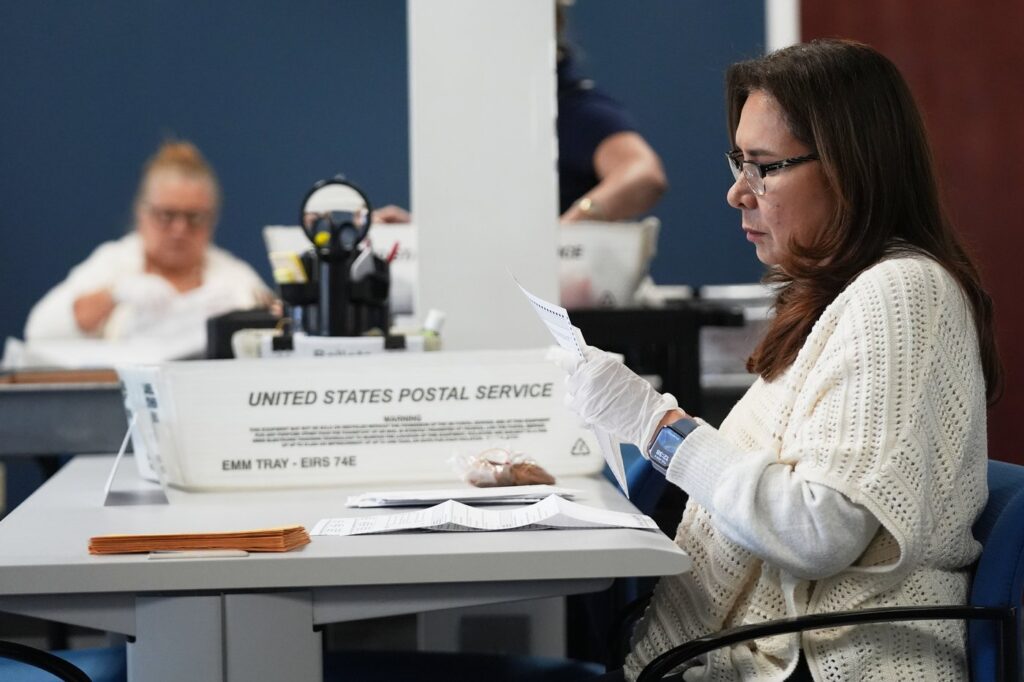
On Monday, the Supreme Court is set to hear a significant case originating from Mississippi that questions whether states are permitted to count late-arriving mail ballots. This issue has garnered attention as it also aligns with an ongoing campaign spearheaded by President Donald Trump against mail voting, which he claims facilitates fraud, despite substantial evidence disputing such assertions and highlighting long-standing practices in various states.
The potential outcome of this case could have far-reaching implications for voters in 14 states and the District of Columbia, which presently allow grace periods for mail ballots, provided they are postmarked by Election Day. Furthermore, approximately 15 other states, which employ more lenient deadlines specifically for ballots submitted by military and overseas voters, may also find themselves affected by the court's ruling.
A decision from the Supreme Court is anticipated by late June, which would allow sufficient time for changes to be implemented ahead of the 2026 midterm congressional elections. The prospect of forcing states to alter their voting practices just months before a significant election raises serious concerns about "confusion and disenfranchisement," especially in jurisdictions that have maintained relaxed deadlines for years. This sentiment was articulated by state and major city election officials in a legal filing presented to the court.
States like California, Texas, New York, and Illinois are among those with post-Election Day deadlines for mail ballots. Additionally, rural regions of Alaska, characterized by vast distances and often unpredictable weather, are also allowed to count ballots that arrive late.
The legal representatives for the Republican and Libertarian parties, along with Trump's administration, are urging the justices to uphold a ruling from an appellate court that invalidated a Mississippi law permitting ballots to be counted if they arrive within five business days after the election as long as they are postmarked by Election Day.
This court challenge reflects a broader Republican initiative against mail-in voting and echoes Trump’s previous measures, including an executive order signed last year, which aimed to mandate that votes be both "cast and received" by Election Day. However, this executive order is currently blocked due to pending court challenges.
Moreover, there has been a trend among Republican-led states; namely, four states—Ohio, Kansas, North Dakota, and Utah—did away with grace periods entirely last year, as reported by organizations such as the National Conference of State Legislatures and Voting Rights Lab.
The legal issue before the Supreme Court involves whether federal law stipulates a single Election Day that necessitates ballots be both cast by voters and received by state officials. Judge Andrew Oldham of the 5th U.S. Circuit Court of Appeals, in his ruling to strike down Mississippi's grace period, noted that the state law permitting counting of late-arriving ballots conflicted with federal law. Notably, Oldham was part of a unanimous panel that included fellow judges James Ho and Stuart Kyle Duncan, all of whom were appointed by Trump during his first presidential term.








