

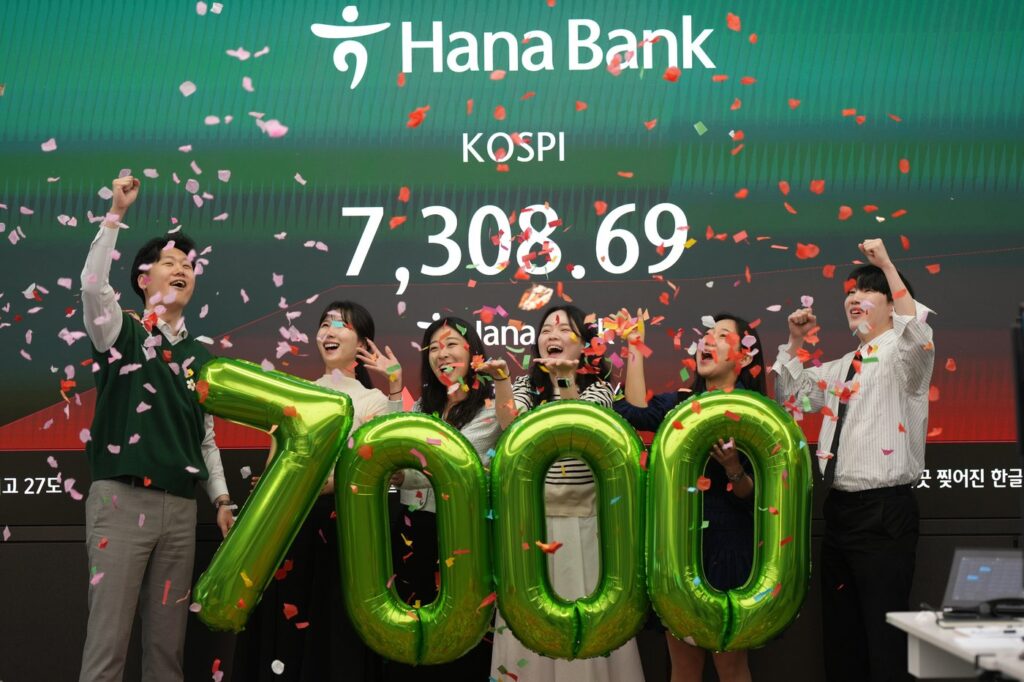
The South Korean market experienced a remarkable surge on Wednesday, with the Kospi index soaring nearly 7% to reach a record high, following a significant jump in Samsung Electronics' stock, which surged by approximately 13%. This rally was primarily fueled by prevailing expectations of robust growth in artificial intelligence and optimism regarding potential advancements in ending the ongoing U.S.-Iran war.
In the early trading hours, shares of SK Hynix, another leading South Korean computer chip manufacturer, also experienced a substantial increase, rising by 10%. Both Samsung and SK Hynix are pivotal players in the production of computer chips that are essential for AI applications, further driving the market's positive momentum.
Market sentiment was notably bolstered by reports of Iranian officials traveling to China ahead of an anticipated summit between U.S. President Donald Trump and Chinese leader Xi Jinping. This development contributed to eased volatility in oil prices, creating a more favorable environment for investors. Following a holiday closure, South Korea’s market reopened, gaining 6.7% early in the day, rising to 7,398.34 points.
While South Korea's market thrived, other Asian markets reflected a generally positive trend, although Tokyo's trading was closed due to a holiday. Australia’s S&P/ASX 200 index rose nearly 1.0% to 8,766.80 during morning trading. Hong Kong’s Hang Seng index increased by 0.7% to 26,081.52, while the Shanghai Composite climbed 1.0% to reach 4,152.68.
In the realm of energy trading, benchmark U.S. crude oil saw a decline, dropping $1.37 to $100.90 a barrel, while Brent crude, the international benchmark, fell $1.50 to $108.37 a barrel. These declines mirrored the significant increases seen earlier in the week but indicate that prices remain substantially elevated compared to the approximately $70 price per barrel prior to the U.S.-Iran conflict.
The U.S. military has indicated that a ceasefire with Iran is currently in effect, although uncertainties persist. Efforts continue to open a pathway in the Strait of Hormuz, facilitating the resumption of oil tanker shipments from the Persian Gulf, a vital route for global oil trade.
In the U.S. markets, the S&P 500 index rose by 0.8%, surpassing its previous all-time high set at the end of the previous week and closing at 7,259.22. The Dow Jones Industrial Average increased by 0.7% to close at 49,298.25, while the tech-heavy Nasdaq composite surged by 1% to a record high of 25,326.13.
Mixed reports regarding the U.S. economy emerged, indicating that growth in services businesses unexpectedly slowed in the previous month, attributed to the impact of the ongoing war on spending. Conversely, a separate report highlighted a slightly increased number of job openings advertised by U.S. employers at the end of March, offering a promising sign for the labor market.
In currency trading, the U.S. dollar experienced a slight decrease, falling to 157.88 Japanese yen from the previous 157.89 yen. The euro traded at $1.1720, an increase from $1.1693.








