

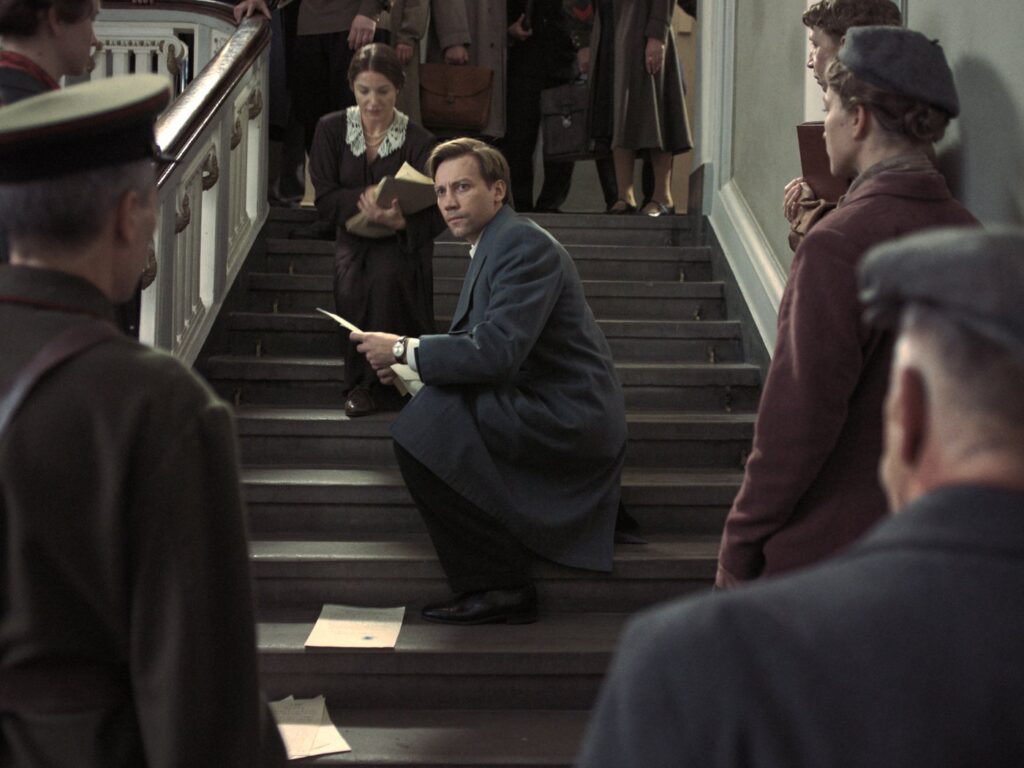
Sergei Loznitsa's film, “Two Prosecutors,” is a gripping exploration of government corruption, masterfully crafted to envelop viewers in the oppressive atmosphere experienced by its young protagonist, Alexander Kornyev, portrayed by Aleksandr Kuznetsov. Set against the backdrop of Soviet-era Bryansk in 1937, the narrative reveals the perils faced by those challenging an entrenched totalitarian regime during the height of Josef Stalin's Great Purge.
Upon arriving at the prison, Alexander, a youthful prosecutor, is met with immediate skepticism from the local authorities. He presents himself with a note written in blood from a prisoner named I.S. Stepniak. This note's transmission is laden with ominous implications, mirroring the desperate circumstances inflicted on victims of the Stalinist regime. The opening scenes depict the incineration of countless letters pleading for justice, foreshadowing the bureaucratic obstacles that Alexander will inevitably encounter.
The film is deeply rooted in historical reality, as it draws inspiration from a novella penned by Georgy Demidov, a physician who endured 14 years of imprisonment in Soviet labor camps. Demidov’s work, written in 1969 but only published posthumously in 2009, serves as a haunting reminder of the truth behind individual experiences of state-sponsored oppression.
Loznitsa, a prominent figure in Ukrainian cinema and a filmmaker known for his poignant documentaries about state violence, imbues the fiction with a documentary-like realism. His previous works, such as “The Invasion” (2024) and “Maiden” (2014), alongside films examining Stalinist Russia, enhance his portrayal of life under tyranny. The cast includes Russian actors who have spoken out against Vladimir Putin's ongoing war with Ukraine, further underscoring the film's contemporary relevance.
In “Two Prosecutors,” which debuted at the Cannes Film Festival last year, Loznitsa's return to fiction after a seven-year hiatus showcases his adeptness at weaving narratives that resonate beyond their historical context. The film employs a parabolic structure reminiscent of the works of Nikolai Gogol, building a narrative that highlights the universal dangers faced by those who dare to question authoritarianism.
The pacing of the film is methodical, reflecting Alexander’s arduous journey through the layers of bureaucratic hell. Each attempt to progress further into the prison system is fraught with tension and obstacles, emphasizing the powerlessness of individual agency within a corrupt regime. The guards are unsympathetic and wary, mirroring the pervasive fear that silenced dissent during this dark historical moment.
The encounter between Alexander and Stepniak is pivotal. Stepniak, a former prosecutor himself, does not seek personal redress but rather aims to expose the systemic injustices perpetrated by the state. His battered body tells a story of brutality and serves as a testament to the horrors of Stalin’s crackdown on dissent. Armed with this knowledge, Alexander sets his sights on Moscow, hoping to report these injustices to the chief prosecutor.
However, his journey into the heart of Stalin’s bureaucracy proves equally treacherous. As Alexander navigates through the convoluted labyrinth of the capital, the film conveys a sense of fatalism—each door he opens merely leads to another barrier. His meeting with Prosecutor Andrey Vyshinsky highlights the futility of his efforts, as the audience becomes painfully aware that Alexander's attempts to blow the whistle on corruption will likely lead to his demise.
Released by Janus Films, “Two Prosecutors” is presented in both Russian and Ukrainian with subtitles, running for 118 minutes and maintaining a somber tone throughout its narrative. With a rating of three and a half stars out of four, Loznitsa's film stands as a stark reminder of the dangers posed by unchecked state power, depicting a harrowing drama that resonates with audiences today.








