

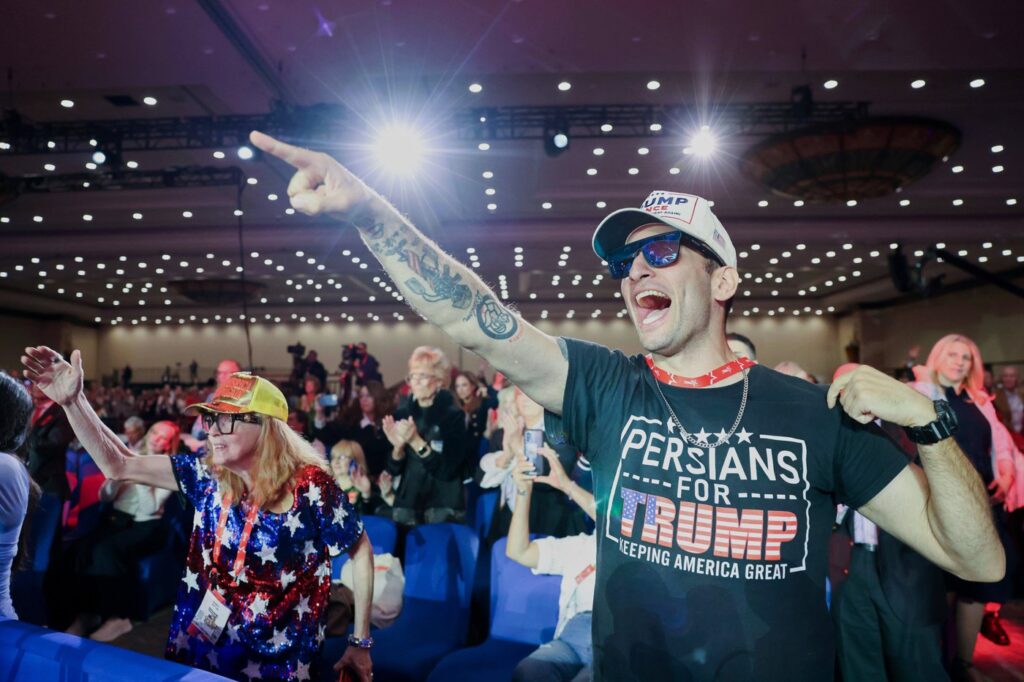
At the Conservative Political Action Conference (CPAC) held in Grapevine, Texas, a significant generational divide emerged over the ongoing war in Iran, highlighting differing perspectives between older and younger conservatives. As the conference gathered momentum, leaders called for unity among Republicans, particularly in light of the challenges posed in the upcoming midterm election year.
Younger conservative attendees expressed feelings of disappointment and even betrayal regarding former President Donald Trump's commencement of military actions against Iran. They conveyed in interviews that Trump's decisions clash with his previous commitments to oppose foreign entanglements. Benjamin Williams, a 25-year-old marketing specialist from Austin, Texas, articulated that such military actions were contrary to the "America-first" principles many expected from Trump. He expressed concern for his military family members and described the approval of military engagements in Iran as an unnecessary disturbance that threatens U.S. economic stability.
Sean O'Brien, a sophomore at Auburn University, similarly voiced his dissatisfaction, indicating that the prospect of sending U.S. troops to Iran felt like a profound betrayal of Trump's initial rhetoric. He shared his anxieties regarding impending military deployments as the U.S. prepared to send at least 1,000 troops from the 82nd Airborne Division to the region, stating that this situation kept him awake at night.
In contrast, older conservatives at the conference generally offered a more forgiving view of Trump's actions. They argued that the military response to Iran was a necessary reaction to longstanding threats posed by the Iranian regime. Joe Ropar, a 70-year-old retired defense contractor from McKinney, Texas, articulated that the U.S. could no longer afford to remain passive in the face of threats, suggesting that Trump was responding to a "40-year-old war" provoked by Iran. This sentiment was echoed by Kelle Phillips, a 61-year-old author, who emphasized that real-world dynamics often supersede campaign rhetoric.
The conference participants also included influential figures who have raised concerns about the conservative coalition's unity regarding the Iran conflict. Podcaster Tucker Carlson, alongside others, has suggested that extended military engagements might alienate some conservatives, potentially impacting voter turnout in the upcoming midterms. This concern is heightened as Republicans face challenges in maintaining their control over the U.S. House and Senate.
A recent poll revealed that a significant majority of Americans perceive U.S. military actions in Iran as excessive, reflecting potential vulnerabilities for Trump's approval ratings. Furthermore, CPAC Chairman Matt Schlapp acknowledged the visible divisions among conservatives regarding the war, noting that a straw poll would be conducted to gauge sentiments on this issue.
Many attendees, particularly younger ones, felt that their support for Trump had diminished since the onset of this conflict. Tiffany Krieger, a 20-year-old student from Harrisburg, Pennsylvania, reported a notable decline in her support for Trump, commenting on the apparent fragmentation within the conservative movement over the war. Mercedes Schlapp, a CPAC senior fellow, addressed these concerns directly, emphasizing the importance of unity among conservatives and urging attendees to remain cohesive in the face of external challenges.
The discussions at CPAC reflected a broader ideological struggle within the conservative movement, as the generational gap regarding U.S. military involvement in foreign conflicts poses significant implications for the party's future. The unfolding dynamics present both challenges and opportunities for Republicans as they navigate the complexities of public opinion and internal divisions leading into crucial elections.








