

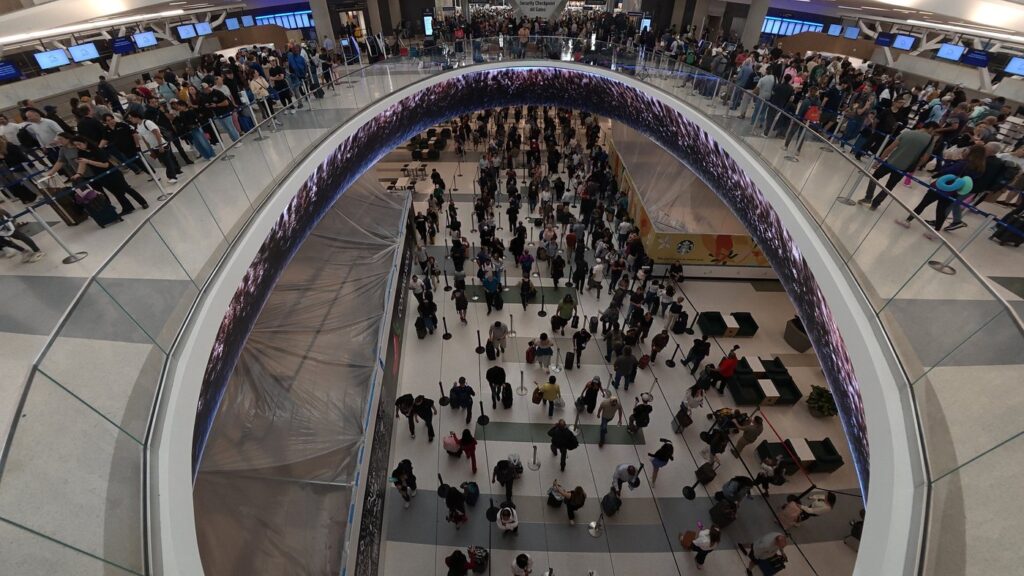
On March 26, 2026, President Donald Trump announced his intention to sign an executive order aimed at ensuring that Transportation Security Administration (TSA) agents receive immediate pay as lawmakers scrambled to resolve a 42-day budget standoff that has severely impacted airport operations and caused financial distress for many government employees. The ongoing funding crisis centers on the Department of Homeland Security (DHS), with the TSA bearing the brunt of the fallout from the government shutdown.
In a statement shared via social media, Trump expressed urgency to rectify the "Chaos at the Airports," highlighting the mounting pressure to conclude negotiations over funding for the DHS. As the deadline approached for TSA workers to potentially miss yet another paycheck, negotiations intensified between the Senate and the White House in the final hours. Initial discussions around invoking a national emergency to fund the TSA were deemed politically complicated, leading to the decision to pay agents using provisions from Trump’s 2025 tax bill as revealed by an anonymous senior administration official.
As senators worked into the night, they focused on a package designed to fund various parts of DHS, including the Federal Emergency Management Agency and the Coast Guard. However, this effort faced hurdles, as Democrats demanded stricter regulations on Homeland Security officers involved in immigration enforcement, a point of contention amidst the shutdown. Senator John Barrasso, R-Wyo., stated that the president's action to guarantee pay for TSA agents was the right move, aiming to provide immediate relief for workers enduring the repercussions of the funding impasse.
The funding shutdown has led to significant disruptions, with rising travel delays and warnings about airport closures as TSA workers have reported high callout rates due to financial uncertainty, resulting in over 3,120 employees missing work on a single day. The American Federation of Government Employees, represented by President Everett Kelley, expressed gratitude for the decision to pay TSA workers but underscored the need for Congress to finalize a comprehensive funding solution to maintain the continuity of vital agency operations.
Travel incidents underscored the real-life impact of the ongoing crisis, as exemplified by traveler Melissa Gates at George Bush Intercontinental Airport in Houston, who missed her flight after lengthy security lines. Meanwhile, Senate Majority Leader John Thune, R-S.D., introduced a “last and final” proposal aimed at breaking the budget deadlock, although no specifics were disclosed. Attempts to forge a compromise have seen resistance, particularly among Democrats who believe Republican proposals do not adequately address concerns regarding immigration enforcement tactics that have sparked widespread debate and protests.
Senate Democrats have called for practical changes in immigration enforcement procedures, including mandates for federal agents to wear identification and avoid operations near sensitive sites like schools and churches. Secretary of Homeland Security Markwayne Mullin has indicated a willingness to consider some of these demands, though solid commitments are still pending. The political landscape remains fraught, with conservative Republicans pushing for stronger funding of immigration operations and a collective discord hindering a swift resolution.
The ongoing budget crisis reflects deep divisions within Congress and highlights the complex dynamics of immigration policy intertwined with budget negotiations. As the stalemate stretches on, the ramifications continue to affect not only TSA agents and airport operations but also the broader landscape of government services and public welfare.








