

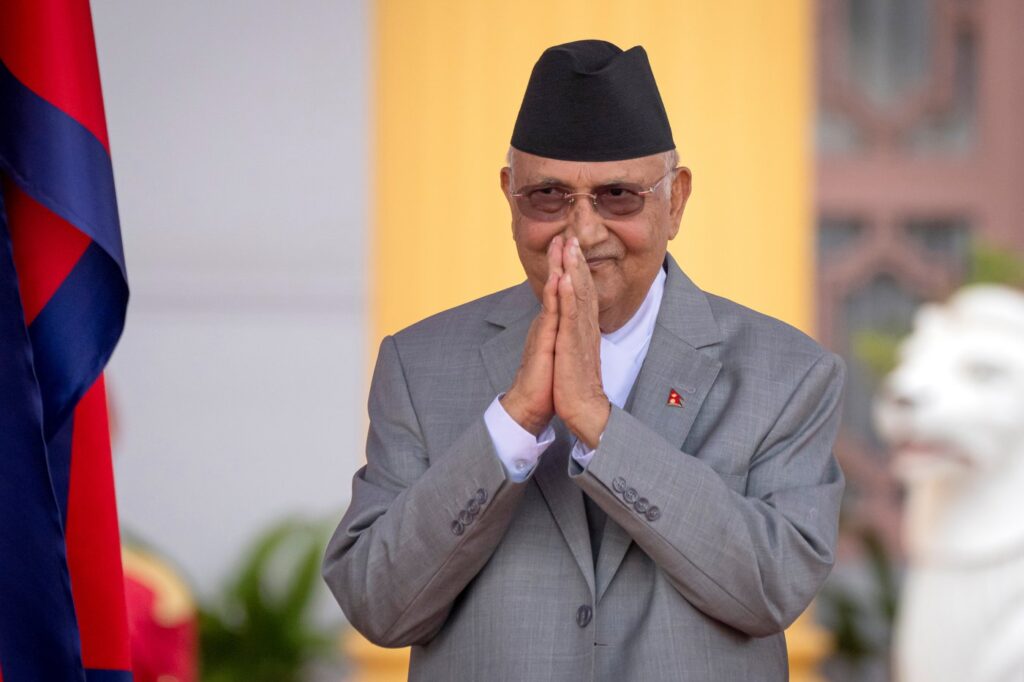
KATHMANDU, Nepal (AP) — Former Prime Minister Khadga Prasad Oli was arrested early Saturday by the police in Nepal in connection with the deaths of dozens during violent protests that took place in September, which resulted in his government's fall and led to new elections in the country. Authorities detained the influential communist leader at his residence situated on the outskirts of Kathmandu. Alongside him, Ramesh Lekhak, the former home minister who stands accused of ordering the police to open fire on protesters, was also arrested.
Home Minister Sudan Gurung announced the arrests via social media, stating, "No one is above the law. We have taken former Prime Minister KP Sharma Oli and former home minister Ramesh Lekhak under control. This is not revenge against anyone; it is just the beginning of justice." An investigative commission established by the government has recommended punishments of up to 10 years in prison for Oli, Lekhak, and the police chief present during the protests.
The arrests occurred just a day after a new government, led by rapper-turned-politician Balendra Shah, took office following a significant parliamentary election victory earlier this month, achieved by his Rastriya Swatantra Party.
Shah, along with Gurung, has promised justice for those who were killed and injured during the unrest. The September protests, which were largely driven by youth activists, resulted in substantial violence, leaving 76 individuals dead and over 2,300 injured. In the turmoil, crowds set fire to the offices of the Prime Minister and the President, along with police stations and the homes of several high-profile politicians, who were compelled to escape in military helicopters.
The demonstrations, ignited by "Gen Z" activists, directly prompted the appointment of Nepal's first female prime minister, Sushila Karki, a retired Supreme Court judge, on September 12. She served during the transitional period leading up to the election, marking a significant moment in the nation's political landscape.
The arrests of Oli and Lekhak suggest a shift in the political climate of Nepal, reflecting the new government's commitment to address grievances from the protests and hold accountable those responsible for the violence. This development signals a critical juncture in Nepal's ongoing struggle with issues of governance and governmental accountability, as it seeks to navigate the aftermath of the recent upheaval and establish a more reliable political order.








