

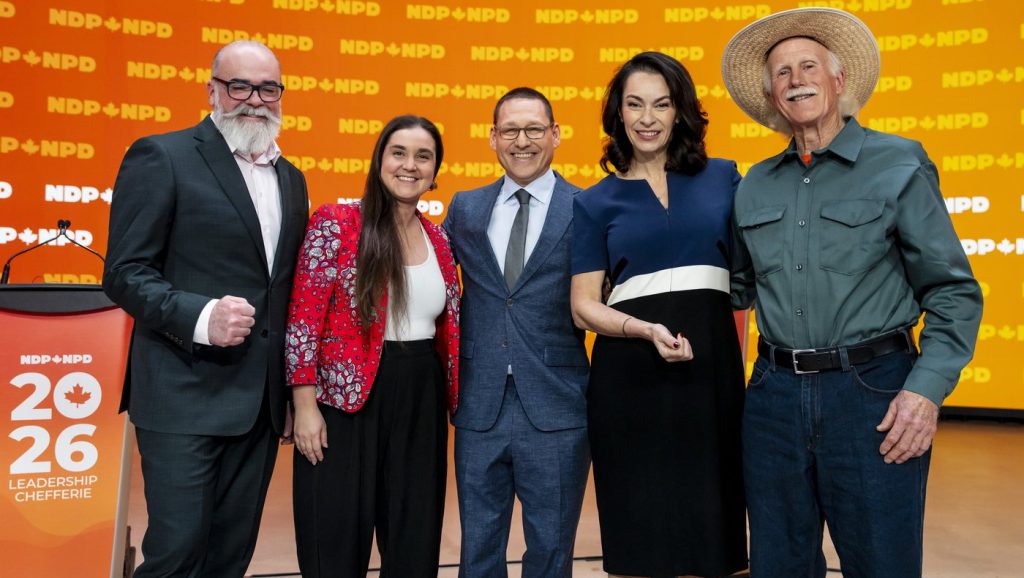
WINNIPEG — The anticipation builds as the next leader of the New Democratic Party (NDP) is set to be announced on Sunday, with voting concluding on Saturday. A total of five candidates are vying for the leadership position, each bringing their unique experiences and platforms to the forefront. Below is an overview of the candidates and their respective campaigns over the last six months.
Avi Lewis is a prominent documentary filmmaker, activist, and journalist with a diversified career spanning various media outlets, from Much Music to Al Jazeera. Lewis aims to reinvigorate the NDP's political relevance by promoting bold initiatives such as publicly-owned grocery stores and significant measures to combat climate change. Despite unsuccessful bids for election in Vancouver-area ridings in both the 2021 and 2025 federal elections, Lewis has emerged as the frontrunner in fundraising efforts, receiving notable endorsements from Manitoba MP Leah Gazan and environmentalist David Suzuki.
Heather McPherson, a three-term Member of Parliament representing Edmonton-Strathcona since 2019, brings two decades of experience from the non-profit sector focused on sustainable development and international cooperation. McPherson presents herself as a strategist for electoral success within the NDP, advocating for collaboration with provincial branches to increase the presence of New Democrats in the House of Commons. Having previously served as the party's whip and foreign affairs critic, she is currently the second-leading candidate in fundraising. McPherson has also garnered support from B.C. MP Gord Johns and former Alberta Premier Rachel Notley, framing the latter stages of the race as a competitive showdown with Avi Lewis.
Rob Ashton stands out as a candidate deeply rooted in organized labor, having spent over 30 years as a dockworker and currently serving as the national president of the International Longshore and Warehouse Union. His campaign seeks to return the party to its blue-collar roots with a labor-focused agenda, acknowledging a recent decline in support from this demographic. Although this is Ashton's inaugural attempt at federal politics, he enjoys substantial backing from influential labor organizations like the Canadian Labour Congress and United Steelworkers. Ashton's fundraising efforts place him third among the candidates.
Tanille Johnston, a social worker and city councilor in Campbell River, B.C., is keen on enhancing accessibility for the party, especially in rural and remote regions. Johnston advocates for increased outreach initiatives and the removal of membership fees to empower potential supporters. Though she faced defeat in the last federal election in the North Island-Powell River riding against Conservative Aaron Gunn, Johnston identifies as one of the “underdog” candidates. Due to her ongoing employment, her campaigning has been largely confined to her vacation days and unpaid leave.
Tony McQuail has been running an organic farm in Huron County, Ontario, for over 40 years. Originally from the U.S., McQuail relocated to Canada in 1971 as an act of defiance against the Vietnam War. His campaign focuses on promoting a greener Canada and advocating for electoral reform. Having run for the NDP federally five times between 1980 and 2019 and attempting to secure a seat with the Ontario NDP twice without success, McQuail is one of the other self-described underdogs in this leadership race. His unique approach has included extensive online campaigning, necessitated by budget limitations and the responsibility of running his farm.
This leadership contest reflects the diverse perspectives and strategies each candidate brings to the NDP as they seek to guide the party forward in a challenging political landscape. With the decision looming on Sunday, the candidates have laid out their visions and aspirations, hoping to resonate with party members and secure their position as the next NDP leader.








