

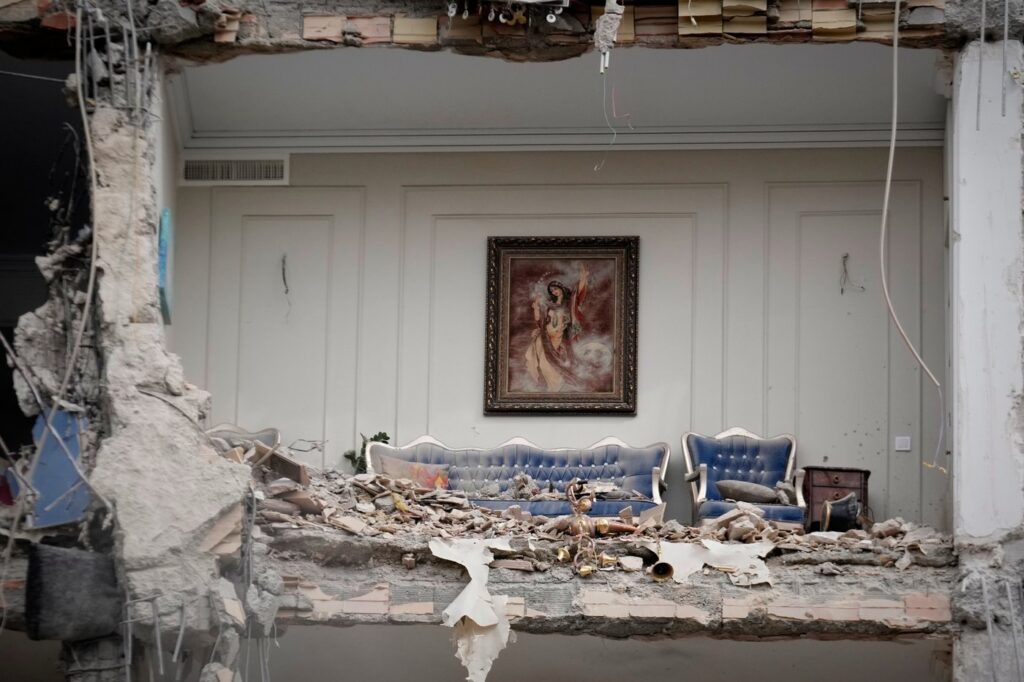
CAIRO (AP) — A month into the U.S. and Israeli bombing campaign that began on February 28, Iranians are grappling with the compounded toll of a war amidst an already beleaguered economy and the aftermath of deadly protests. The bombing of Tehran only exacerbates the fear and uncertainty following the January protests, where hundreds of thousands marched against the ruling theocracy, leading to thousands of deaths and mass arrests.
As the war continues, Iranians are increasingly concerned about their livelihoods and the growing destruction to homes and communities. A designer from Tehran expressed her despair, revealing that her leather products business is on the verge of closure due to economic hardship and a significant drop in online sales stemming from an unprecedented internet blackout that began in January. The conflict's violence has also driven her to live with her parents, leading to further disruptions as blasts from nearby strikes have damaged her apartment.
Daily life in Tehran is heavily influenced by the ongoing airstrikes. A local engineer is attempting to map out the timing and frequency of the strikes, noting that they seem less frequent now but still cause immense anxiety. The bombings disrupt not only personal safety but also economic stability, as many private businesses close down or reduce hours, while government workers continue to receive salaries. The collapse of Iran’s currency, largely attributed to U.S. sanctions, initiated the protests that erupted late last year.
In search of safety, many Iranians have relocated to the northern city of Rasht, which has strained local resources and services. A doctor at a pediatric hospital shared that patient numbers have nearly doubled, leading to shortages in medicine while forcing some patients to procure basic supplies from the market. The internet blackout complicates the doctor’s work, restricting access to patient histories and limiting his ability to record casualty figures resulting from the government crackdown.
Iranians are overwhelmed by mixed emotions regarding the war and their future under the ruling regime. While the government organizes pro-regime street rallies, the fear of a more oppressive Islamic Republic remains prevalent. An engineer reflected on the hardships that decades of misrule have inflicted but rejected the justification for the U.S.-Israeli attacks, expressing anger over the loss of life and infrastructure. He is trying to transform that anger into motivation for rebuilding after the war, determined to emerge stronger.
Meanwhile, U.S. President Donald Trump’s remarks calling on Iranians to overthrow their leaders have been met with skepticism. Some citizens view the ongoing war as potentially the last opportunity to dismantle the theocracy, though there are apprehensions about the implications of any agreements reached by the U.S. and Israel, with fears that such deals could further entrench the regime rather than liberate the populace. A lawyer, previously imprisoned for her activism, spoke of her longing for the collapse of the Islamic Republic but has become despondent, feeling drained by the violence and uncertainty that grips the nation.
In light of the relentless bombings, the pervasive sense of hopelessness among many Iranians is palpable. One woman expressed a grim resignation, stating that the weight of worry about the future has overshadowed joy or dreams. As casualties rise and infrastructure deteriorates, the mental and emotional toll on the population continues to escalate, leaving them navigating a turbulent landscape fraught with peril.








