

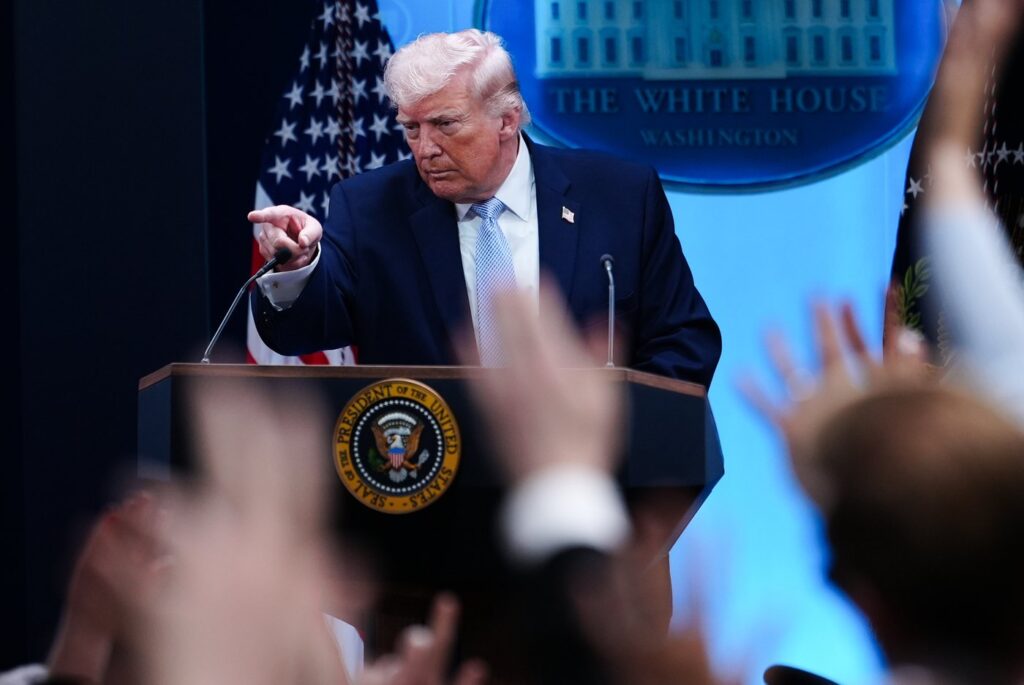
WASHINGTON (AP) — President Donald Trump is encountering significant challenges within his Republican Party as he seeks an off-ramp from the escalating war with Iran. His efforts to negotiate an exit, first through threats of severe action and then with a delicate ceasefire that faces instability, highlight the strains that have arisen since the conflict began six weeks ago.
Trump's "America First" movement, which gained traction by opposing military interventions, is facing tests as the war unfolds. Conservative activist Laura Loomer, known for her close ties to the president, openly criticized plans to negotiate with Iran. In her remarks, she condemned Vice President JD Vance for leading the upcoming talks in Pakistan, expressing her belief that negotiating with what she termed "Islamic terrorists" was inappropriate.
Former Representative Marjorie Taylor Greene echoed discontent, urging the invocation of the 25th Amendment after Trump's alarming comments about Iran's potential actions. Media figures like Megyn Kelly criticized Trump, questioning his behavior and appealing for a more normalized approach to leadership. Amid ongoing discourse, Charlie Kirk humorously pondered whether the ceasefire would outlast their show, indicating the pervasive uncertainty.
Despite growing criticism, Republican leadership in Congress remains largely mum, with many expressing discomfort about Trump's rhetoric while focusing on the implications of the war heading into an election year. With Congress on recess, prominent figures like House Speaker Mike Johnson and Senate Majority Leader John Thune have not publicly commented on the escalating events.
Republicans find themselves in a precarious position, mirroring the instability of the war. The party is already grappling with obstacles as the November midterms approach, leading some strategists to hope that the situation will be resolved by then. Veteran strategist Chris Wilson suggested that foreign policy issues typically do not dictate midterm outcomes, as domestic concerns like the economy tend to take precedence for voters.
Amidst this uncertainty, Trump and his administration maintain a sense of confidence. Following the announcement of the ceasefire, Trump lauded the day as a "big day for World Peace," while White House press secretary Karoline Leavitt celebrated it as a "victory for the United States." Trump dismissed his critics on social media as "stupid people," undermining their arguments for attention.
Supporters in Congress defend Trump's approach, arguing that national security considerations necessitate involvement in Iran. Representative David Kustoff from Tennessee emphasized that Iran's actions directly impact U.S. safety, expressing hope for the ceasefire's success. However, concerns linger about the impact of ongoing military involvement, especially against a backdrop of rising gas prices affecting the electorate's sentiment.
Republican faces challenges as the war progresses without clear resolutions or timelines, especially with discussions on funding for military operations anticipated as the conflict extends. Some GOP members are preparing for potential congressional approval requirements if the war exceeds 60 days. Insertion of additional financial measures may complicate matters for budget-conscious Republicans.
As the political landscape evolves, Democrats are strategizing to introduce another vote related to war powers, which could place further pressure on Republicans depending on how the ceasefire develops. Observations regarding public opinion reflect a challenging environment for the GOP, with a notable percentage of Republicans appearing supportive of military airstrikes but showing reluctance toward ground troop deployments.
In recent election outcomes, Republicans are confronted with additional concerns, as observed in elections signaling shifts in voter sentiment and support. Recent elections have indicated a troubling trend for Republicans, prompting strategic re-evaluations as they navigate the interplay between national security, foreign policy, and electoral viability.








