

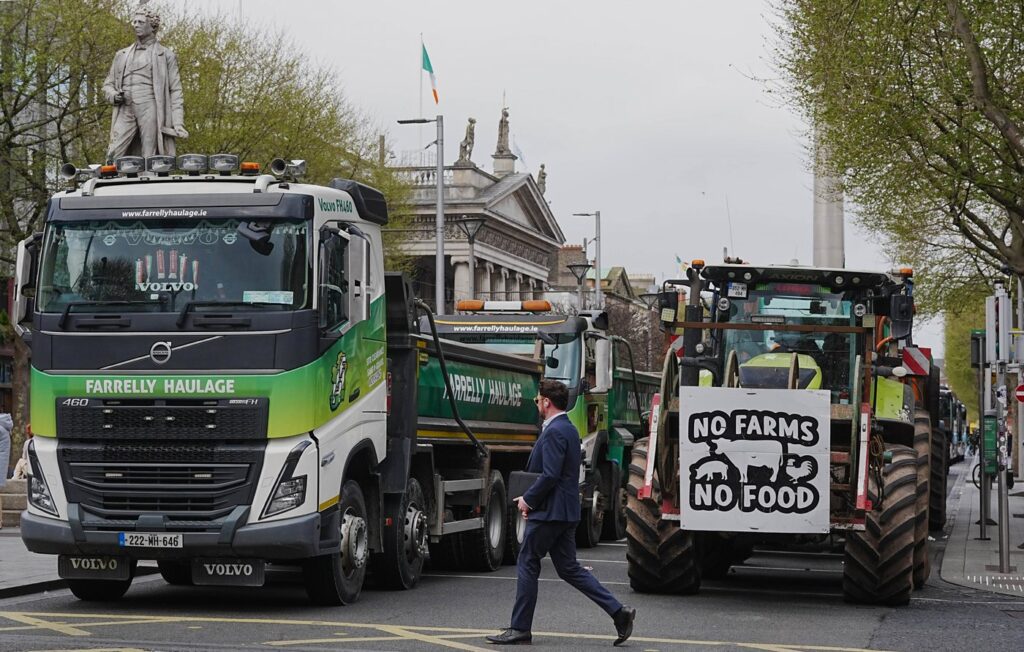
LONDON (AP) — Protests against soaring fuel prices in Ireland have now extended into their fourth day, leading to rising concerns regarding potential fuel shortages and the impact on emergency services. Demonstrators have effectively clogged major roadways and obstructed access to both refining and distribution sites across the nation.
In response to the ongoing crisis, the Irish government is slated to convene with farmers, truckers, and agricultural contractors on Friday. The unrest began as a consequence of escalating gasoline and diesel prices, a situation further exacerbated by the conflict in the Middle East that has limited oil exports from the affected region. While protest organizers have indicated a willingness to end the coordinated demonstrations if the government agrees to engage with them, it remains uncertain whether their representatives will be included in the discussions.
The protests commenced on Tuesday with slow-moving convoys that restricted access to some of the busiest streets in Dublin, the capital city. Protesters have notably blocked fuel depots that are responsible for supplying half of the country with fuel, and many have resorted to sleeping in their vehicles overnight, demanding government dialogue.
Reports indicate that over 100 service stations have run out of fuel, with projections suggesting that this number could swell to as many as 500 by Friday evening if disruptions to fuel supply persist. The national broadcaster RTE cited Fuels for Ireland, an industry organization, regarding these figures.
Further complicating the situation, the government has enlisted the aid of the army to clear vehicles from blocked roads. Authorities have expressed concern that the ongoing protests could hinder emergency services such as police, firefighters, and ambulances, who may struggle to respond promptly to urgent situations.
The disruption stems from a series of protests across Ireland's major cities, with demonstrators demanding additional cuts to the already high fuel prices. In recent weeks, the government has implemented several measures aimed at alleviating fuel costs, including a temporary reduction in excise taxes on motor fuels, the expansion of a rebate program for truckers and bus operators reliant on diesel fuel, and the extension of initiatives designed to assist low-income households with heating costs.
As the situation continues to develop, citizens remain on high alert, grappling with the myriad consequences of the ongoing protests and fluctuating fuel prices. The outcomes of the forthcoming government discussions are anticipated with great interest, as many hope for a resolution to the crisis that has left a significant portion of the population adversely affected.
In this precarious climate, the Irish government's approach in addressing the demands of protesters while ensuring public safety and maintaining access to essential services will be pivotal in the days to come.








