

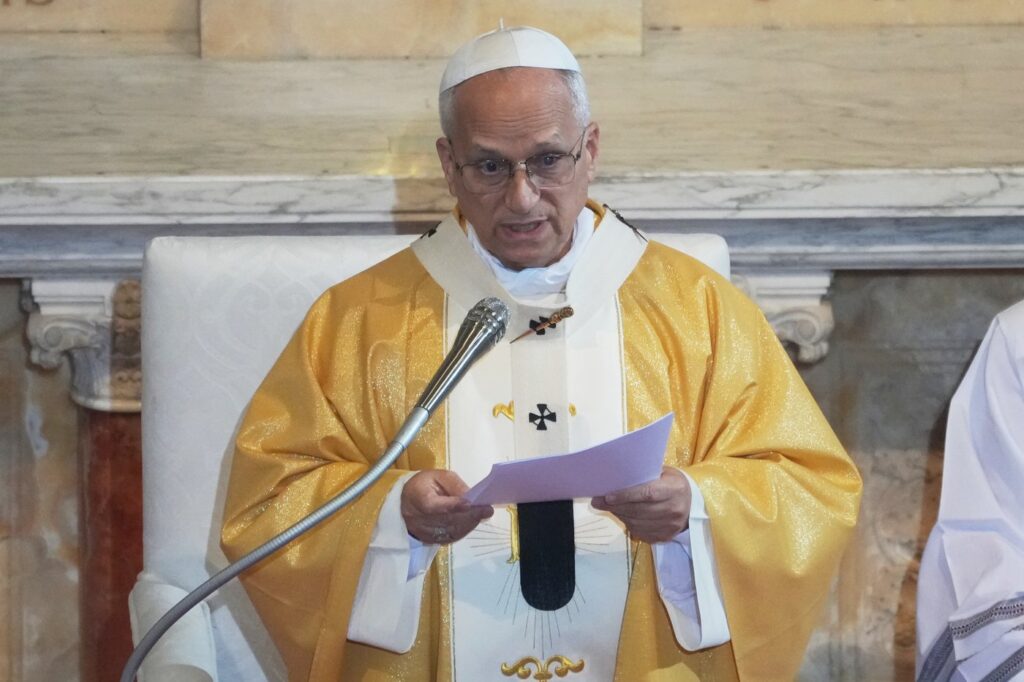
ALGIERS, Algeria (AP) — Pope Leo XIV is set to visit Cameroon with a message of peace aimed at addressing tensions in its separatist region and for discussions with President Paul Biya. The 93-year-old Biya, who has been in power since 1982, recently won an extended eighth term in a controversial election held last year.
The Vatican has indicated that combating corruption in the mineral-rich nation and the appropriate use of political authority will be central themes during Leo's visit, which begins on Wednesday with his arrival in Yaoundé, the capital. This trip follows Leo's stop in Algeria, marking the first leg of his four-nation tour of Africa.
As the first American pope in history, Leo's visit comes with a significant focus on challenging authoritarian governance. The Vatican has emphasized that Catholic social teaching is critical of the type of leaders Leo will meet, including Biya, who is currently the world's oldest president.
Upon his arrival at the presidential palace in Yaoundé, Leo will first meet with Biya. Following this meeting, he plans to address Cameroonian government officials, civil service representatives, and diplomats before visiting an orphanage operated by a Catholic religious order of nuns.
In a last-minute change to the itinerary, the Vatican announced that President Biya, rather than the prime minister, will deliver a speech ahead of Leo’s address to governmental authorities, and the meeting will occur at the presidential palace instead of a conventional conference center.
Cameroonian opposition has raised questions about the legitimacy of the election held on October 12, which Biya ostensibly won. His main rival, Issa Tchiroma Bakary, alleges election fraud and has called on citizens to dispute the official results.
Earlier this week, Leo issued a statement highlighting the role of political leaders and the necessity for "authentic democracy" to validate their authority, serving as a safeguard against the abuse of power. In a message directed at a Vatican academy, Leo asserted that democracy can only thrive when grounded in morality and a vision that respects human dignity.
During his time in Cameroon, Leo has two major planned events, the highlight being a "peace meeting" scheduled for Thursday in Bamenda, a city in the northwest region that has experienced significant separatist violence. The unrest stems from a rebellion launched by English-speaking separatists in 2017, seeking to establish an independent state separate from the French-speaking majority. This conflict has resulted in over 6,000 deaths and displaced more than 600,000 individuals, according to the International Crisis Group.
In a gesture ahead of Leo's visit, the English-speaking separatists declared a three-day ceasefire to facilitate "safe travel" for the Pope. The Unity Alliance, which includes various separatist factions, expressed that the decision reflects the "profound spiritual importance" of Pope Leo’s visit, aiming to ensure safe passage for civilians, pilgrims, and dignitaries.
Another significant event during Leo's visit will be a Mass on Friday in Douala, where an expected gathering of around 600,000 attendees is anticipated. After Cameroon, Leo's travels will continue to Angola, with the journey concluding in Equatorial Guinea the following week.








