

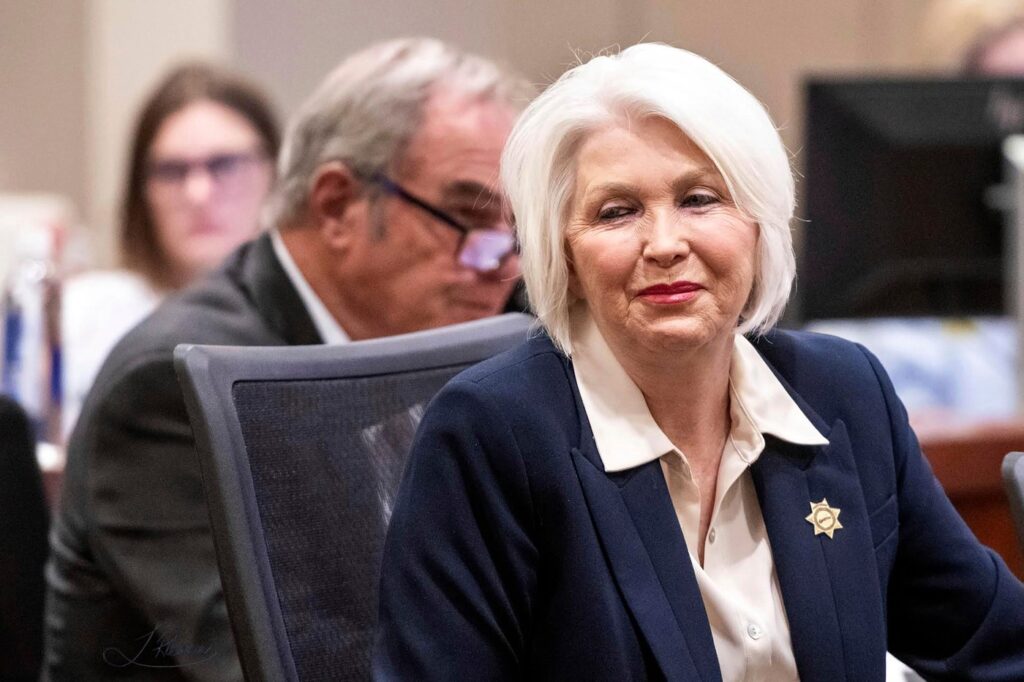
Former Colorado elections clerk and conspiracy theorist Tina Peters is set to be released from prison on Monday, having served less than a quarter of a nine-year sentence. Her conviction stems from her involvement in a scheme to copy the election system of her county following the 2020 election. This unprecedented breach of election security has drawn significant attention, highlighting issues surrounding election integrity in the United States.
Governor Jared Polis, a Democrat, commuted Peters' sentence last month amid pressure from former President Donald Trump. The Colorado Department of Corrections has refrained from confirming the exact time of Peters' release, and her attorney has stated that she will not address the media upon her exit from custody.
Peters was notably the first local election official to face charges related to a security breach after the 2020 election. In a covert operation, she allowed an outside computer expert connected to Mike Lindell, CEO of My Pillow, to access and copy her county’s Dominion Voting Systems computer server during a software update in 2021. Her actions led to significant controversy, as videos and images of the server and its passwords were subsequently released online. This fueled false narratives alleging that voting machines had been manipulated to steal the election from Trump.
Peters was convicted in 2024 on multiple charges, including attempting to influence a public servant, conspiracy to commit criminal impersonation, and violations of duty. This conviction was upheld by an appeals court in April, although the court mandated a resentencing due to concerns that the original judge had imposed an excessive punishment for her public comments regarding election fraud.
Despite Trump's vocal support for Peters and his public push for her release, he lacked the authority to pardon her under state law. Instead, he urged Polis to commute her sentence, publicly criticizing the governor on social media and prompting the disinvitation of Polis from a White House meeting with other governors. The Trump administration had also taken steps such as proposing the dismantling of the National Center for Atmospheric Research in Colorado and relocating the U.S. Space Command to Alabama, further intertwining political actions with Peters' case.
On May 15, 2024, Governor Polis commuted Peters’ sentence, emphasizing in his letter that while her crimes were serious, the extent of her imprisonment for a first-time non-violent offender was "extremely unusual and lengthy." The move has drawn criticism, particularly from Colorado's Secretary of State, Jena Griswold, who labeled it a “dark day for democracy.” Griswold accused Polis of compromising the integrity of the state's justice system for political favors.
The implications of Peters’ actions and subsequent release have sparked an ongoing debate regarding election security, the role of public officials in safeguarding democratic processes, and the influence of political figures in judicial matters. As Peters prepares to leave prison, attention continues to focus on the broader ramifications this case holds for the future of elections in the United States and the integrity of public trust in government institutions.








