

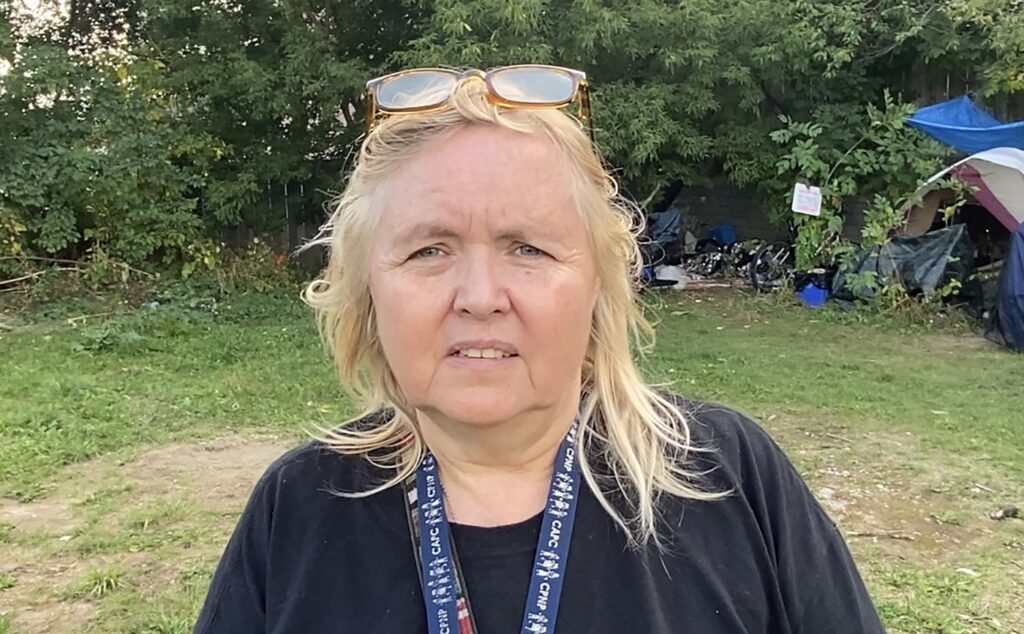
Christine Nayler, a 15-year-old mother, experienced profound heartbreak when her newborn daughter was taken from her after just four hours at a hospital near Newmarket, Ontario, in 1982. Nayler, who resided in Toronto at the time, had been sent to live with a relative to give birth, with the understanding that she was expected to return home without her child. Despite being pressured to give up her baby, Nayler held onto hope that her family would change their minds, but that hope was dashed.
Nayler later reflected on the moment she left the hospital without her daughter, claiming, "the day that I left the hospital without her was my death day because I feel like I died that day." She emphasized the emotional toll of having her child taken simply because of her age, stating that her experience drastically altered her worldview.
She is part of a larger group of unwed mothers within Canada who were coerced into giving up their children for adoption from the late 1940s to the 1970s. After decades of living with the pain of separation, Nayler initiated a petition directed at the federal government, asking for acknowledgment and an apology for its role in this unjust system. The petition has collected over 600 signatures nationwide and was recently presented in the House of Commons, requiring a government response within 45 days.
Nayler stated, "I want the government to acknowledge the harm that was done to us and the role that they played in it." The government, in response, expressed gratitude to those sharing their stories, acknowledging the persistent impact of forced adoption practices on mothers and their children. They highlighted current legal safeguards that protect against such practices occurring in the present day.
Liberal MP Karina Gould and Senator Chantal Petitclerc have also joined efforts advocating for a formal apology from Ottawa. At a recent press conference, Gould emphasized the need for public awareness about the estimated 300,000 women who faced forced adoptions during this period, labeling the apology as a crucial step towards justice and closure for affected families.
Petitclerc pointed out that systemic public policies and institutions played significant roles in these forced adoptions. Valerie Andrews, another advocate whose own child was seized at birth, noted that only a handful of institutions, including the Catholic archdiocese of Vancouver and the United Church of Canada, have issued formal apologies thus far. She urged the government to recognize and acknowledge the human rights abuses committed against unwed mothers.
Andrews highlighted her own academic pursuits, obtaining a PhD in women’s studies to research these forced adoptions and authored a book titled "White Unwed Mother: The Adoption Mandate in Postwar Canada," published in 2018. After years of separation, Andrews was reunited with her son, but her time with him was cut short when he passed away from cancer.
This movement for acknowledgment is not new; the Senate social affairs committee previously addressed the issue in a 2018 report, which the government responded to in 2019 by recognizing the associated trauma and outlining preventive legal measures. Former senator Art Eggleton, who participated in the investigation, spoke at the recent press conference, reiterating the importance of revisiting this subject to facilitate closure and potential counseling services for those affected.
Nayler’s personal narrative underscores the lasting scars left by forced adoption. Although she later married and had three more children, she remained emotionally tethered to her firstborn, praying for a reunion. Remarkably, they connected when her daughter turned 21, allowing them to build a relationship despite the years lost. Nayler conveyed the mutual trauma stemming from their separation and the difficulties they faced while getting to know each other.
While Nayler considers herself fortunate to have spent even a few hours with her child and eventually reunite, she recognizes the plight of other mothers who never had that opportunity. Many, she notes, did not even get to hold their babies, leaving them with a sense of grief that never fades. Her story, along with many others, advocates for recognition and reconciliation concerning the painful legacy of forced adoptions in Canada.








