

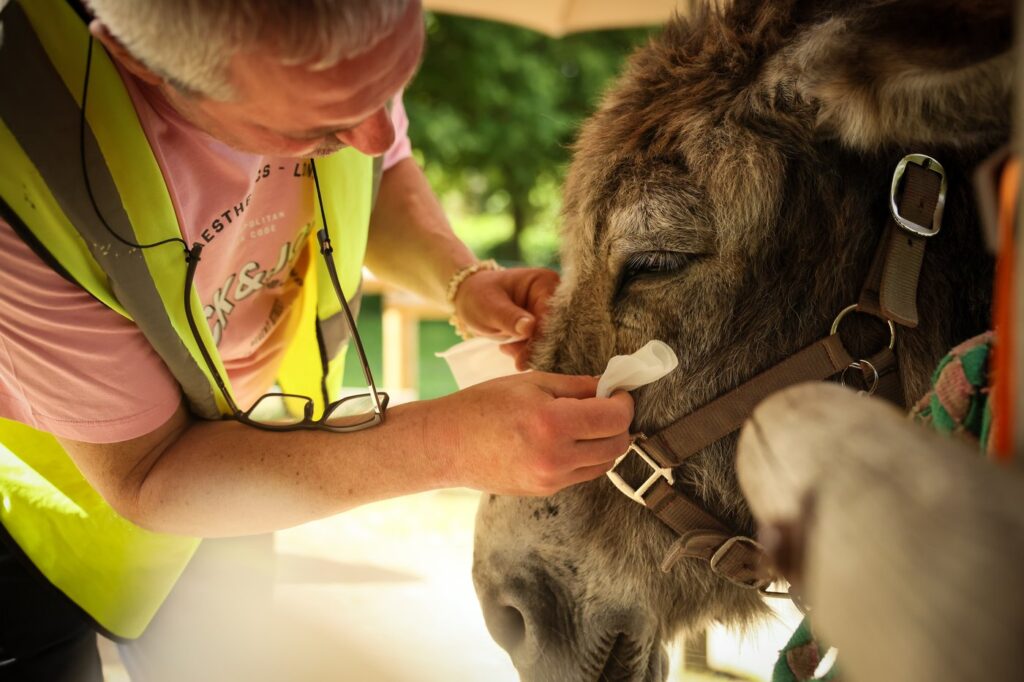
NEUILLY-SUR-MARNE, France (AP) – In an innovative approach to mental health treatment, therapy donkeys are aiding patients in their recovery at a psychiatric hospital unit located in Neuilly-sur-Marne, just outside of Paris. The facility, housed in 19th-century farm buildings surrounded by woods, provides a unique and tranquil setting within the Ville-Evrard hospital complex.
On a recent Friday, patients engaged in activities with five donkeys, taking them for walks and caring for them. Participants enthusiastically lifted the animals' hooves to clean them and ended their sessions with affectionate hugs. One patient, 60-year-old Nathalie, described the experience as “animal medicine,” stating that it brings relief and allows her to escape the burdens of daily life.
Nathalie shared her positive experience, explaining how the therapy facilitates a break from the routine of treatment and medication. Free of charge and funded by France’s public health system, the therapy sessions are designed to improve emotional well-being while fostering connections with the animals. Patients are typically assigned to one of the donkeys—Nono, Pitou, Oscar, Manolo, or Malraux—thus developing a bond with the animals over time.
Audrey Seffar, a nurse at the animal therapy unit, highlighted the significant progress that patients like Nathalie have made. She noted that Nathalie, who initially depended on a cart for mobility due to physical difficulties, was able to move freely alongside her donkey after just a few sessions. The animals serve as mediators, enabling patients to engage more fully in their own care.
Another patient, Jérôme, 52, emphasized the program's role in lessening feelings of loneliness. He mentioned that participating in activities he ordinarily wouldn’t engage in helps him navigate daily life better. Patients often report feeling good, calm, and relaxed after their interactions with the donkeys, reinforcing the therapeutic impact of the program.
The introduction of donkeys to Ville-Evrard hospital began in 2016, driven by the passion of nurses Ermelinda and François Hadey, who envisioned the benefits of animal therapy. Ermelinda was particularly keen on utilizing donkeys for their calm and social demeanor. Some therapy donkeys were rescued from shelters after experiencing neglect. François Hadey noted the intelligence of donkeys and their ability to connect with human emotions, labeling them as “emotional sponges.”
In 2022, the animal therapy initiative attained the status of a dedicated health care unit, which allowed the hiring of three full-time nurses. The program’s scope has since widened to include interactions with guinea pigs, chickens, doves, goats, turtles, and rabbits, with sessions tailored to meet individual needs. Smaller animals can also be brought to hospital rooms, further enhancing the therapeutic experience for patients.
Alicia Fabi, an 18-year-old nursing student, remarked on the positive effects of these outings, stating that they provide patients opportunities to step outside the hospital environment and engage in enriching interactions. The therapeutic activities also facilitate deeper connections between health care workers and patients, allowing for discussions that extend beyond the patients’ illnesses.
The staff emphasize that these sessions serve as a therapeutic intervention aimed at managing conditions such as anxiety, depression, autism, and schizophrenia. The activities foster emotional regulation, communication, social interaction, and self-esteem. Ermelinda Hadey explained that working with the animals can mirror patients’ own behaviors, enabling them to address personal habits concerning nourishment and hygiene.
Although many patients undergo intensive treatment, including the use of antipsychotic medications, the presence of animals can inspire motivation and re-establish feelings of self-worth. While the program does not replace traditional medical treatment, it is seen as a valuable complement to more conventional therapeutic approaches. The team is eager to conduct further research to formally recognize animal therapy as a legitimate form of psychiatric support, given the numerous positive testimonies from patients and caregivers alike.








