

On Thursday, the House of Representatives voted down a resolution that would have mandated President Donald Trump to withdraw U.S. forces from the ongoing conflict with Iran unless Congress provided authorization for military action. This decision marked another failed attempt to counter the President's military strategy, with Republicans predominantly supporting Trump's operations.
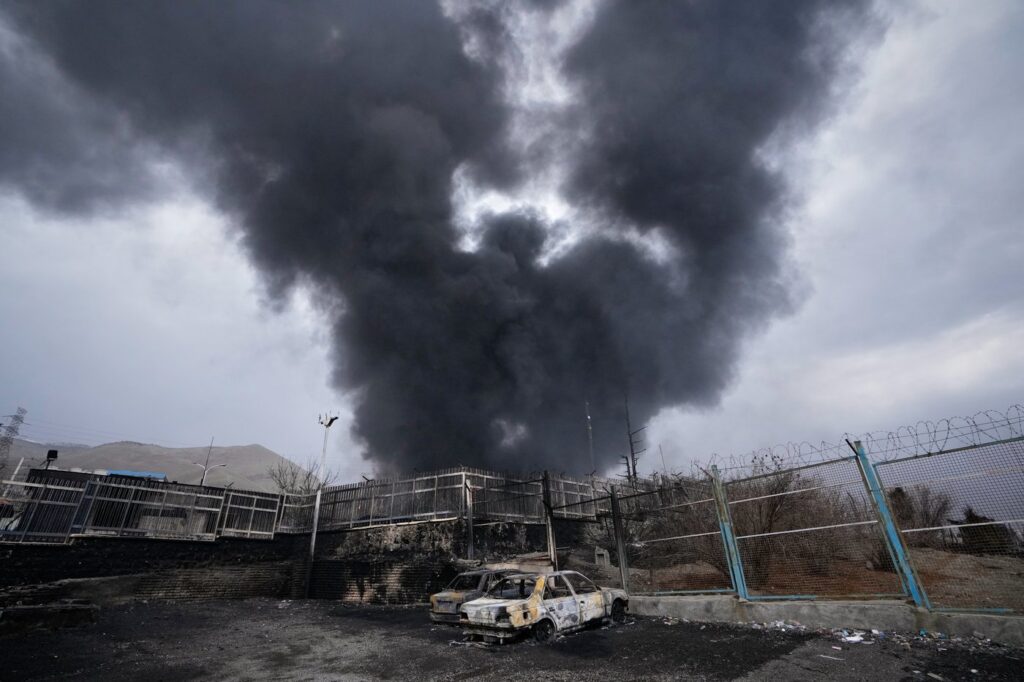
Democrats expressed alarm over the potential for the United States to become mired in a protracted conflict in the Middle East. They committed to persist in addressing the issue through additional votes on war powers in the forthcoming weeks. The vote concluded with a margin of 213-214, following a similar resolution's failure in the Senate the previous day. The situation has escalated since the U.S. and Israel conducted strikes against Iran on February 28, leading to a tenuous ceasefire that is currently in its second week.
The attempt to limit Trump’s military authority received substantial support from Democrats, who voiced concerns over the risk of escalating the conflict. "We’re standing at the edge of a cliff, and Congress must act before the president pushes off," asserted New York Representative Gregory Meeks, who serves as the ranking Democrat on the House Committee on Foreign Affairs. He emphasized the urgency of the situation, stating, "Every day we delay, we inch closer to a conflict with no exit ramp."
Republicans countered that the Democrats' stance was hypocritical. Florida Representative Brian Mast, the committee chairman, pointed out that Congress did not pass a war powers resolution when the United States retaliated against Iranian-backed Houthis in Yemen during President Joe Biden’s administration in 2024. He argued, "When Joe Biden was responding to merchant marine vessels being attacked, it was OK. No war power needed. It went on for about a year. President Trump responds — war power, war power, war power... That’s the hypocrisy."
According to the War Powers Act of 1973, Congress is required to declare war or authorize the use of military force within a strict 60-day timeline, a deadline that is approaching at the end of April in the context of the Iran war. While the law allows for a potential 30-day extension, lawmakers have made it clear that they expect the Republican administration to present a concrete plan for concluding the conflict soon.
Even though the House vote did not pass, it served as a platform for Democrats to underscore some of the adverse impacts of the war, such as the significant financial burden, the loss of at least 13 service members, rising gas prices, and tensions with traditional allies who oppose Trump’s military actions. Representative Pramila Jayapal of Washington noted, "Gas prices at home are up to $7 in my home state, and families are hurting. Another 10,000 U.S. troops are being sent in to join 50,000 already stationed in the Middle East with absolutely no strategy, no plan, and no exit."
In defense of Trump, Republicans highlighted his administration's decisive actions against an Iranian regime that has historically posed threats in the Middle East. South Carolina Representative Joe Wilson remarked, "President Donald Trump has sent a message that those who threaten the United States and our partners will be ultimately held accountable."
The initial House vote to curb Trump’s military actions took place in early March, resulting in a narrow defeat of 212-219.








