

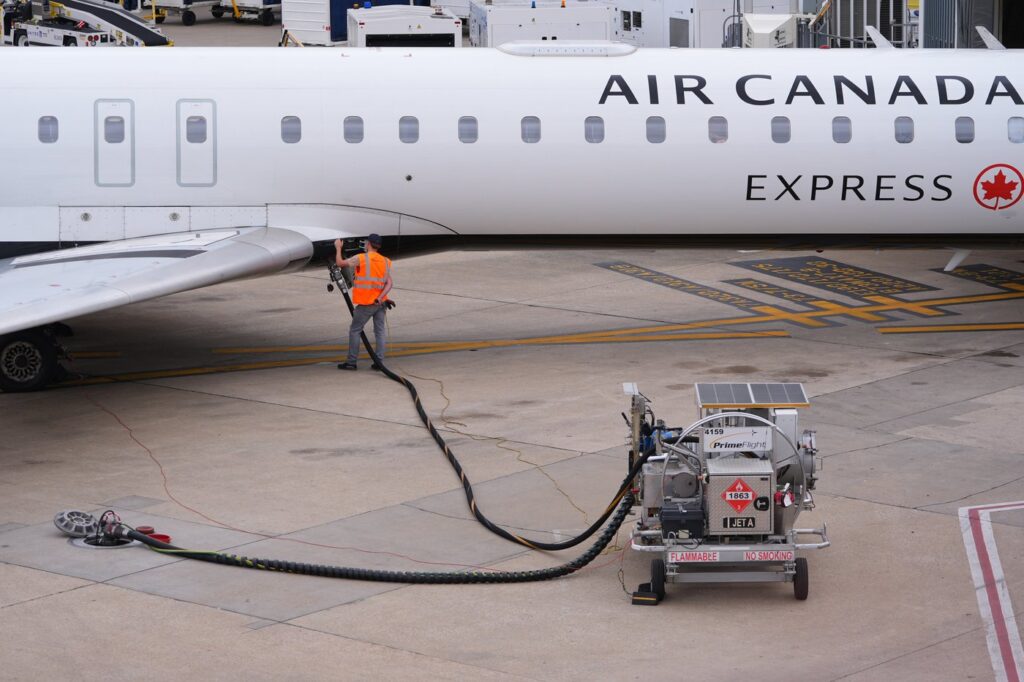
NEW YORK (AP) — Air Canada announced the suspension of its service to New York's JFK International Airport during the summer months, attributing the decision to jet fuel shortages caused by the ongoing war in Iran, which has significantly increased fuel prices.
The airline revealed that flights from Toronto and Montreal to JFK will be halted starting June 1 and are set to resume on October 25. However, Air Canada will continue its operations at the New York metropolitan area's other two airports: LaGuardia and Newark. The carrier has committed to reaching out to affected customers to provide them with alternative travel options.
A spokesperson for the Montreal-based airline remarked on the situation, indicating that jet fuel prices have doubled since the beginning of the conflict in Iran, leading to the infeasibility of some less profitable routes. As a result, Air Canada is making necessary adjustments to its flight schedule. According to Argus Media, the average price for a gallon of jet fuel surged to $4.32 as of Thursday, a stark increase from $2.50 on the day prior to the escalation of hostilities in Iran.
In an interesting turn of events, oil prices plummeted more than 10% on Friday after Iran announced that the Strait of Hormuz has reopened for commercial tankers that transport oil from the Persian Gulf to global markets. This could potentially ease some of the supply constraints that airlines, including Air Canada, are currently facing.
Fuel and labor costs typically rank among the largest annual expenses for airlines. For instance, Delta Air Lines has projected that the rise in fuel costs will increase its expenses by $2 billion for the second quarter. In response to soaring fuel prices, various airlines, such as JetBlue and United Airlines, are increasing baggage fees to help offset their rising operational costs, while others are reducing service availability.
In a recent exclusive interview with the Associated Press, Fatih Birol, Director of the International Energy Agency, expressed serious concerns regarding jet fuel supplies in Europe, stating that the continent may have only "maybe six weeks" of remaining reserves. Additionally, he warned that the global economy is currently facing its "largest energy crisis," underscoring the gravity of the situation as it relates to the aviation sector and beyond.
Amidst these challenges, airlines are forced to reassess their operational strategies in light of unprecedented fuel price hikes and supply shortages. The ongoing conflict in Iran continues to have widespread ramifications across various industries, particularly those reliant on stable fuel supplies. This scenario serves as a critical reminder of the interconnected nature of global events and their capacity to influence sectors such as air travel.








