

BEDZIN, Poland (AP) — A remarkable archaeological discovery in southern Poland has unveiled a secret bunker, an underground tunnel, and an armband emblazoned with the Star of David at a house in Bedzin. This location was once a refuge for Jews, including young members of the resistance, who sought to evade the Nazi regime during World War II.
Karolina Jakowenko, associated with the Cukerman’s Gate Foundation which organized the exploration, described the armband as a poignant symbol of the cruelty humanity can inflict upon others. She expressed that discovering such a relic felt like a “jolt” of historical significance.
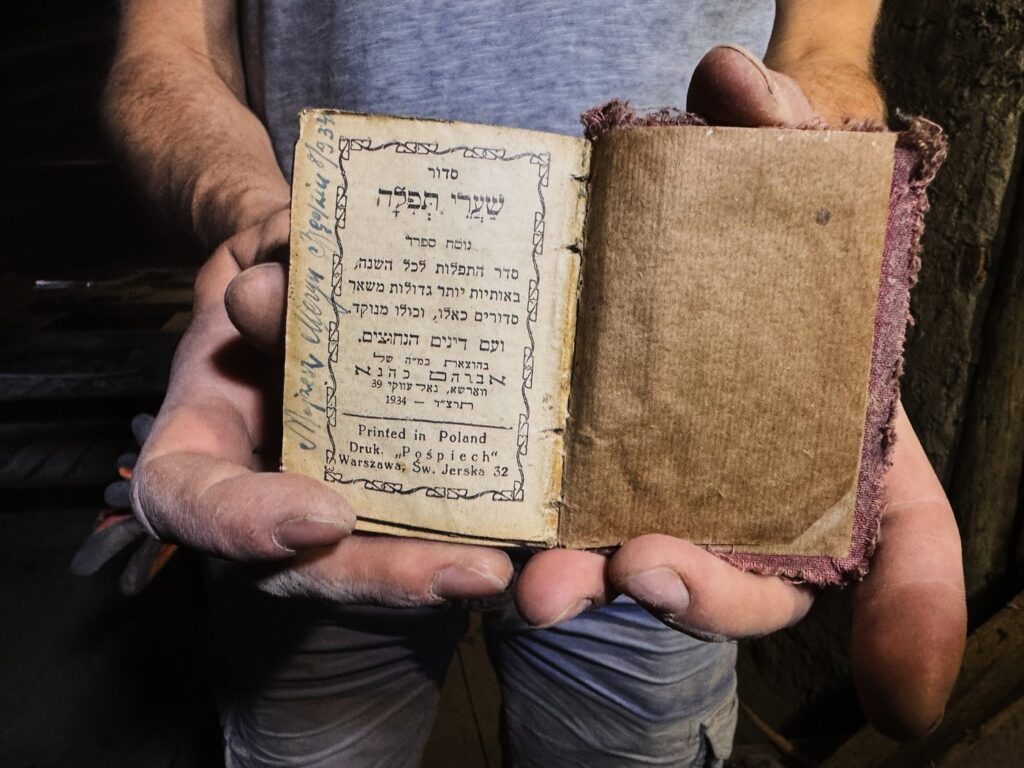
The redbrick two-story house is situated in what was once a Jewish ghetto during the war. It functioned as a “kibbutz” established by youth from left-wing Zionist groups. This network aimed to protect its members while providing an avenue for resistance against Nazi occupiers. Recent excavations led by Jakowenko and her colleagues uncovered multiple objects, including a Jewish prayer book dated back to 1934.
The Cukerman's Gate Foundation previously discovered a bunker and an underground tunnel on the property based on accounts from survivors and oral histories. Evidence indicates the presence of three bunkers within the vicinity. Piotr Jakowenko noted that one of the bunker entrances was cleverly concealed within the kitchen oven. It's believed that up to 60 individuals may have sought shelter there, although little is known about their fate following the Nazis' discovery of the site.
Finding these hideouts required a meticulous examination of the property. Volunteer Wojciech Mazan described the excavation process as physically demanding yet meaningful, drawing parallels between their efforts and the original resistance activities of the Jewish youth.
Before the war, Bedzin's Jewish population totaled around 27,000, comprising half of the town's residents. This community was among the most vibrant in Poland, with many families engaged in coal mining. In 1942, Nazi authorities formalized the establishment of ghettos for the Jewish populace. The house where Jakowenko and her team are currently working is becoming a significant site for understanding Jewish resistance during the Nazi occupation of Poland.
While the Warsaw Ghetto Uprising of 1943 is often regarded as the most famous act of Jewish resistance, numerous other groups across Poland also engaged in diverse forms of defiance. This particular house is set to become a notable landmark in European Holocaust history, according to Joanna Król-Komla from the POLIN Museum of the History of the Polish Jews in Warsaw. She emphasized the uniqueness of this location, highlighting that unlike many historic sites, here, the story is centered around the Jews who organized their hiding places.
During the turmoil of 1943, as the Nazis began dismantling the Bedzin ghetto, the Jewish resistance had managed to procure around 20 firearms to defend themselves, fully aware of the grim fates that awaited them. Some members, including Frumka Plotnicka, a vibrant female fighter from Warsaw, endeavored to rally support locally but lost her life in an unlocated third bunker.
The acts of resistance undertaken by Bedzin's Jewish population extended beyond armed conflict. Jakowenko noted that efforts to conceal family members or construct hideouts constituted resistance in its own right, highlighting the struggle for survival.
Amidst the historical backdrop of Holocaust awareness, Poland grappled with complex narratives involving Polish neighbors during the war. In Bedzin, however, local communities actively foster the town's Jewish legacy. Jakowenko expressed that this shared history brings meaning to the region, honoring the Polish family who lived alongside Jewish neighbors during the war, allowing children to play together despite the oppressive circumstances of the ghetto.
After the war, the Polish family chose not to obstruct access to the property, welcoming Jewish visitors intending to learn about its history. Recently, they sold the site to the Cukerman’s Gate Foundation, which aims to transform the house into a museum titled “the Bedzin Ghetto Fighters’ House.”








