

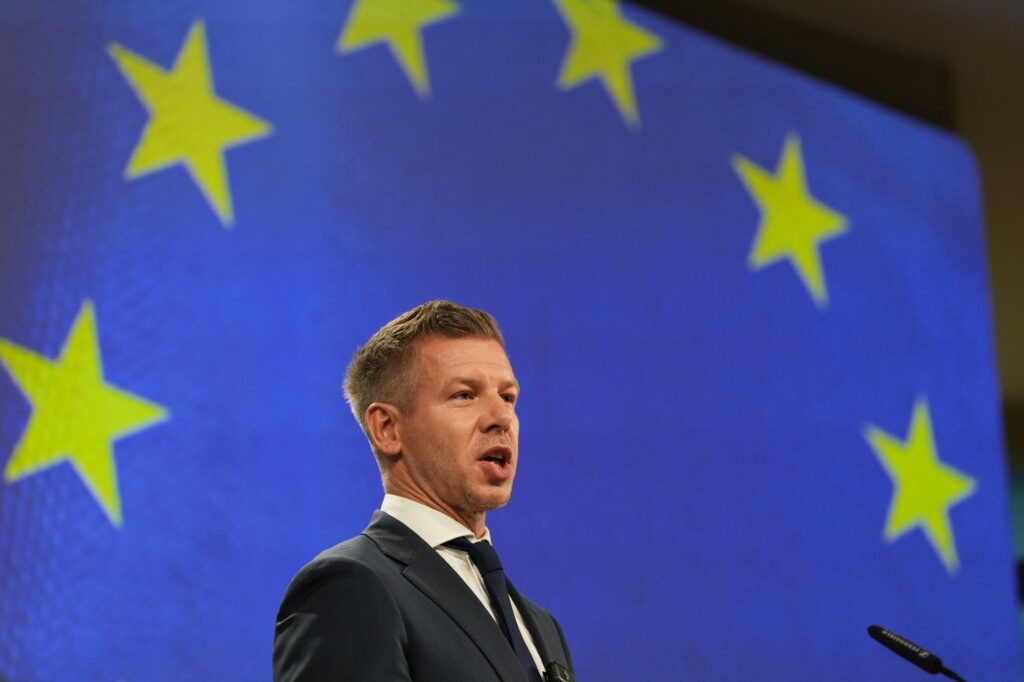
BUDAPEST, Hungary (AP) — Hungary's government is set to amend the constitution to remove the country’s president, Tamás Sulyok. This decision comes amid a broader effort initiated by the new Prime Minister Péter Magyar, who is determined to eliminate officials appointed during the tenure of former populist Prime Minister Viktor Orbán. Magyar and his Tizsa party achieved an overwhelming victory in the elections held in April and now hold a two-thirds majority in parliament, granting them the power to enact significant changes to the political system that Orbán built over his 16 years in power.
Following his electoral success, Magyar has been vocal in his calls for President Sulyok to resign or be removed through constitutional means. The Prime Minister had set a deadline for Sulyok to vacate his position by May 31, referring to him as “Orbán’s puppet.” While the role of the president in Hungary is largely ceremonial, the office holder possesses crucial responsibilities, including signing legislation into law and the authority to refer bills passed by parliament to the constitutional court for review. This capacity raises concerns among supporters of the new government about the potential for obstruction to Magyar's plans.
On a recent Monday, Magyar met with Sulyok at the presidential Sándor Palace. Following their discussions, the Prime Minister announced that Sulyok had declined to resign. Consequently, Magyar stated that he would instruct lawmakers from his party to initiate the necessary procedures to remove the president, a process he estimated would take around a month. During this announcement, Magyar emphasized, “Hungary does not belong to Tamás Sulyok, nor to Viktor Orbán. It doesn’t belong to a single party or political system.” He underscored the constitutional principle that the president is meant to represent the unity of the nation and uphold the democratic functioning of the state.
While specifics regarding the constitutional amendment to remove Sulyok were not provided, Magyar criticized the president for his inaction on various matters. He noted Sulyok's failure to speak out against Orbán's dehumanizing remarks aimed at political opponents and criticized the previous government’s legislation that banned LGBTQ+ Pride events. Magyar asserted that “it is in Hungary’s interest that this institution—the office of the president—regain the prestige that has been eroded by its silence and inaction.”
In response to Magyar's demands for resignation, Sulyok's office issued a statement indicating that such calls negatively impact both the constitutional functioning and the authority of the presidency. Furthermore, it was noted that Sulyok has requested a legal evaluation of the situation from the Venice Commission, an advisory body composed of legal experts linked to Europe’s top human rights organization, the Council of Europe. This development signifies a potential legal confrontation as Magyar’s administration moves forward with its plans.
The unfolding situation in Hungary highlights a critical shift in the nation's governance as the new leadership seeks to redefine the political landscape established by Orbán. With significant changes on the horizon, the political dynamics between the new government and the existing institutional frameworks will be closely watched both domestically and internationally.








