

The government of Ontario has decided to reverse its recent acquisition of a $29-million private jet intended for Premier Doug Ford. The announcement comes just days after the purchase of a 2016 Bombardier Challenger 650 jet was disclosed, drawing significant criticism from various quarters who labeled the expenditure as an irresponsible use of taxpayer money.
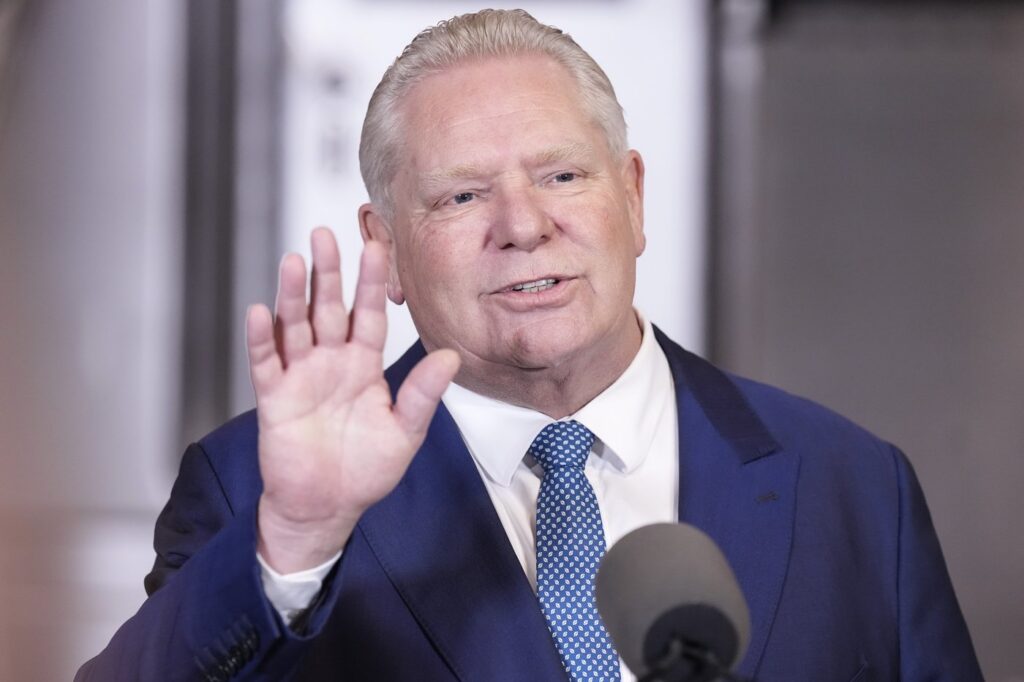
Premier Doug Ford acknowledged the backlash in a statement released on Sunday, affirming that the province is currently working with Bombardier and other stakeholders to sell the aircraft. “Despite the best of intentions, I have heard and agree that now is not the right time for the expense of a government plane,” he remarked. This statement reflects an apparent shift in the government’s stance in light of growing public disapproval.
Initially, Ford's office defended the purchase by arguing that the premier frequently travels for official duties and that the $28.9 million spent on the jet was still less than the $107 million spent by Quebec taxpayers for two new Challenger jets and a used one. However, opposition leaders quickly responded to this justification, criticizing the expense amidst ongoing economic difficulties faced by many Ontarians. New Democrat Leader Marit Stiles and interim Liberal Leader John Fraser referred to the jet as Ford’s "gravy plane," underscoring their disapproval of the lavish spending.
Fraser remarked that Ford's decision to sell the plane does not guarantee that taxpayers won't face financial repercussions. “Now, only after intense backlash, he’s scrambling to sell his gravy plane. But it could easily be sold at a loss and sit on the books as a liability for taxpayers for months,” he stated, casting doubt on the fiscal prudence of the purchase. Fraser also pointed to the government's controversial plans to modify freedom-of-information laws that would keep the premier's and his cabinet's records secret, raising further concerns about transparency.
The criticisms weren’t limited to political leaders. Noah Jarvis, the Ontario director for the Canadian Taxpayers Federation, expressed outrage over the decision to charge taxpayers for a private jet while the government is grappling with substantial debt. “It is completely unacceptable Ford is billing taxpayers for a private jet so he can fly around the province in luxury, especially when this government is borrowing billions of dollars this year and wasting more than a billion dollars a month on debt interest charges,” he stated.
In a previous instance in 2019, Ford had dismissed the notion of spending hundreds of thousands of dollars on a government plane. Over the years, he has utilized charter flights to the United States during official trips to promote Ontario and has frequently traveled within the province on smaller OPP aircraft. Furthermore, Ford has publicly acknowledged his trepidation about flying, specifically detailing his discomfort with turbulence in smaller planes, stating, “You hit wind turbulence, and you’re — at least my heart — it just drops, and you drop 100 feet, and you’re holding on for dear life,” revealing his personal anxieties about air travel.
This situation highlights the delicate balance between government expenditures and public perception, especially during times of economic hardship. It raises broader questions about fiscal responsibility and transparency in governance, particularly how public officials justify spending decisions that may appear extravagant to constituents feeling the pinch of rising costs. As the government seeks to rectify this situation, the implications of this decision will likely resonate within Ontario’s political landscape for some time.








