

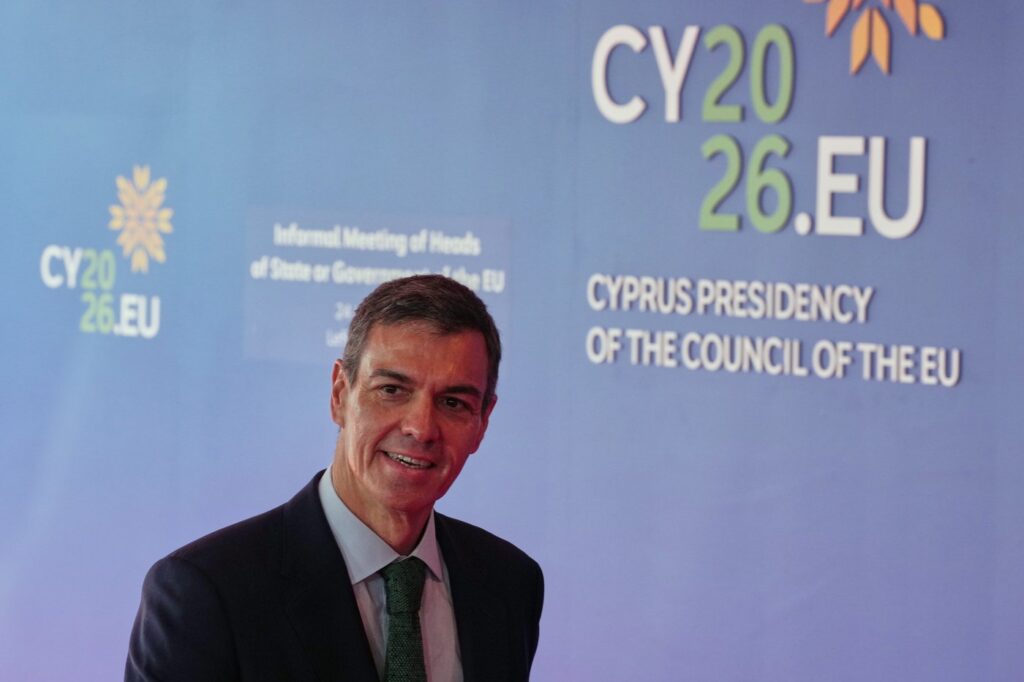
NICOSIA, Cyprus (AP) – Spanish Prime Minister Pedro Sánchez has opted not to engage in ongoing tensions with the United States concerning reports that the Pentagon is contemplating punitive measures against NATO members that do not support U.S. operations in the Iran war. This stance particularly affects Spain, which has recently rejected requests for U.S. forces involved in the conflict to utilize Spanish military bases or airspace, citing a belief that U.S.-Israeli actions contravene international law.
The Pentagon is reportedly considering suspending Spain from NATO, according to an unidentified U.S. official who referenced an internal email from the Defense Department, as reported by Reuters. Sánchez addressed the issue during a European Union summit in Cyprus, emphasizing, "Well, we do not work with emails; we work with official documents and positions taken, in this case, by the government of the United States." He reiterated Spain's commitment to "absolute collaboration with the allies, but always within the framework of international legality."
NATO functions on a consensus basis, and its founding treaty lacks provisions for suspending or expelling member nations. Members can only withdraw voluntarily after providing a year’s notice. While NATO itself does not have a defined role in the Iran war, it exists primarily to defend its territories.
U.S. President Donald Trump has expressed frustration about what he views as a lack of support from various NATO members in the Iran war, particularly regarding their contributions to securing the vital shipping routes in the Strait of Hormuz. This dissatisfaction has led him to question the value of U.S. involvement in the military alliance.
European Union foreign policy chief Kaja Kallas expressed confusion over the U.S. criticisms, particularly as the United Kingdom and France are leading initiatives aimed at maintaining maritime security in the region post-conflict. Kallas stated, "When we have had contacts with the American counterparts, then actually their asks for us have been exactly what we are able to offer after the cessation of hostilities," referring to discussions about activities such as demining and escorting ships.
NATO Secretary-General Mark Rutte has also highlighted concerns, stating that the United States expects its "long-standing arrangements and agreements with European allies on overflight, on basing" to be respected. His comments appeared to target specific allies, including Spain and France.
Despite Spain's restrictions on U.S. military operations related to the Iran conflict, American warplanes have accessed airspace and bases in other NATO countries for war-related activities. Tensions have escalated to the point where Trump has threatened to cut trade with Spain due to its refusal to grant access to military bases and airspace. Additionally, Spain has faced criticism from its allies for failing to increase its defense spending to levels meeting NATO expectations.
___
Menelaos Hadjicostis and Lorne Cook contributed to this report.








