

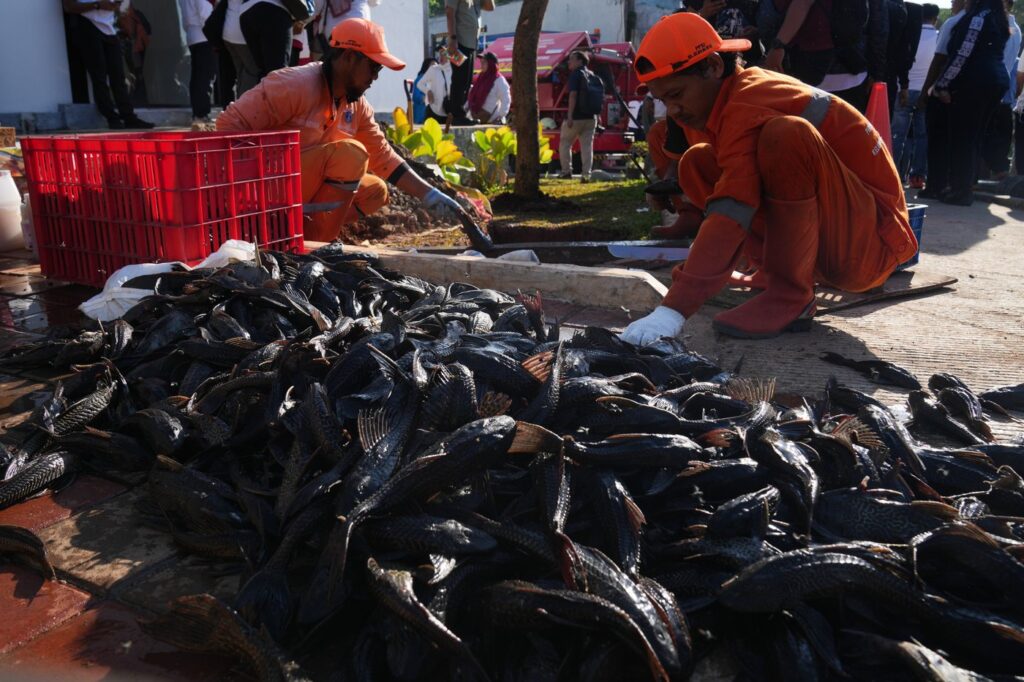
JAKARTA, Indonesia (AP) – In an effort to restore ecological balance, residents and city workers in Jakarta, Indonesia, celebrated the removal of invasive janitor fish from local waterways on Friday. This initiative aims to extract at least 10 tons (9 metric tons) of Pterygoplichthys, colloquially known as “sapu-sapu,” from the Ciliwung River and surrounding areas, which have suffered from severe pollution over the years.
Originally imported for aquarium use due to their algae-eating abilities, janitor fish were released into Jakarta’s rivers, where they have thrived in the polluted environment. These fish can reach lengths of up to 50 centimeters (nearly 20 inches) and have a life span of 10 to 15 years. Their presence is seen as a sign of deteriorating water quality, as they have adapted to conditions that many native species cannot survive.
Dian Rosleine, an ecologist from the Bandung Institute of Technology, noted that janitor fish serve as biological indicators of poor water conditions. The Ciliwung River once flowed with clear water from West Java’s mountains. However, urbanization has transformed it into a channel carrying untreated waste and industrial runoff, further exacerbated by concrete embankments that choke off its natural flow.
In response to the overwhelming population of janitor fish, Jakarta Governor Pramono Anung has mandated a city-wide cleanup operation that began last week. This comprehensive campaign spans across all five administrative cities of the capital, engaging hundreds of personnel including firefighters, disaster officers, and community volunteers. Within a week, they have successfully netted and buried over seven tons of janitor fish.
On Friday, a special cleanup at a 6-meter-deep (19-foot-deep) reservoir located in East Jakarta’s Ciracas neighborhood attracted curious onlookers as city workers collected approximately 320 kilograms (705 pounds) of the invasive fish. Piles of these wriggling fish filled red barrels, demonstrating tangible progress in the eradication effort.
According to Munjirin, the mayor of East Jakarta, the rapid reproduction rate of janitor fish has been detrimental to the ecosystem, preying on native species and causing structural damage to riverbanks. He emphasized that this coordinated operation marks the commencement of a sustained effort to regulate the species, which will include regular monitoring and ongoing removal to prevent further ecological harm.
However, the cleanup has raised ethical concerns, particularly regarding animal rights. The Indonesian Ulema Council (MUI) has expressed apprehension about the methods employed, urging that all fish be dead before being buried, citing that burying live fish could violate Islamic teachings. In response, authorities are re-evaluating their approach to ensure compliance with these concerns.
Although janitor fish are considered edible in some regions, heavy metal contamination in Jakarta’s waters prevents immediate approval for human consumption. Officials are now exploring alternative uses for the fish, such as processing them into animal feed or fertilizer. Governor Anung also suggested adopting Brazil’s practices, which involve converting the fish into charcoal for more practical economic benefits.
Experts, however, warn that merely removing the fish is not sufficient. Without significant improvements in wastewater management and pollution reduction efforts, the Ciliwung River risks returning to its prior polluted state. Dian Rosleine highlighted the urgent need for rehabilitation of the river, stating that targeting only the symptoms of ecological degradation without addressing its root causes will not lead to a sustainable solution.








