

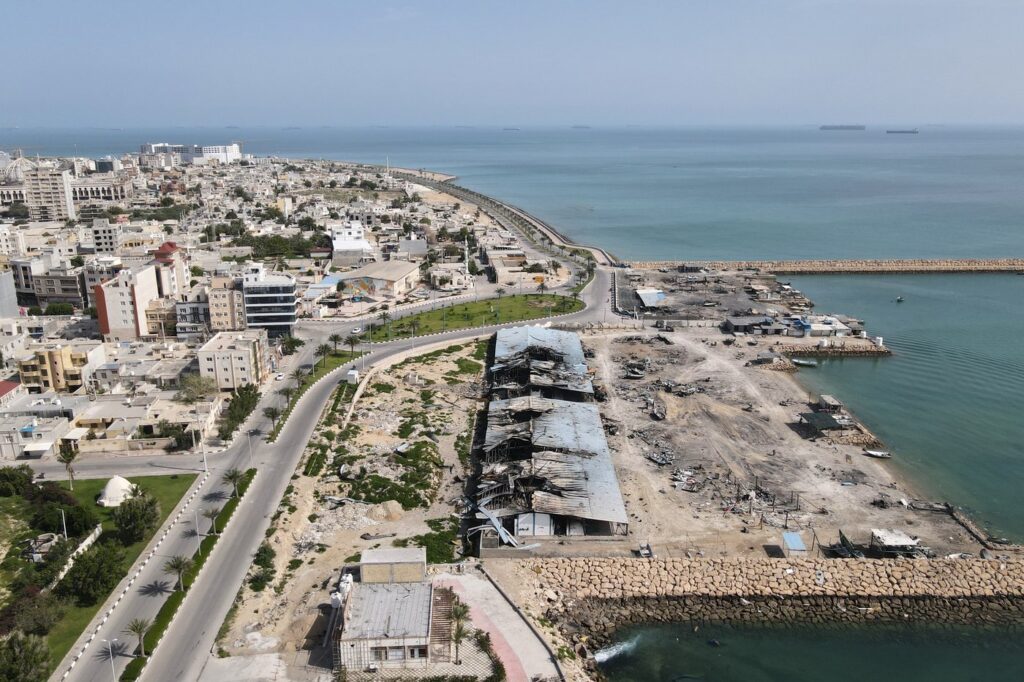
NEW DELHI (AP) – For the past eight weeks, Indian Capt. Rahul Dhar and his crew have been stranded on their oil tanker in the Persian Gulf, witnessing the ongoing conflict as the Strait of Hormuz remains effectively closed. The crew has attempted to maintain morale through routines and team activities, but the ongoing war has created substantial strain and tension among them as they observe drone strikes and missile interceptions nearby.
Despite a tentative ceasefire between the U.S. and Iran providing a glimmer of hope, uncertainty lingers regarding the war's conclusion. Dhar expressed that maintaining normalcy through daily conversations with family has been crucial in keeping spirits lifted. Moreover, the wider maritime community is facing similar challenges, with approximately 20,000 seafarers stranded on hundreds of vessels, unable to traverse the vital Strait of Hormuz, which typically facilitates about 20% of the world's oil and liquefied natural gas shipments.
According to maritime data firm Lloyd's List Intelligence, only about 80 vessels managed to pass through the strait during the week of April 13-19, down from previous levels of over 130 daily transits. The conflict has led to several attacks on ships, and the United Nations reports at least ten seafarers have lost their lives due to the violence. Despite President Donald Trump extending the ceasefire indefinitely, U.S. naval forces have maintained a blockade of Iranian ports, while Iranian forces have responded by firing at vessels in the strait and seizing two ships.
Capt. ArunKumar Rajendran, also stranded at sea, noted that seafarers are critical to global trade yet remain disproportionately affected by geopolitical conflicts. Manoj Kumar Yadav from the Forward Seamen's Union of India highlighted the gravity of the situation, with many seafarers trapped near Iranian ports like Bandar Abbas and Khorramshahr, experiencing isolation and fear as explosions occurred nearby. Yadav stated that the distress from crew members and their families has been a constant, with numerous sailors experiencing acute shortages of food and drinking water. Communication has proven challenging due to internet disruptions, leading to concerns among families about their loved ones' return.
Reza Muhammad Saleh, an Indonesian chief officer on a Greek-owned cargo ship, described several incidents involving nearby drone explosions and the constant uncertainty of when they would be able to navigate through the Strait of Hormuz safely. The vessel, which typically transports iron ore, is now halted until they receive explicit clearance from Iran. Saleh expressed frustration regarding the current situation, emphasizing how the crew, while experienced in conflict zones, has been on edge due to missile strikes and disrupted navigation services.
Regarding operational logistics, Fleet Management Limited regularly coordinates with several stranded vessels. CEO Capt. Rajalingam Subramaniam mentioned that while some crew changes occur, many crew members remain hesitant to join ships in such volatile conditions. Notably, many mariners did not anticipate being stationed in a conflict area, and thus it is essential to respect their concerns to avoid further distress.
In the broader context, Germany’s Hapag-Lloyd has approximately 150 sailors stranded in the region. A spokesman for the company acknowledged the difficulties, stating that while some crew rotations have taken place, the prolonged duration of the situation has inevitably led to a sense of monotony and heightened anxiety on board vessels. The International Maritime Organization has called for a safe corridor for commercial traffic in the Strait as Iranian authorities demand tolls for any vessel traversing the waterway while simultaneously laying mines.
As the maritime industry grapples with continued turmoil, experts warn that recent crises—including the impact of the COVID-19 pandemic and the geopolitical tension in Eastern Europe—may exacerbate the ongoing shortage of skilled seafarers. With numerous challenges already hindering recruitment, there are concerns that seafarers may be even less willing to engage in maritime work in high-risk areas once the conflict subsides.








