

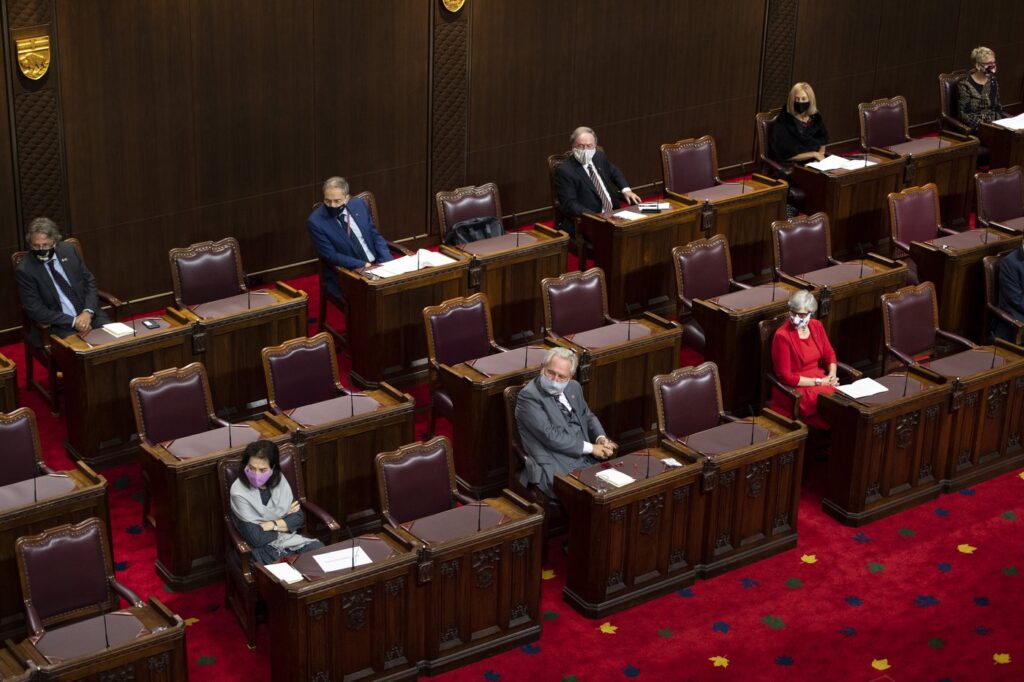
OTTAWA — Senators are expressing concern over the increasing number of vacancies in the upper chamber of Canada's Parliament as the process for appointing new members remains ambiguous. Currently, there are nine vacant seats in the Senate, with an additional six senators expected to retire by the end of 2026. Since taking office in spring 2025, Prime Minister Mark Carney has not made any appointments to fill these vacancies.
The federal government's website indicates that there are also 24 vacancies on the Independent Advisory Board for Senate Appointments, the body responsible for providing non-binding, merit-based recommendations to the Prime Minister regarding potential new senators. However, new applications and nominations for Senate appointments through the Independent Advisory Board's website are currently not being accepted.
Non-affiliated Senator Marilou McPhedran has voiced her conviction that the ongoing vacancies signify "the end of an era." She believes that this situation marks a shift away from a community-driven selection process that has kept the Prime Minister's Office's influence at arm's length. McPhedran worried that this trend could lead to a return to "cronyism," where appointments may be made based on political loyalty rather than merit.
McPhedran pointed out the efficiency associated with patronage systems and characterized Carney as "nothing if not efficient." Despite repeated inquiries from The Canadian Press regarding how the next appointments will be made, the federal government has remained largely silent since last May. Pierre Cuguen, a spokesperson for the Privy Council Office, had previously stated that information about Senate appointments would be made available "in due course."
McPhedran claimed that the Independent Advisory Board for Senate Appointments, which was established in 2016, has essentially been "dismantled." She expressed concern that the current state of vacancies renders the board non-functional, as the primary mechanism for individuals to apply to serve as independent senators has effectively been rendered impotent. According to her, what was already a shifting landscape in Senate appointments is now accelerating towards a less transparent and more politically motivated process.
As McPhedran prepares to retire from the Senate this summer, she expressed anger over the potential consequences of these changes on citizens across Canada. "My fear is about what’s going to show up three to five years from now as a result of what’s being done now in the Parliament of Canada," she said, highlighting a lack of serious attention to the risks posed to the democratic integrity of the nation.
Bernadette Clement, another independent senator, echoed concerns regarding the impact of the vacancies. She argued that having fewer senators tends to limit the diversity of perspectives representing various regions and provinces. Additionally, Clement raised concerns about racial representation, noting the palpable absence of diversity within the Senate chambers and committees. She stated, "When we don’t have a full roster or as close to a full roster as possible, I always feel like we have fewer perspectives from the region, the province that they represent."
Clement remarked that neither she nor her fellow senators have received clear answers about how appointments will be managed under the current Liberal government. "We are waiting to understand how that’s going to happen in the future, especially with the mounting number of vacancies," she said, acknowledging that while economic and affordability issues are pressing priorities, other significant areas risk being neglected.
This report emphasizes the critical discussions surrounding the Senate appointment process, reflecting the potential implications for representation and democratic governance in Canada amidst a backdrop of uncertainty and political change.








