

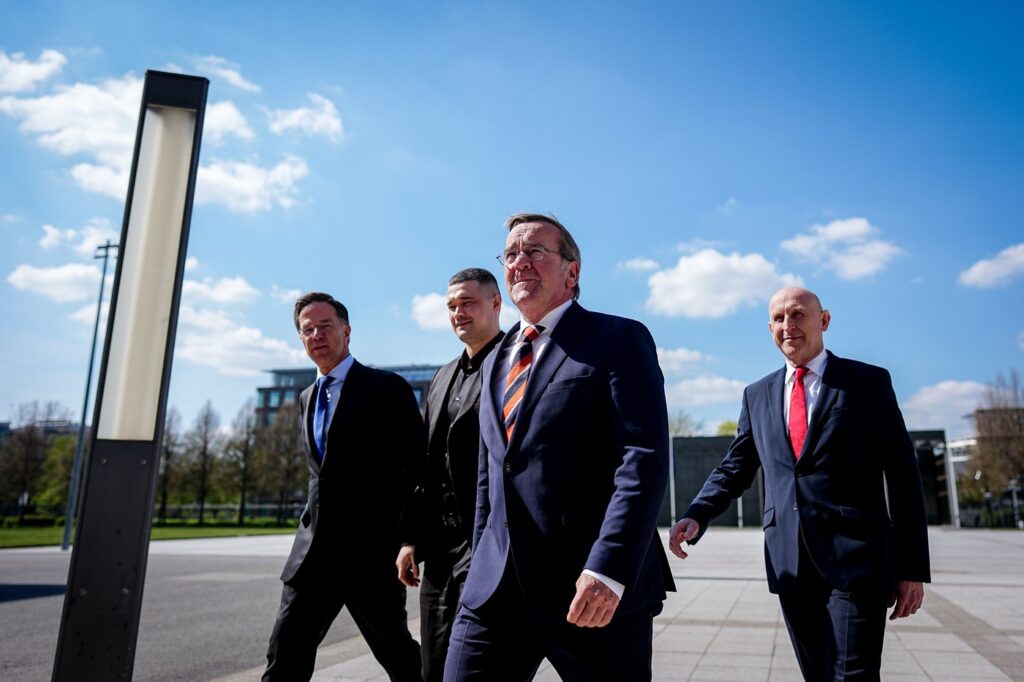
BERLIN (AP) — On Saturday, Germany's Defense Minister, Boris Pistorius, responded to a Pentagon announcement regarding the withdrawal of approximately 5,000 U.S. troops from Germany. He indicated that such a drawdown was anticipated and underscored the mutual advantages of the longstanding U.S. military presence in Europe, particularly in Germany.
Pistorius noted that Europe is increasingly aware of the necessity to enhance its security responsibilities within the U.S.-led NATO alliance, of which Germany is a crucial member. He emphasized that the presence of American soldiers in Europe is beneficial for both Germany and the United States. “The presence of American soldiers in Europe, and especially in Germany, is in our interest and in the interest of the U.S.,” he stated to the German news agency dpa.
The planned troop withdrawals, which are expected over the next six to twelve months, signal a notable downturn in U.S.-Germany relations amid a broader strain with European allies. President Donald Trump has previously expressed frustration regarding NATO allies' reluctance to support U.S. efforts against Iran and has criticized various European leaders, including German Chancellor Friedrich Merz and Spanish Prime Minister Pedro Sánchez.
In recent comments, Merz criticized the U.S. stance on Iran, claiming it has been “humiliated” by Iranian leadership and calling for a clearer strategy. Concurrently, Trump has accused the European Union of failing to uphold its trade deal commitments and announced plans to increase tariffs on cars and trucks imported from the EU to 25%, a move particularly detrimental to Germany's automotive industry.
The potential withdrawal of 5,000 troops represents about one-seventh of the 36,000 U.S. service members currently stationed in Germany, constituting a significant, though not critical, reduction in forces. The Pentagon has not provided specific details regarding which troops or operations would be impacted by this drawdown. Normally, around 80,000 to 100,000 U.S. personnel are stationed in Europe, depending on various operational factors. The U.S. military presence in Europe was bolstered in response to Russia's full-scale invasion of Ukraine in February 2022, a fact that NATO allies, including Germany, anticipated for over a year regarding potential withdrawals.
Pistorius reiterated the importance of European nations taking on greater responsibility for their defense, emphasizing recent actions by Germany to strengthen its military capabilities, expedite procurement processes, and develop infrastructure. NATO spokesperson Allison Hart stated that the alliance is collaborating with the U.S. to comprehend the specifics of the troop reduction decision, highlighting that this adjustment underscores the imperative for Europe to invest more in defense and contribute more significantly to shared security.
The decision to draw down troops follows a thorough review by the Pentagon and reflects the changing requirements and conditions in the operational theater. A U.S. defense official, speaking on the condition of anonymity, revealed that many military branches were not previously aware of the troop withdrawal decision and learned about it only recently. The majority of U.S. personnel in Germany come from the Army and Air Force.
Among the military infrastructure in Germany are several American facilities, such as the U.S. European Command headquarters, Ramstein Air Base, and a medical center in Landstuhl. The proposed withdrawal of 5,000 troops, equivalent to the size of a brigade combat team, would likely have limited effects on actual combat power; however, it sends a very different message regarding U.S. commitment to its allies. The only permanent brigade combat team stationed in Germany is the 2nd Cavalry Regiment, which plays a crucial role in deterrence strategies for both the United States and NATO.
Following the announcement, Republican leaders from both armed services committees in Congress expressed significant concerns over the troop withdrawal plan, arguing it could send the wrong message to Russian President Vladimir Putin. U.S. Senators Roger Wicker and Representative Mike Rogers also mentioned the cancellation of the planned deployment of the Army's Long-Range Fires Battalion, which was not addressed in the Pentagon's statement. They called for the Department of Defense to engage with Congress regarding any substantial changes to U.S. military posture in Europe.
Trump has long suggested reducing the American military presence in Germany, often voicing dissatisfaction with NATO's contributions to U.S.-led military efforts, including the conflict that escalated with U.S.-Israeli strikes on Iran in February 2026. NATO allies have been preparing for the possibility of a U.S. troop pullout since Trump's administration began, as the U.S. has warned that Europe must take more responsibility for its own security, including that of Ukraine.








