

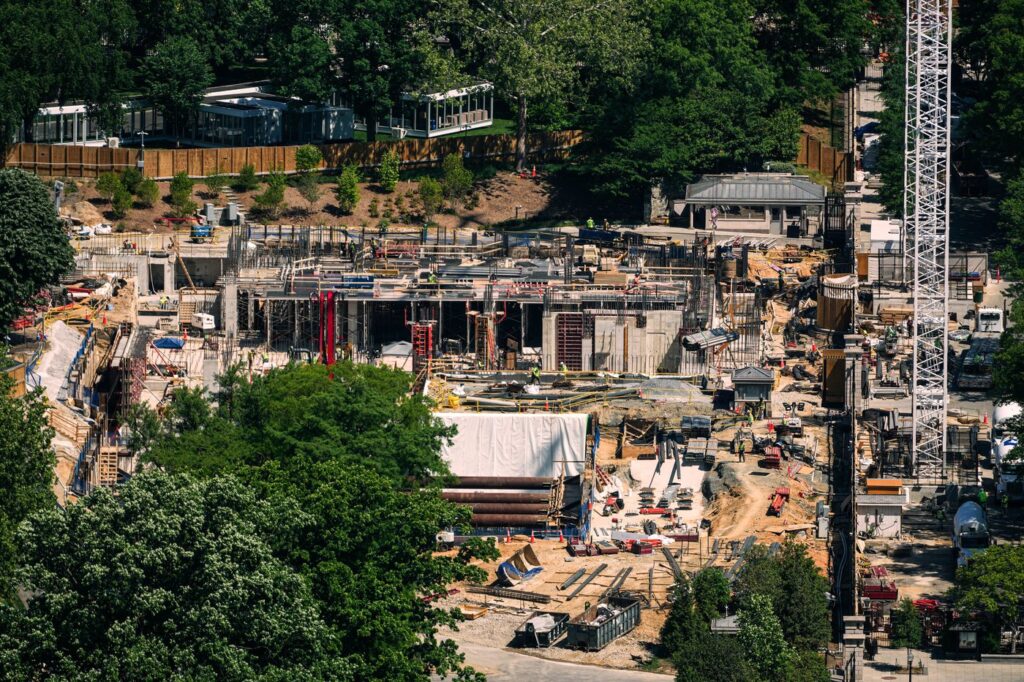
WASHINGTON (AP) — As Republicans return to Washington, they are confronted with significant scrutiny regarding a proposed $1 billion Senate security initiative. This funding could contribute to the construction of President Donald Trump's new ballroom, and Democrats have signaled their intention to oppose this development actively.
The Senate Republicans have earmarked funds for White House security within a broader spending bill designed to restore financing for immigration enforcement agencies that Democrats have impeded since February. The call for this considerable security funding emerged following an incident where an individual was accused of attempting to assassinate Trump at the White House Correspondents’ Association dinner in April.
To advance this spending legislation without democratic participation, Republicans are employing a partisan budget maneuver. However, Senate Democratic leader Chuck Schumer has communicated to his colleagues that Democrats will respond through alternative strategies. These may include urging the Senate parliamentarian to eliminate the ballroom security funding from the bill and proposing amendments that require Republicans to officially vote on it.
In a recent letter, Schumer criticized the Republican-led Congress for its intent to endorse an expensive party-line bill meant to divert taxpayer funds into what he described as a “rogue ICE operation” and the cost of the ballroom project. He asserted that this approach fails to address critical issues like the ongoing conflict in Iran or the escalating affordability crisis impacting working families.
The lack of consensus among Republicans regarding the proposed security funding remains apparent. The House has yet to release its version of the bill; however, the Senate's proposal is expected to be brought to a vote this week. Many GOP lawmakers have refrained from publicly voicing their opinions while out of Washington, yet certain members have expressed hesitance regarding support for the initiative.
Representative Rob Wittman, a Republican from Virginia, stated, “I’m going to look at it very carefully and make sure those things are in the national interest.” He indicated a desire to fully comprehend the nature of the expenditures proposed for security before making a judgment on the funding.
Trump estimated the ballroom's construction cost at $400 million, asserting that private funds would cover these expenses, but he has not specified the projected costs for security enhancements. The Senate bill stipulates that the allocated security funds would be directed to the U.S. Secret Service, aimed at facilitating “security adjustments and upgrades” associated with the ballroom project.
This initiative gained urgency following the incident involving Cole Tomas Allen, who was charged with invading the media dinner at the Washington Hilton while armed. The bill outlines that funding may enhance the ballroom project through "above-ground and below-ground security features," emphasizing that it will not finance non-security aspects.
Davis Ingle, a spokesperson for the White House, commended Republicans for integrating these long-overdue funds, asserting it would furnish the U.S. Secret Service with vital resources to secure the White House complex better, while also addressing critical operations for the agency. In court documents, the White House has articulated that the East Wing construction initiative will be “heavily fortified,” incorporating bomb shelters, military installations, and an underground medical facility within the ballroom. Trump has proposed features such as bulletproof glass and defenses against drone attacks.
Despite the ongoing plans for the ballroom, the National Trust for Historic Preservation has attempted to halt the construction through legal means; however, a federal appeals court has permitted the project to proceed for the time being.








