

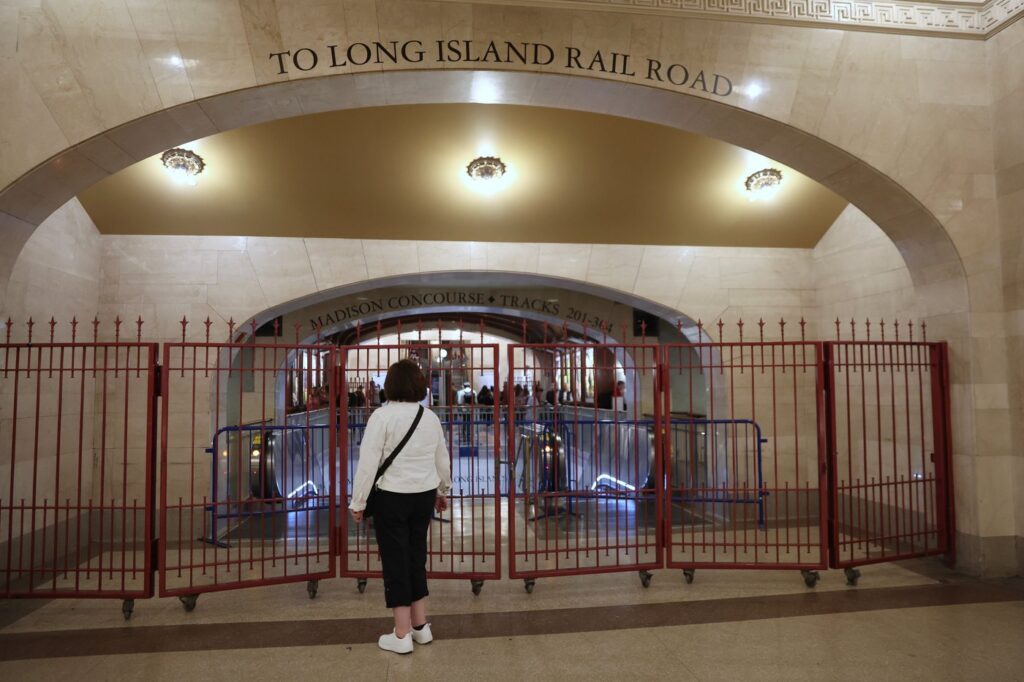
NEW YORK (AP) - On Sunday, New York Governor Kathy Hochul made an urgent appeal to unions representing workers of the Long Island Rail Road (LIRR), the largest commuter rail system in North America, to return to negotiations. With a strike already in its second day—the first in three decades—Hochul emphasized the impact on both the workers and the hundreds of thousands of commuters, stating that a prolonged strike could lead to significant losses.
“This is my official invitation. We didn’t want you to leave. You left. You’re welcome to come back. I’ll provide refreshments, whatever you like. Just c’mon back,” Hochul remarked during a news conference alongside the Metropolitan Transportation Authority (MTA) chief executive. She highlighted that the LIRR is essential for the daily lives of Long Islanders, asserting, “The bottom line is, no one wins in a strike. Everyone is hurt.”
The strike commenced just after midnight on Friday, resulting from five unions that represent nearly half of the workforce deciding to walk off the job after months of stalled contract negotiations. The unions stated they are not seeking special treatment but are striving to keep up with the rising cost of living in the New York region, particularly after not receiving raises for several years. The MTA, meanwhile, claimed to have met the unions’ demands regarding pay, implying that the unions were prepared to strike regardless.
Kevin Sexton, the national vice president of the Brotherhood of Locomotive Engineers and Trainmen, indicated that no new negotiations had been scheduled and expressed regret over the situation, noting, “We’re far apart at this point.”
This strike, marking the first walkout of LIRR workers since 1994, threatens to disrupt weekend events, including sports competitions involving the Yankees and Mets, as well as the Knicks' playoff games at Madison Square Garden, located above the railroad’s Penn Station hub in Manhattan. The usually bustling station was notably quiet, with only a few travelers seen navigating the main concourse as the LIRR services ceased.
As the strike continues, the MTA has started planning limited shuttle bus services to New York City subway stations. Hochul has also encouraged companies to allow employees to work from home, noting that it is impossible to fully replace the LIRR service. “Please do so,” she urged regular commuters who had the option to work remotely, especially with the impending workweek.
The negotiations had previously been influenced by attempts from the Trump administration to mediate a settlement, which ultimately failed, resulting in the unions being legally entitled to strike at 12:01 a.m. on Saturday. The unions, representing locomotive engineers, machinists, signalmen, and other train workers, are advocating for stronger salary increases due to the effects of inflation and increased living costs.
As the strike drags on, approximately 250,000 LIRR passengers who rely on the system for their daily commute will face significant disruptions, potentially forcing them to navigate the already congested roadways of Long Island to reach New York City. Hochul shifted some blame to the previous administration for condensing mediation efforts, while Trump publicly rejected any responsibility, countering Hochul's claims by stating, “No, Kathy, it’s your fault, and now looking over the facts, you should not have allowed this to happen.”
As frustration mounts, both parties remain at an impasse, with the MTA insisting that fulfilling union demands would necessitate fare increases and would complicate ongoing negotiations with other unionized workers. With tensions high and no resolution evident, the future of LIRR operations remains uncertain.








