

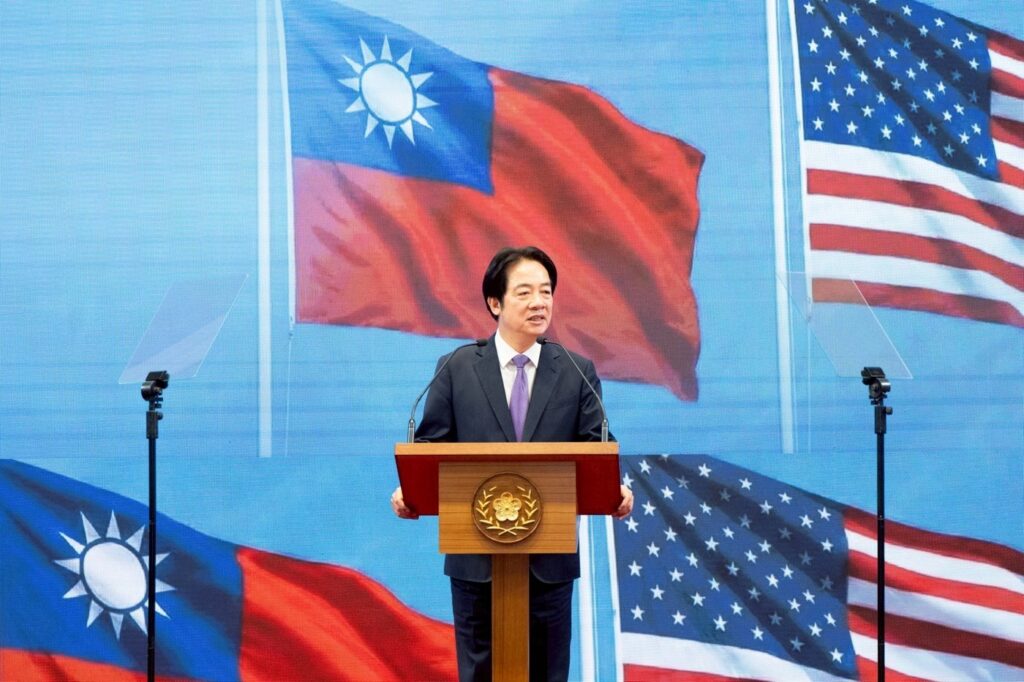
TAIPEI, Taiwan (AP) – Taiwan's President Lai Ching-te emphasized the critical role of arms purchases from the United States in deterring regional conflict and maintaining stability. His remarks come in the wake of comments made by former President Donald Trump, who recently expressed uncertainty regarding continued U.S. support for Taiwan following his visit to China.
President Lai highlighted that U.S. arms sales to Taiwan and collaborative security measures are essential not just under existing law but also as pivotal elements in promoting peace throughout the region. He appreciated Trump for his ongoing commitment to peace in the Taiwan Strait since his initial term, particularly referencing the sizeable increase in arms sales to Taiwan over the years.
These comments emerged just days after Trump questioned the future of U.S. arms sales to Taiwan. The island, regarded as a democracy by its residents, is claimed by China as its own territory, with Beijing asserting it has the right to reclaim the area through force if necessary. The U.S. does not officially recognize Taiwan as a sovereign nation, yet it has stood as the island's most reliable ally and primary supplier of military equipment, adhering to its legal obligation to ensure Taiwan's self-defense.
Earlier in December, Trump authorized a landmark $11 billion arms package for Taiwan, which included various military technologies such as missiles, drones, artillery systems, and software. However, during an interview on Fox News, Trump indicated that he had yet to authorize a proposed $14 billion arms package, suggesting that such a decision would depend on China's actions. He referred to the potential arms package as “a very good negotiating chip for us.”
Trump's remarks have raised alarm on the island, prompting the Taiwanese government to reassure citizens that U.S. policies toward Taiwan remain unchanged. President Lai reaffirmed Taiwan's stance, stating that while the island will not provoke conflict or escalate tensions, it will adamantly defend its national sovereignty and democratic values despite external pressures. He characterized China as the central factor undermining peace and stability in the region, as well as trying to alter the current status quo.
On domestic political fronts, U.S. House Speaker Mike Johnson expressed support for Lai's statement, highlighting the importance of standing firm against any attempts by China to assert territorial claims. Johnson emphasized that it is unreasonable for China to attempt to seize land and pledged strong support from Congress.
Meanwhile, U.S. Trade Representative Jamieson Greer commented that the Biden administration is reviewing its strategy concerning arms sales to Taiwan. He acknowledged that previous U.S. presidents have reconsidered arms transactions in the past, stating that President Biden would need to evaluate multiple factors before making decisions related to national security, which ultimately prioritize American interests.
China has consistently stated that Taiwan is the most pressing issue in China-U.S. relations, a sentiment reinforced during recent communications between Chinese President Xi Jinping and Trump. In a stern warning, Xi cautioned Trump about potential “clashes and even conflicts” if the Taiwan situation is mismanaged.
Since 1949, China and Taiwan have operated independently following a civil war that resulted in the Communist Party taking power in Beijing. The defeated Nationalist Party retreated to Taiwan, where the island underwent significant changes, eventually transitioning to a multiparty democracy.








