

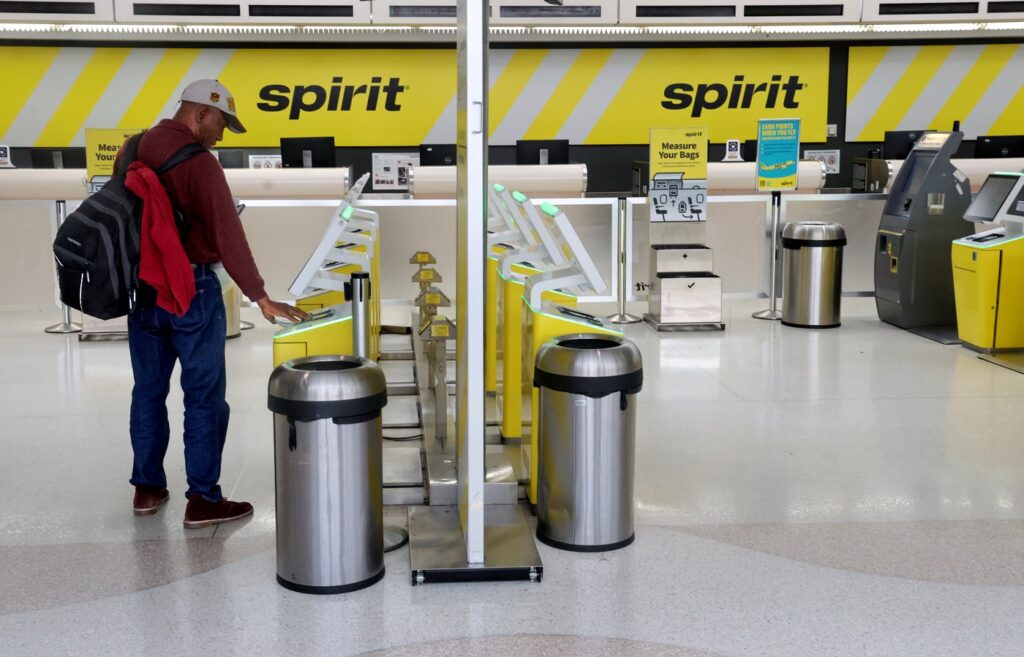
Days after Spirit Airlines abruptly ceased operations, a lawyer for the now-defunct budget airline appeared before a bankruptcy judge to express remorse, particularly towards price-sensitive customers who may struggle to find affordable flights without Spirit’s presence. Marshall Huebner, the attorney, acknowledged the passengers who relied on the airline during its 34-year history, emphasizing that many could not otherwise afford air travel.
On May 3, 2026, Spirit Airlines shut down, coinciding with rising challenges for travelers just as the summer travel season began in the U.S. on Memorial Day. Rising jet fuel costs, influenced by the conflict in Iran, have resulted in increasing airfare and additional fees across the aviation industry. Notably, two remaining budget airlines recently finalized a merger amidst this turbulence.
The current landscape for affordable air travel underscores the difficulties faced by low-cost carriers, squeezed by volatile fuel prices, inflation, and escalating competition. While budget airlines previously gained traction by offering lower fares compared to traditional airlines, their competitive edge has diminished as the 'big three' - American, Delta, and United - enhance their pricing strategies. These traditional carriers can generate additional revenue through premium services, memberships, corporate travel programs, add-on charges, and sophisticated pricing algorithms.
Shye Gilad, a former airline captain now at Georgetown University, remarked, “Dynamic pricing has taken away one of the last structural advantages that low-cost carriers had.” Traditionally, budget carriers thrived due to their low fares; however, as major airlines improved their pricing tactics, they could offer competitive base fares alongside standard and premium ticket prices, making it challenging for budget airlines to compete solely based on price.
Additionally, the surge in jet fuel prices, exacerbated by the Iran conflict, led the Association of Value Airlines, representing multiple budget airlines, to request $2.5 billion in emergency aid from the Trump administration in late April. However, Airlines for America, which advocates for larger airlines, opposed this request, suggesting that federal support for budget carriers would disadvantage those airlines that had implemented self-help strategies to manage rising costs.
The day Spirit ceased operations, Transportation Secretary Sean Duffy rejected the aid request. Even prior to the fuel price surge, there were signs of consolidation occurring within the budget airline market. For instance, Alaska Airlines completed a $1 billion acquisition of Hawaiian Airlines in September 2024, while Allegiant recently finalized a $1.5 billion acquisition of Sun Country Airlines, announced in January. The merger is expected to integrate passenger services with Sun Country’s cargo and charter operations.
Experts indicate that this consolidation might highlight weaknesses within the industry. Gilad explained that eliminating a competitor and improving product offerings could yield higher profits. Furthermore, despite being categorized as budget airlines, there exists a vast diversity within this sector, from struggling airlines like Spirit to established carriers like Southwest Airlines, which has grown significantly since its inception.
Vikrant Vaze, an aviation expert from Dartmouth College, noted that while budget airlines can be grouped under a broad term, they exhibit distinct business models and resilience against fuel cost volatility. For example, Allegiant targets leisure travelers at smaller airports facing less competition, while JetBlue operates with a hybrid low-cost model emphasizing premium seating and loyalty perks.
Meanwhile, Frontier Airlines, which operates similarly to Spirit, is poised to benefit from Spirit’s exit as it expands into markets previously dominated by Spirit, including Las Vegas, Detroit, and several Florida cities. Gilad draws parallels between today's budget airline landscape and that of his past experiences with Independence Air, a low-cost airline that collapsed during a similar period of rising fuel prices and market volatility.
Overall, the challenges faced by budget airlines in today's economic environment reflect ongoing structural pressures, suggesting a potentially difficult future for this segment of the airline industry.








