

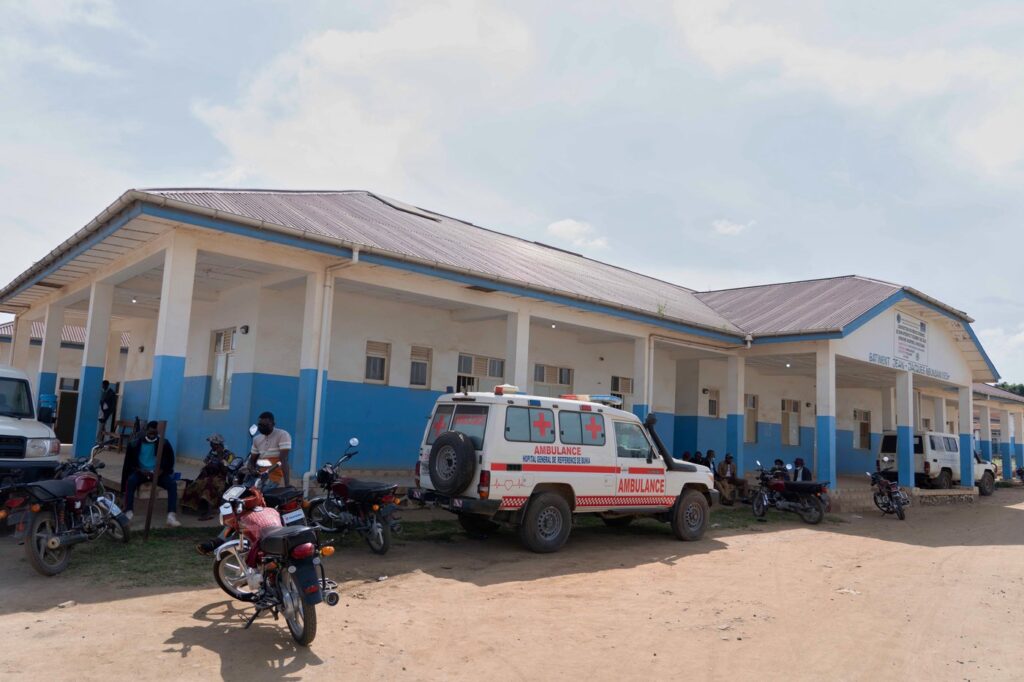
DAKAR, Senegal (AP) — The Congolese health minister, Samuel Roger Kamba, announced the establishment of three treatment centers in the Ituri region of eastern Congo as the country grapples with an ongoing Ebola outbreak. His announcement came during a visit to Bunia, the capital and the largest city in Ituri, on Sunday evening. Kamba acknowledged the strain on local hospitals due to the influx of patients, stating, “We know that the hospitals are already under stress because of the patients.” He emphasized the necessity of expanding capabilities through the new treatment centers.
On the same day, the World Health Organization (WHO) classified the Ebola outbreak as a public health emergency of international concern. This decision followed the report of more than 300 suspected cases and 88 confirmed deaths in Congo, along with two deaths in neighboring Uganda. While the outbreak primarily affects the Ituri region, cases have also emerged in Kinshasa, the capital of the Democratic Republic of the Congo, and Goma, the largest city in eastern Congo.
In a separate announcement, the WHO Regional Office for Africa reported the arrival of a 35-member team of experts from both the WHO and the Congolese Ministry of Health in Bunia. They arrived equipped with 7 tons of emergency medical supplies and equipment, aimed at addressing the urgent needs arising from the outbreak.
Ebola is known for its high contagion rates and can be transmitted through bodily fluids including vomit, blood, and semen. Although rare, the disease it causes is severe and often fatal. The WHO's emergency declaration serves to encourage donor agencies and countries to mobilize resources swiftly. According to the WHO, the situation is serious, there is a potential risk of international spread, and a coordinated international response is essential.
Jean Kaseya, Director-General of the Africa Centre for Disease Control and Prevention, expressed urgency regarding the current crisis. He stated, “Currently I’m on panic mode because people are dying; I don’t have medicines, I don’t have vaccine to support countries.” He highlighted the need for collaboration and mentioned that he had called for a meeting with partners to discuss available candidate vaccines and medications, with hopes of acquiring solutions in the forthcoming weeks.
The current outbreak, which was first confirmed on Friday, is attributed to the Bundibugyo virus—a rare strain of the Ebola virus that lacks approved treatments or vaccines. Although Congo and Uganda have experienced over 20 Ebola outbreaks historically, this is only the third recorded occurrence of the Bundibugyo virus. The virus was first identified in Uganda's Bundibugyo district during a significant outbreak from 2007 to 2008, which resulted in 149 infections and 37 fatalities. The second occurrence was in 2012 in Isiro, Congo, where 57 cases and 29 deaths were reported.
The ongoing situation underscores the critical need for international cooperation and the mobilization of resources to combat this deadly outbreak effectively.








