

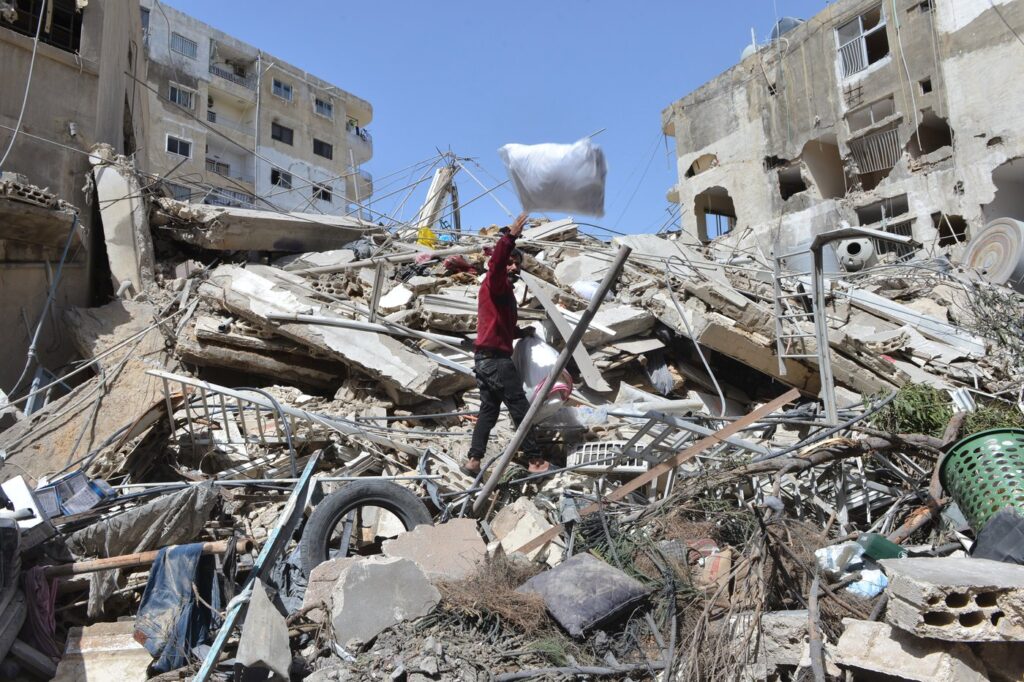
BEIRUT (AP) – The death toll in the ongoing conflict between Israel and the Iranian-backed militant group Hezbollah in Lebanon has surpassed 3,000, as reported by Lebanon's health ministry on Monday. The ministry stated that the current toll stands at 3,020 individuals killed due to Israeli airstrikes, including 292 women and 211 children.
The hostilities ignited on March 2 when Hezbollah began firing toward Israel, following a two-day military offensive by the United States and Israel against Iran. Despite a fragile ceasefire, combat operations have persisted, with Israel stating their military objectives are focused on dismantling Hezbollah's rearmament efforts.
Israeli forces have invaded southern Lebanon and conducted extensive bombardments in Beirut and surrounding areas. The violence has led to the displacement of over a million people in Lebanon, with many seeking refuge in makeshift tents along roads and coastlines in Beirut. Meanwhile, Israel faces ongoing threats from Hezbollah drone attacks targeting its military positions and towns in northern Israel.
Israeli airstrikes on Lebanon continue daily, even amidst ongoing negotiations in Washington aimed at achieving a ceasefire, which started on April 17 and has been extended into June. Israeli troops maintain a significant presence in southern Lebanon, despite Hezbollah's refusal to engage in the negotiation process. Instead, Hezbollah expresses allegiance to Iran, which is conducting its own discussions with the United States, mediated by Pakistan.
As hostilities persist, Israeli military spokesperson Avichay Adaree has urged residents in areas near the southern coastal city of Tyre to evacuate in anticipation of airstrikes. In a related incident, the militant Palestinian Islamic Jihad group reported that one of its officials and his daughter were killed in an Israeli strike on their home in Baalbek, a city near the Syrian border.
Israeli officials emphasize the disarmament of Hezbollah as a key aim of the negotiations, framing it as a step towards potential normalization of diplomatic relations. Conversely, Lebanese officials are pursuing a security agreement or armistice that stops short of normalization, prioritizing the withdrawal of Israeli troops from Lebanon while also committing to the disarmament of Hezbollah.
Despite continued military actions, the two sides agreed to extend the ceasefire by an additional 45 days. Military delegations from both countries are set to engage in direct talks on May 29. U.S. President Donald Trump has publicly advocated for a meeting between Israeli Prime Minister Benjamin Netanyahu and Lebanese President Joseph Aoun. However, Aoun has declined to visit Washington for direct discussions with Netanyahu, a move likely to incite backlash in Lebanon due to public opposition to negotiations with Israel.
Since the escalation of hostilities, Israel has reported the deaths of 20 soldiers, two civilians within Israel, and a defense contractor in southern Lebanon. The U.N. peacekeeping forces stationed in southern Lebanon have also been affected by the violence, with six personnel reported killed amid the ongoing conflict.








