

PORTLAND, Ore. (AP) On Tuesday, Oregon voters will face a primary ballot marked by the presence of well-financed Democratic incumbents aiming to fend off lesser-known challengers, while Republicans are striving to nominate candidates capable of competing in November within this predominantly blue state.
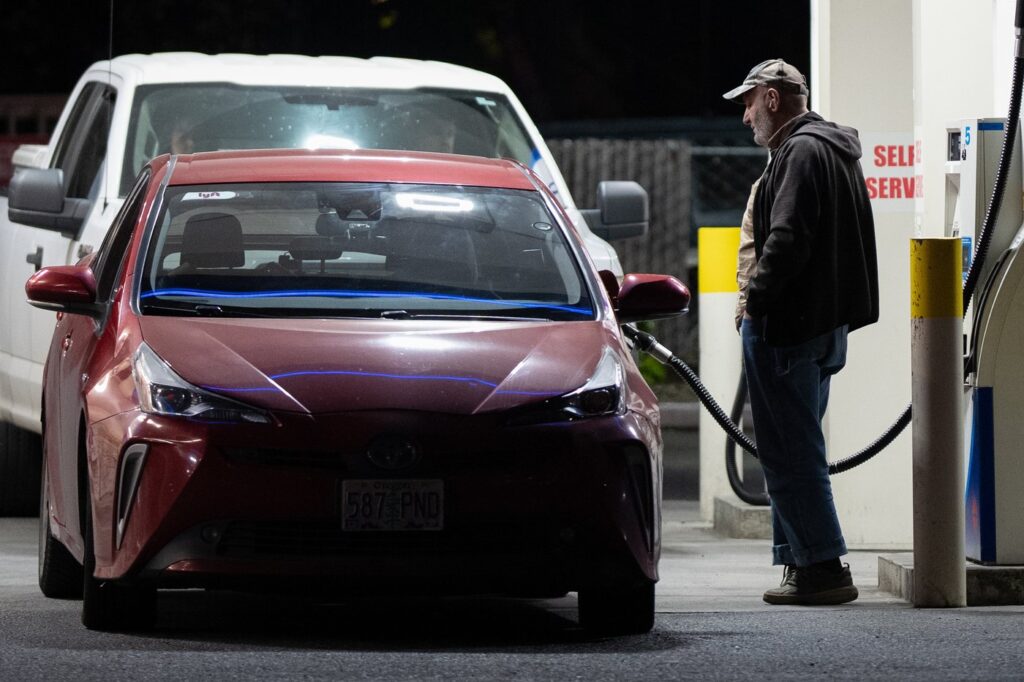
Central to the drama of Election Day is more than just candidate races; it revolves around a significant referendum aiming to repeal a bill enacted by the Democratic-controlled Legislature last fall. This legislation, which raised the state gas tax and increased several fees, was intended as a response to bolster Oregon's transportation budget amidst a projected decline in gas tax revenue due to the increasing prevalence of fuel-efficient, electric, and hybrid vehicles. The gas tax, now being raised from 40 cents to 46 cents per gallon, is vital for funding road repairs and upgrades.
The ballot measure, referred to as Measure 120, arrives at a time when gas prices are soaring nationwide, largely due to the ongoing war in Iran. Oregon's Democratic Governor, Tina Kotek, along with other party lawmakers, has expressed skepticism about the likelihood of the measure's passage, acknowledging the challenges presented by the current economic climate where voters are disinclined to approve any additional tax increases. A ‘yes’ vote endorses the gas tax increase, while a ‘no’ vote opposes it.
Democratic state Representative Paul Evans remarked, "It’s going to lose, so we might as well get on to the work of finding alternatives," indicating a pessimistic outlook regarding the measure. Following the passage of the tax and fee increases, representatives from the Republican Party quickly mobilized to circulate petitions for repeal, successfully amassing over three times the signatures needed to place the measure on the ballot.
Republicans are seizing this opportunity to counter the national messaging from Democrats surrounding affordability and the cost of living as they head into the midterm elections. State Senator Bruce Starr, who has taken a leading role in campaigning for the referendum, stated, "Oregonians are paying more today and not getting more in return. So are they going to, at the polls, vote to increase the price of gas another six cents? I doubt it."
Under the Democrats' transportation funding initiative, various fees associated with payroll taxes for transit projects and vehicle registration fees will also see increases. Anecdotal responses from voters reveal a split perspective; while some recognize the necessity for enhancing road upkeep funding, others are firmly opposed to any tax hikes during economically challenging times, as expressed by voter Josh Hansen, 39, who noted, "At a time when everything is more costly… nobody wants to pay more for anything."
While Kotek and other Democrats attempt to correlate rising gas prices to decisions made at the federal level by former President Donald Trump, they have not made concerted efforts to rally support for the gas tax increase on the ballot. If approved, the tax hikes would be effective 30 days post-approval by voters. Trump himself has suggested a federal gas tax suspension, which would require Congressional approval.
In addition to the tense atmosphere surrounding the gas tax referendum, Kotek is working to secure her reelection in the Democratic primary against nine challengers who lack financial backing and political experience. Conversely, the Republican primary features a hefty field of 14 candidates vying for the chance to run against Kotek in November, among them State Senator Christine Drazan and State Representative Ed Diehl, both of whom are notable figures in the gas tax repeal campaign.
The Republican nominee pool also includes Chris Dudley, a former NBA player with ties to the Portland Trail Blazers, and David Medina, a conservative influencer recently pardoned by Trump following his involvement in the January 6 riots. Both Drazan and Dudley appear to be leading in fundraising efforts, with Dudley securing a $1 million donation from Phil Knight, co-founder of Nike, headquartered in Oregon.
The eventual Republican nominee will face an uphill battle in a state that has not elected a Republican governor in over 40 years. Voters will also have the opportunity to participate in primaries for the U.S. Senate and six congressional districts, five of which are currently held by Democrats. Notably, the most competitive race occupies Oregon's 5th Congressional District, which switched back to Republican control in 2022 but was reclaimed by Democrats in 2024. Incumbent Democratic Representative Janelle Bynum enjoys a significant financial advantage over her primary challenger, while Republican candidates seek to establish their footing in the district.
As for the U.S. Senate seat currently held by Democrat Jeff Merkley, it remains considered secure for him, with seven Republicans contesting the primary to challenge him in the fall.








