

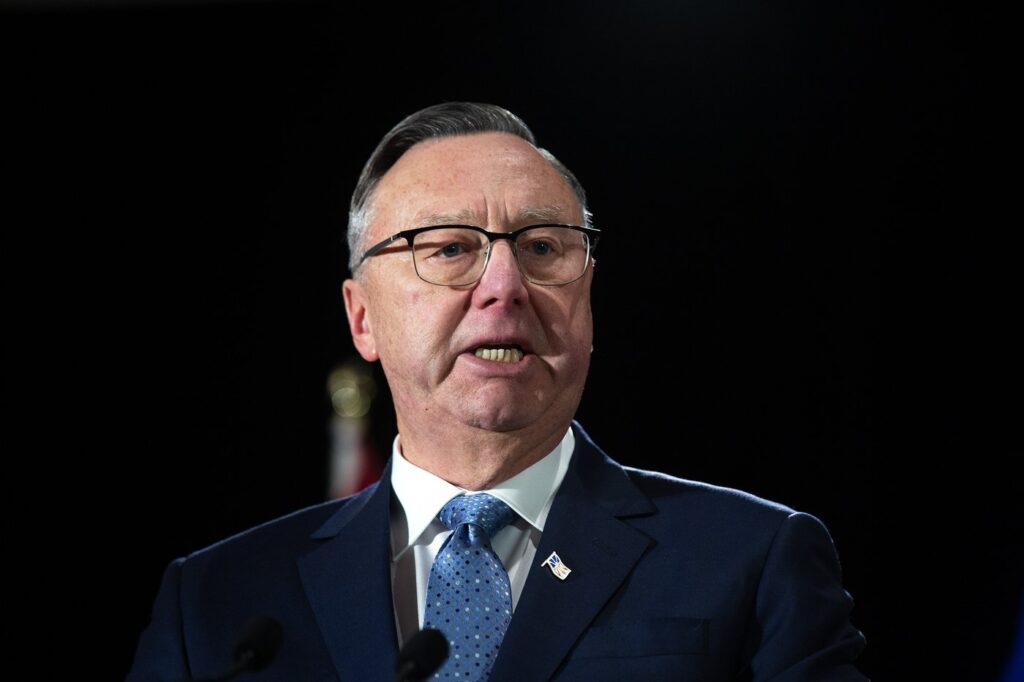
A panel appointed by the Newfoundland and Labrador government has concluded that a proposed energy deal with Hydro-Québec is not in the best interests of the province. This observation is detailed in a report, expected to be released on May 19, 2026, wherein the three-person panel outlines various concerns regarding a non-binding framework agreement to share power from Labrador, which was signed by the provinces' hydroelectric utilities in 2024.
The panel's chief concern is that the agreement does not provide sufficient power to Newfoundland and Labrador, which could adversely affect energy-intensive sectors like mining and impede long-term economic growth. According to the report's executive summary, there is potential for the Newfoundland and Labrador government to make significant decisions that may allow Newfoundland and Labrador Hydro to negotiate a more advantageous agreement with Hydro-Québec that serves the public interest.
This report is anticipated by a population weary of feeling cheated by Quebec and could potentially reignite negotiations between the two provinces' power utilities, should Quebec be amenable. The panel was tasked in December 2025 to determine if the draft deal is in the best long-term interests of the residents of Newfoundland and Labrador, as outlined in its terms of reference. The deal, originally unveiled by Newfoundland and Labrador's previous Liberal government in late 2024, would remain effective until 2075 if finalized.
Tony Wakeham, the current Progressive Conservative Premier of Newfoundland and Labrador, has called for a review of the proposed deal since its announcement, setting up the panel just weeks after his party took office in the fall of 2025. This move came as negotiations for final agreements were halted, adhering to a wait-and-see strategy pending the panel's findings.
The agreement under scrutiny involves new rates and allocations for power derived from the 5,428-megawatt Churchill Falls generating station located in Labrador. Currently, Hydro-Québec receives most of the electricity from Churchill Falls at basement-floor prices due to a contract established in 1969, a situation that has fostered resentment in Newfoundland and Labrador over the years.
The proposed deal would also permit Hydro-Québec to spearhead new developments on the Churchill River alongside Newfoundland and Labrador Hydro. This arrangement would enable the utilities to ultimately share over 9,000 megawatts of power from the river, with Hydro-Québec gaining approximately 80 percent of this output. Although Newfoundland and Labrador would receive greater financial compensation from Hydro-Québec for the electricity supplied, the panel indicated that this would occur at the cost of economic growth that would stem from acquiring additional power.
The panel expressed apprehension that Newfoundland and Labrador Hydro lacks the transmission capability to sell Churchill Falls power to export markets as well as concerns regarding the sustainability of joint ventures between partners with differing interests. Their conclusion asserts that, despite potential benefits, the memorandum of understanding is not in the public interest in its current form.
Chris Huskilson, a former chief executive at Emera Inc., led the review panel, which also included Michael Wilson, a former executive at EY who has publicly criticized the draft deal, asserting that Newfoundland and Labrador could negotiate better terms. While Wakeham previously indicated that the panel members would present their report in person, a spokesperson later confirmed that the report's content would speak for itself, making such presentations unnecessary.
Additionally, the proposed arrangement obtained support from former Quebec Premier François Legault, who facilitated the agreement between Hydro-Québec and Newfoundland and Labrador Hydro. However, Legault’s party, Coalition Avenir Québec, is projected to perform poorly in the approaching provincial election. Conversely, the leading Parti Québécois is against the proposal, claiming it disproportionately favors Newfoundland and Labrador.








