

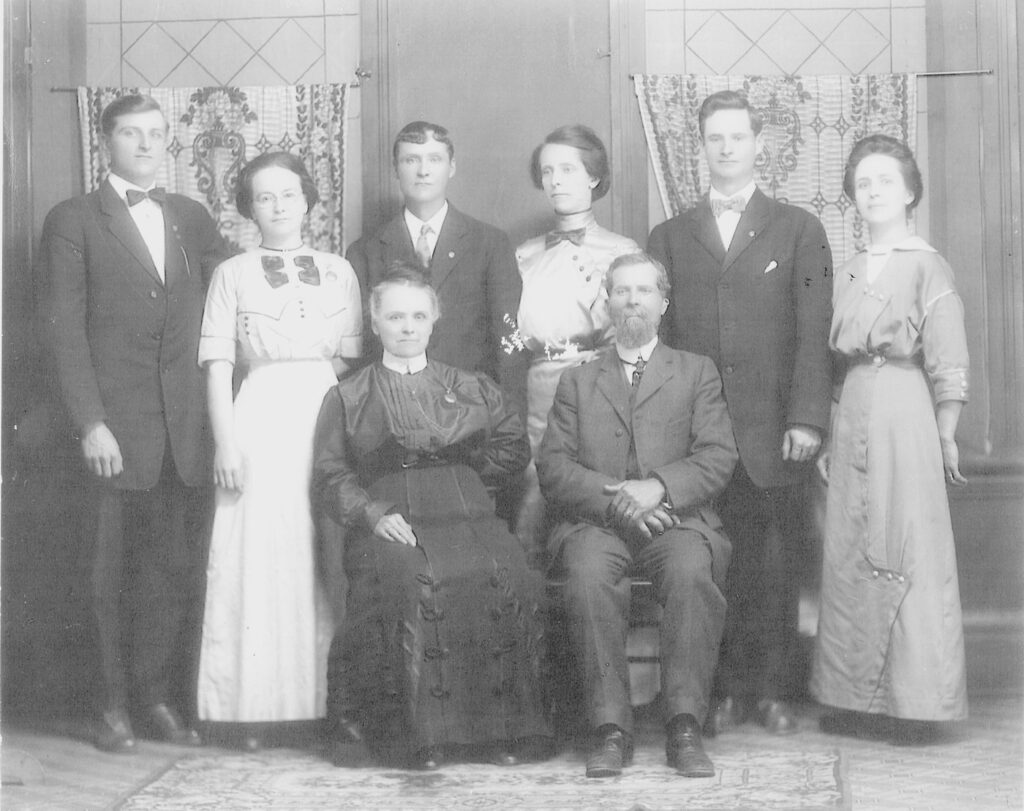
Cody Sibley, an eighth-generation descendant of Acadian ancestors from Nova Scotia, has embarked on a journey to trace his family's roots that date back to Agathe Doucet, who was baptized on January 19, 1710. Sibley’s ancestors faced upheaval during the Acadian expulsion in 1755 by British soldiers, which led many, including Doucet and her husband Pierre Pitre, to settle in Louisiana, where they became part of the Cajun community.
Amidst a recent surge in individuals seeking to uncover their Canadian ancestry, Sibley's case reflects a broader trend. New legal changes under the Citizenship Act, known as Bill C-3, aim to remove the "first-generation limit" on citizenship for individuals born outside Canada to a Canadian parent. This adjustment has sparked an uptick in Americans delving into genealogical records to establish their eligibility for Canadian citizenship.
According to Sibley, the changes to the Citizenship Act that came into effect in December broaden the scope for many descendants, allowing claims based on ancestral connections without a generational limit. While there are cautious reminders from Immigration, Refugees and Citizenship Canada (IRCC) that merely having distant Canadian ancestry isn’t enough for automatic citizenship, many immigration lawyers support the interpretation that citizenship may now be passed down through generations.
British Columbia immigration lawyer Amandeep Hayer stated that anyone born in Canada, regardless of when they were born or their current status, could potentially reclaim citizenship if there’s documentation proving an unbroken line of Canadian descendants. Hayer noted that he has successfully assisted clients whose lineage traces back many generations, including descendants of Acadians who are now eligible for citizenship under the new law.
Archivists across Canada have reported an overwhelming influx of requests from Americans investigating their ancestral connections. Quebec's provincial library and archives noted a significant increase in requests, with the number jumping from 56 to around 1,700 in April alone compared to the previous year. The provincial archivist of New Brunswick also observed that their monthly request numbers had escalated from the usual 100-150 to 300-400 since the law was enacted.
The personal stories of many individuals highlight their emotional connections to this pursuit. For example, Stephen Redmond from Tennessee is seeking Canadian citizenship based on his ancestor, Jacques Timothé Boucher, a significant figure in New France. Leah Larkin, a resident of the San Francisco Bay Area and Cajun descendant, expressed the sentiment that restoring her Acadian roots brings a profound sense of dignity and heritage acknowledgment.
As they navigate the complexities of genealogy, some applicants like Mariam Watson from Indianapolis have documented connections to Canada through more recent ancestors. Her grandmother Asako Uyeda, born in British Columbia in 1921, serves as the gateway for Watson's claims under the new laws. Several applicants also cited political motivations as a driving force behind their desire for Canadian citizenship, reflecting a search for safety and security in a shifting political climate.
Every application is evaluated on a case-by-case basis by IRCC, requiring proof through official documentation that each claimed ancestor became or would have become a Canadian citizen. The process often involves sifting through historical records, some of which have been lost or damaged over time, bringing challenges to individuals seeking to validate their claims.
Overall, as the financial and staffing challenges faced by archives mount due to this unprecedented demand, the personal narratives of these hopeful applicants illustrate a deeper longing for connection to their ancestral heritage. Many are excited about the prospect of reclaiming their Canadian identity, emphasizing the cultural significance and pride it holds for them.








