

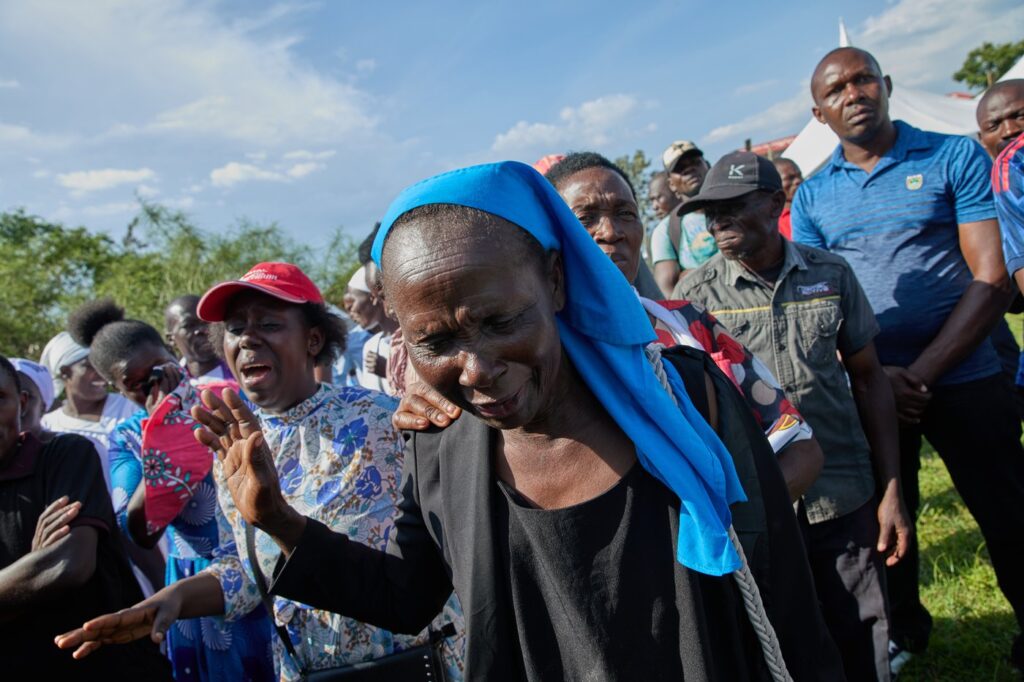
KISUMU, Kenya (AP) – At the funeral of Tom Ochieng Mima, a 64-year-old man, the atmosphere is thick with emotion, as family and friends gather under white tents by the roadside. The body, adorned in formal attire, lies in a casket shaded from the scorching sun, while mourners, some of whom are professional mourners, invoke traditional Luo cultural norms through their expressions of grief.
These professional mourners—hired to authentically express sorrow—are not connected to Mima or his family. Instead, they perform elaborate displays of grief, including wailing and rhythmic movements, which resonate deeply within the local community. This unique practice illustrates how such roles can help provide a sense of comfort and shared experience among those mourning a loss, even when they are strangers to the deceased.
Francis Oyoo, one of the professional mourners, has been in this line of work for two years and asserts that "it is a job anyone can do" as long as one can tap into their emotions. Typically receiving one or two engagements per month, Oyoo earns around $80 for his services, which he finds sufficient to sustain his living. His motivation stems from personal loss; after the death of his uncle in an accident, he felt compelled to help others who were grieving.
Another mourner at Mima’s funeral, James Ajowi, has over 20 years of experience in this profession. He credits his commitment to the role to his own daughter’s death from a lung disease, stating that personal grief has intensified his empathetic response during funerals. Ajowi feels as though his loss has prepared him for the emotional demands of the job, allowing him to be more effective in supporting families during their time of need.
The presence of professional mourners fulfills a vital community function by supporting families during funerals, which are already communal and spirited events in western Kenya. Lawrence Ouma Angira, who was raised by the deceased Mima, acknowledges the comfort that these mourners provide, stating that they "help fill the emptiness and they comfort us." Despite being unfamiliar with the deceased, these hired individuals profoundly understand the nuances of loss and grief.
Mourning rituals among the Luo people living near Lake Victoria are more than acts of sorrow; they also serve a protective function, driving away evil spirits through crying, singing, and movement. This cultural dimension highlights a blend between tradition and modernity, with the professionalization of mourning being a relatively recent development, influenced by urbanization and commercialization. Charles Owour Olunga, an anthropologist, notes that while this shift is moving away from authentic traditional practices, it still retains cultural richness and community involvement.
Furthermore, the convergence of indigenous beliefs and Christianity in western Kenya creates a unique tapestry of religious practices. There is a strong presence of African-initiated churches in the region, reflecting local resistance to rigid Christian prohibitions against indigenous mourning rites. For the mourners on this day, the emotional connections forged through grief provide a sense of community and shared experience that transcends individual backgrounds and beliefs.
As Oyoo reflects, "Death is painful," yet he finds solace in the fact that one day he too will be remembered and mourned in a similar fashion. This cyclical view of life and loss underscores the deep societal bonds that funerals and mourning rituals foster within communities like that of the Luo people.








