

As artificial intelligence increasingly influences various sectors, it has become a contentious topic during college commencement speeches this season. Graduates at institutions such as the University of Arizona have voiced their concerns by booing speakers who discuss AI, reflecting a broader sense of anxiety regarding career prospects in an automated future.
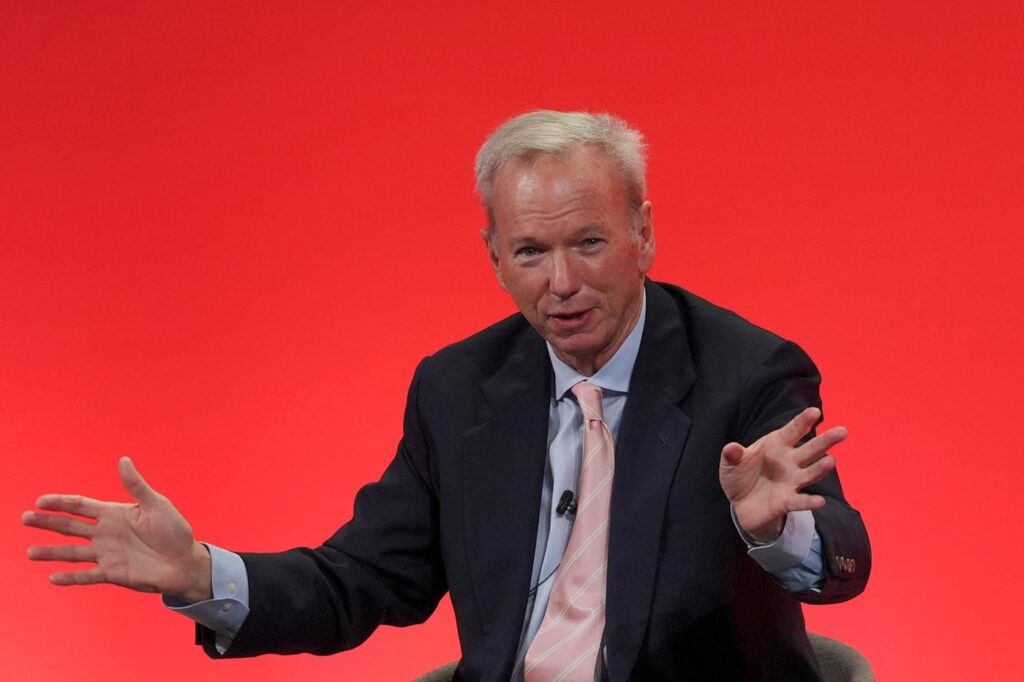
Former Google CEO Eric Schmidt encountered significant backlash while delivering the keynote address to approximately 10,000 graduates at the University of Arizona. He emphasized that AI would impact every profession and personal relationship, provoking a growing chorus of boos from the audience. Schmidt acknowledged the fear many students feel about their future job security, stating, "I understand that fear." Despite this, his remarks on the potential evolution and adaptation to AI did not resonate well with the audience.
Olivia Malone, a 22-year-old law student from the University of Arizona, described Schmidt's speech as "incredibly disrespectful." She criticized the disconnect between the message delivered by a prominent advocate for AI and the experiences of students who felt penalized for using AI tools in their academic pursuits. Malone pointed out that many graduates were frustrated by Schmidt's positioning as a champion of the technology at a time of significant uncertainty about job availability.
This sentiment of unease extends beyond Schmidt's speech, with similar reactions documented across various universities. Polling data reveals that about 70% of college students perceive AI as a threat to their employment opportunities. A 2025 poll conducted by the Institute of Politics at the Harvard Kennedy School further corroborated this anxiety, highlighting students' struggles to identify skills and careers that AI would not render obsolete.
These fears have been echoed in a Gallup poll focused on Generation Z, which found an increase in negative attitudes towards AI. While roughly half of Gen Z respondents utilize AI regularly, the overall enthusiasm for the technology has dwindled, fueled by growing concerns about its implications for their futures.
Real estate executive Gloria Caulfield experienced similar hostility during her commencement address at the University of Central Florida when she referred to AI as part of the next industrial revolution. Her surprise at the backlash underscored the disconnect between speakers advocating for AI's potential and the students' overwhelmingly negative sentiment about what such advancements mean for their job prospects.
Music executive Scott Borchetta faced boos during his address at Middle Tennessee State University while discussing AI's transformative influence on the music industry. His attempts to present AI as a tool for empowerment were met with resistance, illustrating the students' frustration and fears surrounding their future in a rapidly changing job market.
Graduates' dissatisfaction is further compounded by the challenging job market they are entering. Reports indicate that the unemployment rate for college graduates aged 22 to 27 has reached its highest level in a dozen years, exacerbating fears about AI's ability to take over their future careers. For instance, Sami Wargo, a recent Marquette University graduate, voiced her concerns about an AI expert being chosen as their commencement speaker despite student petitions calling for a different selection, reflecting the sentiments felt across many campuses.
Wargo expressed frustration about the disconnect between AI's portrayal in speeches and the realities of job applications that increasingly require collaboration with AI—a concept many students find unclear given the restrictions often imposed on their use of AI during their studies. She noted that being reminded of uncertainties on what should be a celebratory day adds to the pressure faced by graduates inundated with concerns about their future.








