

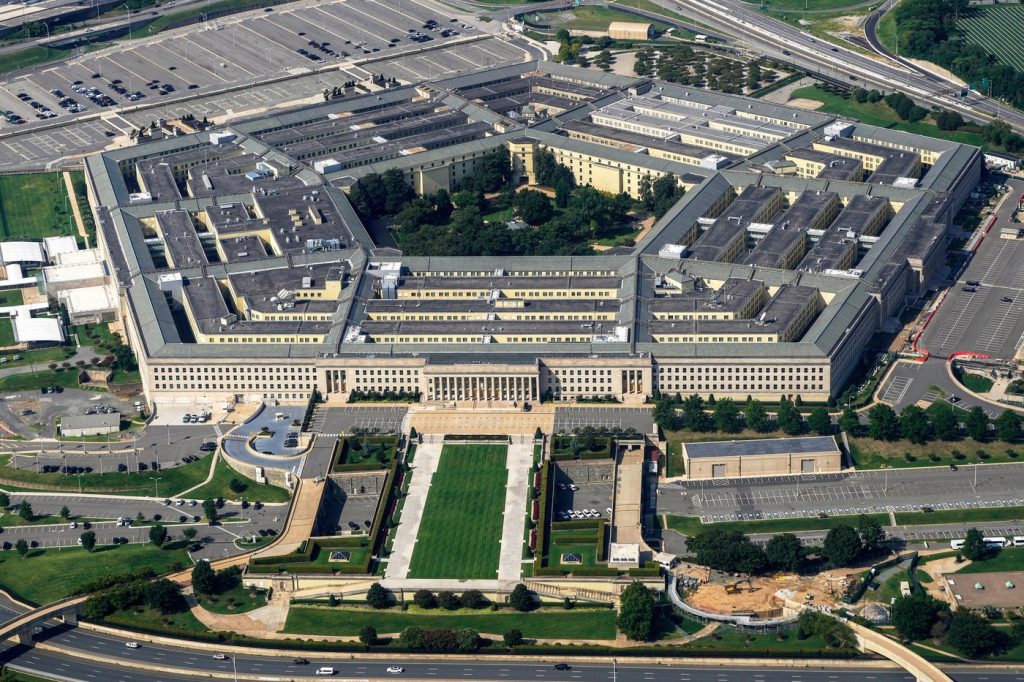
WASHINGTON — A high-ranking U.S. defense official revealed that the Pentagon provided Ottawa with a classified document outlining priorities for a collective North American defense pact. However, Ottawa's response was deemed "not credible," highlighting growing frustrations over defense cooperation between the U.S. and Canada. The official, associated with the Trump administration, shared these insights during a briefing with a small group of Canadian journalists, shedding light on the state of Canada-U.S. relations.
One of the significant points of contention discussed was Canada's delayed decision on procuring F-35 fighter jets. The U.S. officials expressed irritation regarding Ottawa's response to the classified paper, which merely stated that Canada would attempt to align with U.S. defense positions. In contrast, the Trump administration is seeking a more substantive plan from Canada regarding shared defense responsibilities.
Defence Minister David McGuinty's office did not comment on whether Canada received the classified document detailing U.S. expectations around defense or if a formal response was made. Alice Hansen, McGuinty's communications director, defended Canada's performance, stating that Canada has committed "historic investments in continental defense, Arctic security, and military readiness." In 2025, Canada allocated $63.4 billion for national defense, marking the first time it met NATO's commitment to spend two percent of GDP on defense.
According to Hansen, Canada plans to invest over $82 billion in Canadian Armed Forces capabilities over the next five years. NATO members agreed to a target of five percent of GDP for defense spending by 2035 at a meeting in The Hague last year. Hansen mentioned Canada's ongoing efforts to ramp up defense spending, aiming for NATO's new target of 3.5 percent on core defense and optimizing an additional 1.5 percent on defense and security-related expenditures.
Despite these commitments, U.S. Pentagon officials criticized Canada for lacking a concrete plan to meet new defense spending commitments. Elbridge Colby, U.S. undersecretary of defense for policy, announced a pause in the Permanent Joint Board on Defense, established in 1940 as an advisory forum for U.S.-Canada bilateral defense cooperation. This move signifies a reassessment of how the board benefits shared North American defense objectives.
The Pentagon officials emphasized that while Canada may have a list of defense initiatives, it must clearly demonstrate how it contributes to North America's defense capabilities to be satisfactory. Jamie Tronnes from the Center for North American Prosperity and Security pointed out that the situation reflects a communication failure between Canada and the U.S., noting that Canada views a classified wish list as a request, while the Pentagon sees it as an order.
Experts highlight that the Pentagon's decision to pause the advisory board and criticize Canadian defense spending is interlinked with ongoing discussions about Canada’s F-35 fighter jet order and the review of trade agreements under the Canada-U.S.-Mexico Agreement (CUSMA). The Liberal government has yet to finalize its order of F-35 jets from Lockheed Martin, which has been under political review for over a year, leading to U.S. officials branding Canada's approach as delayed.
Historically, Canada has faced scrutiny over its defense spending, and under President Trump's administration, this criticism has been exacerbated by broader trade issues. Prime Minister Mark Carney's administration has made significant defense investments, achieving NATO's previous funding target for the first time. However, within Canada, there are demands for increased transparency in defense spending moving forward. Former federal spending watchdog Kevin Page called on the prime minister to outline a fiscal roadmap to meet the new NATO spending commitments. Page, now leading the Institute of Fiscal Studies and Democracy at the University of Ottawa, criticized Ottawa for lacking clarity in how it would substantially increase defense expenditures towards 2035.
This situation underscores the complexities in Canada-U.S. defense relations, particularly as Canada maneuvers to align its military spending and commitments with expectations from its southern neighbor while addressing internal and external pressures.








