

On May 1, 2026, Lucille Blumberg, a South African infectious disease specialist, received an urgent email while the country celebrated Labor Day. The message highlighted a serious situation involving a passenger from the MV Hondius cruise ship, thousands of miles away in the Atlantic. The passenger had been evacuated to a Johannesburg hospital with suspected pneumonia, and other individuals aboard the vessel were also reported to be ill.
Blumberg, along with experts from South Africa's National Institute for Communicable Diseases, quickly mobilized to investigate the outbreak. "Even though it was a public holiday, we moved really fast," Blumberg stated, emphasizing the urgency of the situation. Within 24 hours, they identified that the man's illness was caused by hantavirus, a rare rodent-borne virus.
The elderly British man, who had arrived at a private hospital in Johannesburg, was critically ill. By the time he was evacuated from the MV Hondius cruise liner, two elderly Dutch passengers who had also been on the ship had already succumbed to illness, leading to a gradual increase in concern among health officials. Reports had surfaced on Ascension Island, where health authorities noted a cluster of illnesses on the ship that showed symptoms similar to pneumonia.
The initial step taken by Blumberg and her team was to consider common pneumonia-causing agents, including Legionella and avian influenza, especially since the passengers had visited regions known for bird populations. However, tests for these infections came back negative, leading them to explore other potential causes.
It became apparent that focusing on the MV Hondius's region of origin, Argentina, was important, especially considering the passengers were avid bird watchers and may have encountered rodent populations there. Collaborating with hantavirus experts from South America and the United States, facilitated by the World Health Organization (WHO), allowed the South African team to hone in on the hantavirus hypothesis.
On Saturday morning, Blumberg contacted the only laboratory in South Africa equipped to test for hantavirus. After the tests on the patient's blood samples returned positive for hantavirus—specifically the Andes strain—an outbreak was officially declared on board the cruise ship. While hantavirus is not easily transmissible between humans, the Andes virus allows for some degree of human-to-human transmission.
Further investigations led to a heartbreaking revelation: a Dutch woman, one of the first two passengers to die, had traveled to South Africa with her husband's body. A posthumous test on her indicated a positive result for hantavirus, marking a significant turning point in understanding the outbreak. "It was a bit of a wow moment," Blumberg remarked, appreciating the clarity that came with understanding the virus involved.
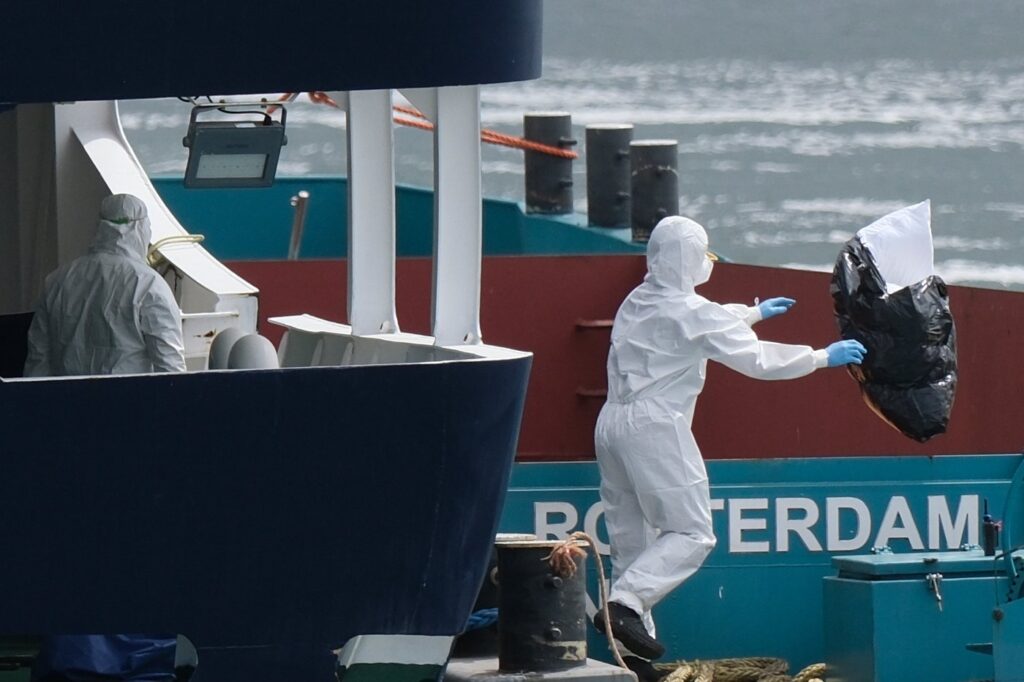
As the situation unfolded, the health ministry reported that the British man who was the first confirmed case was on the mend. The MV Hondius ultimately arrived in Rotterdam, Netherlands, where it underwent disinfection, and its remaining crew members disembarked. Blumberg reflected on her extensive experience dealing with outbreaks, emphasizing the effectiveness of immediate responses to urgent health questions.








