

TOKYO (AP) - The Humanoids Summit Tokyo showcased a variety of advanced robotics on Thursday, featuring mechanical hands capable of threading needles, child-like dancing robots, and adult-sized delivery robots. The event highlighted numerous companies, including industry giants such as Boston Dynamics and Toyota Motor Corp, but the spotlight primarily fell on emerging Chinese firms.
Chinese companies like Booster Robotics and LimX Dynamics are refining robotics technology that was initially developed in Japan and the United States, often achieving more cost-effective mass production. This phenomenon mirrors trends seen in various Japanese industries, including consumer electronics and automobiles. While Japan previously held a leading position in humanoid robotics, experts assert that it has struggled to deliver significant commercial applications over time.
Tim Hornyuk, author of "Loving the Machine: The Art and Science of Japanese Robots," attended the summit and referred to Japan's situation as the "Galapagos syndrome," which describes the evolution of innovative products in isolation without significant international impact. He expressed hope that Japan could create a revolutionary humanoid robot similar to the Ford Model T but noted that China's advancements have significantly outpaced Japan's efforts. "It's a bit too little too late," he remarked.
One standout from the summit was the Mini Pi Plus, a playful and wiggly robot from China's High Torque. Although it lacks functionality for tasks like working in an auto plant or washing dishes, it appeals to the market with an attractive price starting at $5,500. Additionally, GMO, a Tokyo-based AI and robotics firm, is developing a humanoid equipped with camera eyes intended for aiding Japan Airlines' cargo operations and airport duties. This initiative responds to Japan's increasing labor shortage by making robots capable of performing roles historically filled by humans.
Unitree, another Chinese company, is responsible for the foundational robotics technology used in these new humanoids. They are also innovating with a four-legged dog-like "stellar explorer." Experts highlight that Japan’s expertise in manufacturing and a societal acceptance of robotics have fostered an environment conducive to robotics development. A recent Pew global survey indicates that only 28% of Japanese respondents expressed anxiety regarding AI, compared to 50% of Americans.
Honda Motor Co., known for its pioneering work in robotics—including the unveiling of its walking humanoid, Asimo, in 2000—demonstrated a motorized robotic hand at the summit capable of complex tasks. Despite the presence of numerous similar mechanical hands from various Chinese manufacturers, assistant chief engineer Keisuke Tsuta remained confident in Honda’s superior technology, asserting that it is more durable and powerful than many rivals. Historically, Japan excels in quality mass production, which could help maintain its competitive edge.
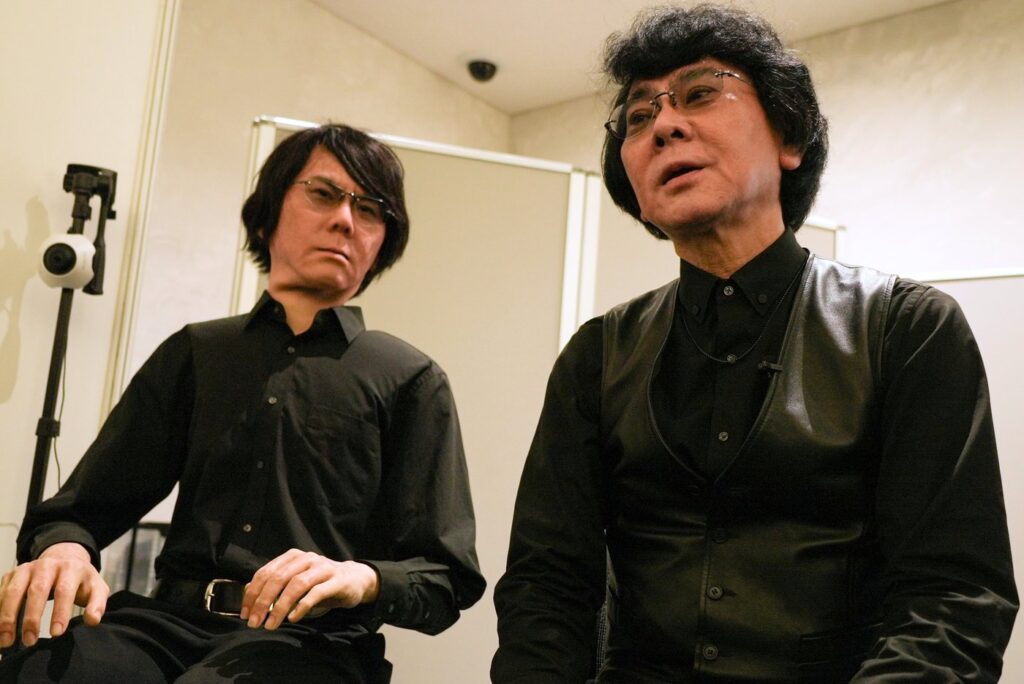
Despite the potential dominance of Chinese robotics, Professor Hiroshi Ishiguro from Osaka University expressed a calm outlook. Ishiguro, who has worked with humanoids for decades—his own creation being a robot that closely resembles him—asserted that Japan possesses a culture that is receptive to robotics. "If we’re going to really start using robots in society, Japan is the ideal place," he commented, emphasizing the lack of discrimination against robots within Japanese society. His own android counterpart engages in existential inquiries about the nature of robotics, stating, "Robots will coexist with people. Robots are the mirror of human beings."
Through the exploration of humanoid robotics at this summit, the future of this technology appears intertwined with the rivalry between Japan and China, both pushing the envelope in an ever-evolving domain of innovation.








