

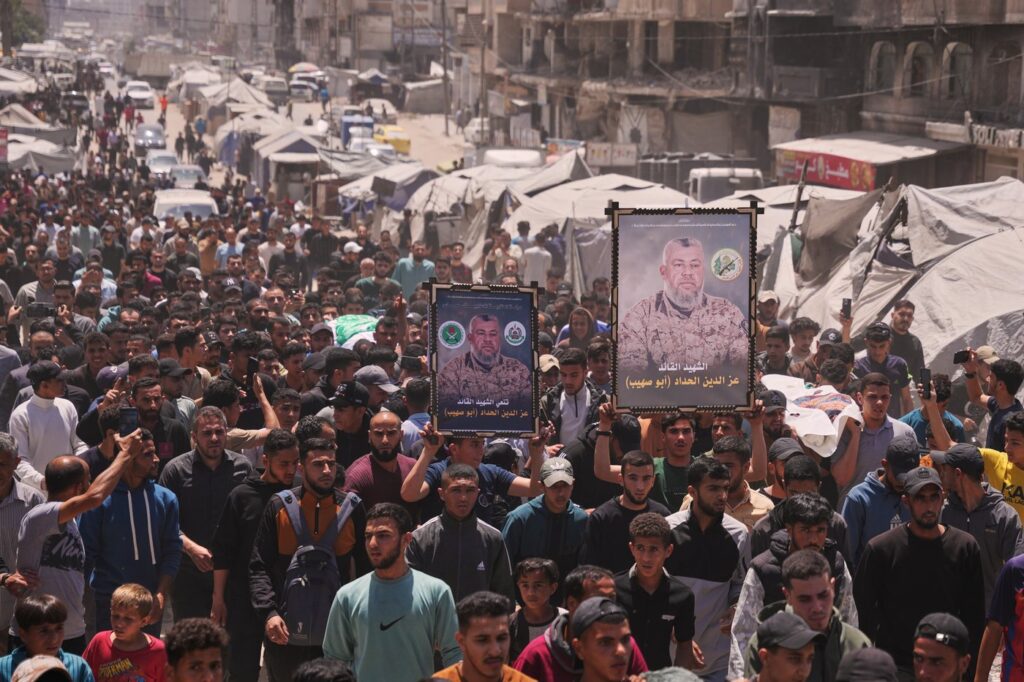
Over the past two weeks, Israel has intensified its military actions by killing two prominent leaders of Hamas: Mohammed Odeh and Izz al-Din al-Haddad. These individuals were central figures in the planning of the October 7, 2023, attack on Israel, and their deaths are part of Israel's broader strategy aimed at eliminating leaders responsible for initiating the recent conflict in Gaza.
While such targeted killings can present immediate victories for military leaders, experts note that they do not fundamentally resolve the underlying grievances that fuel these long-standing conflicts. According to Nasser Khdour from the nonprofit organization ACLED, while the killings highlight Israel’s operational capacity to dismantle Hamas’ military leadership, they are unlikely to compel Hamas to disarm or abandon its governance role in Gaza.
Israel has a long history of targeted killings, which has often resulted in militant groups enduring or even becoming more powerful post-assassination. A pertinent example includes Hezbollah, which thrived after the death of its leader Abbas Musawi in 1992, ultimately emerging as a formidable force under his successor, Hassan Nasrallah. Despite significant losses during the 2024 war with Israel, including the deaths of Nasrallah and his deputies, Hezbollah quickly resumed its military operations against Israel.
Hamas has faced similar fates with the deaths of its leaders, including the assassination of its founder Sheikh Ahmed Yassin in 2004. Despite the systematic elimination of individuals behind the October 7 attack, Hamas continues to find means to persist and operate, driven by deep-rooted grievances connected to the Israeli-Palestinian conflict.
The United States has also employed targeted killings as a counter-terrorism strategy, notably taking out Osama bin Laden in 2011 and Abu Bakr al-Baghdadi in 2019. Although these actions reduced the threat posed by al-Qaida and the Islamic State, they were effective only after prolonged military engagements.
Yossi Kuperwasser, former head of Israel's military intelligence research division, expressed that while targeted killings can serve as a tactical advantage, they do not provide a comprehensive solution to the threats posed by such organizations. He emphasized the importance of these operations in weakening adversaries while acknowledging their limitations in changing the operational capabilities of the groups involved.
Kuperwasser noted that although Israel has aimed to reshape the leadership structures of hostile groups in Gaza, Lebanon, and Iran through targeted strikes, these actions have not led to substantial regime changes. He cited the early days of the Iran war, where high-profile assassinations altered the political landscape, yet the resultant leadership was often more resilient and uncompromising.
However, targeted killings can have counterproductive effects. Political scientist Max Abrahms pointed out that eliminating leaders who might exercise restraint could lead to more extreme behaviors among their successors. This phenomenon has been observed in various regions, where violence against civilians escalates following such operations. Leadership decapitation can create a vacuum, but without an accompanying robust political strategy, it risks exacerbating conflict rather than resolving it.
Mohanad Hage Ali, deputy director at the Carnegie Middle East Center, noted that while organizations can be decimated militarily, success ultimately hinges on having a cohesive political framework to follow up on military actions. The challenge remains apparent, raising concerns about the sustainability and effectiveness of Israel's military strategies in the context of the ongoing conflict in Gaza.








