

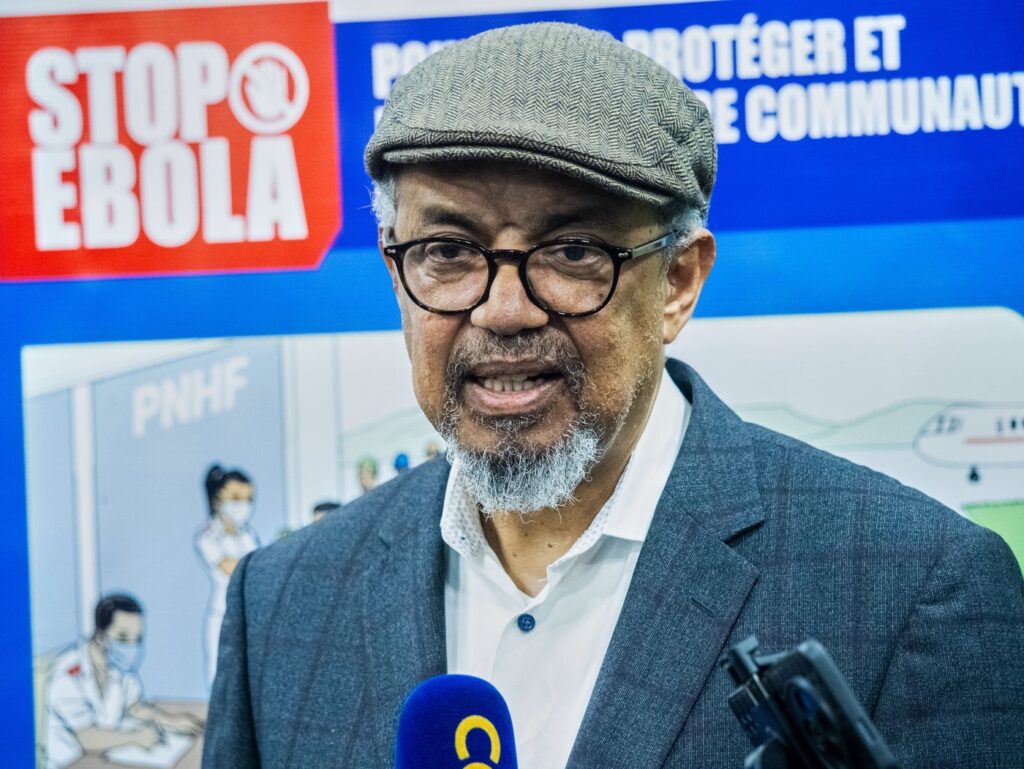
KINSHASA, Congo (AP) — The Director-General of the World Health Organization (WHO), Tedros Adhanom Ghebreyesus, arrived in Kinshasa, Congo, on Thursday evening to observe the ongoing efforts to combat an outbreak of the Bundibugyo virus, a rare type of Ebola. Medical personnel are grappling with numerous challenges, including a shortage of equipment, a wary populace, and the presence of armed groups in a region plagued by instability.
At the airport, Tedros expressed the importance of his presence, stating, “To come here is to really show to the community that they’re not alone.” He emphasized the need for WHO colleagues to engage with the community directly, rather than simply issuing directives from Geneva, and urged communities to take steps to protect themselves.
On the same day, medical supplies donated by the European Union arrived in Ituri province, which is at the epicenter of the Ebola outbreak. The United States also announced an additional $80 million in aid, adding to its total support commitment of over $112 million to address the crisis.
Health workers in Ituri, facing dire shortages, have been attempting to manage an outbreak of the Bundibugyo virus, which lacks an approved vaccine or treatment. Reports indicate that in some instances, doctors have had to use expired medical masks while attending to suspected cases. As of Tuesday, the WHO reported 1,077 suspected cases and 238 suspected deaths related to the outbreak.
Health workers are facing increased risks due to community tensions surrounding the strict medical protocols required for handling victims' bodies, which interfere with local burial customs. This discontent has led residents to launch at least three attacks against health centers.
Tedros highlighted additional hurdles complicating the containment efforts, including the high number of displaced individuals due to ongoing armed conflicts in the area and rampant food insecurity. On Wednesday, he called for a ceasefire in regions where armed groups, such as the Allied Democratic Forces (ADF), have historically perpetrated violent attacks.
Ituri province, located in northeastern Congo near the Ugandan border, has suffered from persistent violence attributed to the ADF, which is affiliated with the Islamic State group, as well as various ethnic militias. In early May, the ADF reportedly killed at least 40 people and set multiple homes ablaze in Ituri.
The outbreak has also been detected in the nearby Congolese provinces of North Kivu and South Kivu, where the M23 rebel group, backed by Rwanda, exerts control over significant urban areas, including Goma and Bukavu. The M23 has reported two cases of the virus.
The regional airport in Goma, a crucial hub for humanitarian operations, has been closed since January 2025 following the M23's capture of the city. This ongoing conflict has triggered one of the world’s largest humanitarian crises, displacing at least 7 million individuals in eastern Congo.
Tedros advised against travel bans imposed on nationals from affected countries, suggesting that managing health workers and suspected cases can be achieved without resorting to severe restrictions. The Trump administration recently announced a temporary travel ban for individuals without U.S. passports or green cards who have visited Congo, Uganda, or South Sudan in the preceding 21 days. Additionally, the administration plans to redirect Americans exposed to Ebola to a new facility in Kenya rather than transporting them directly to the U.S. Meanwhile, Uganda and Rwanda have also closed their borders in response to the crisis.








