

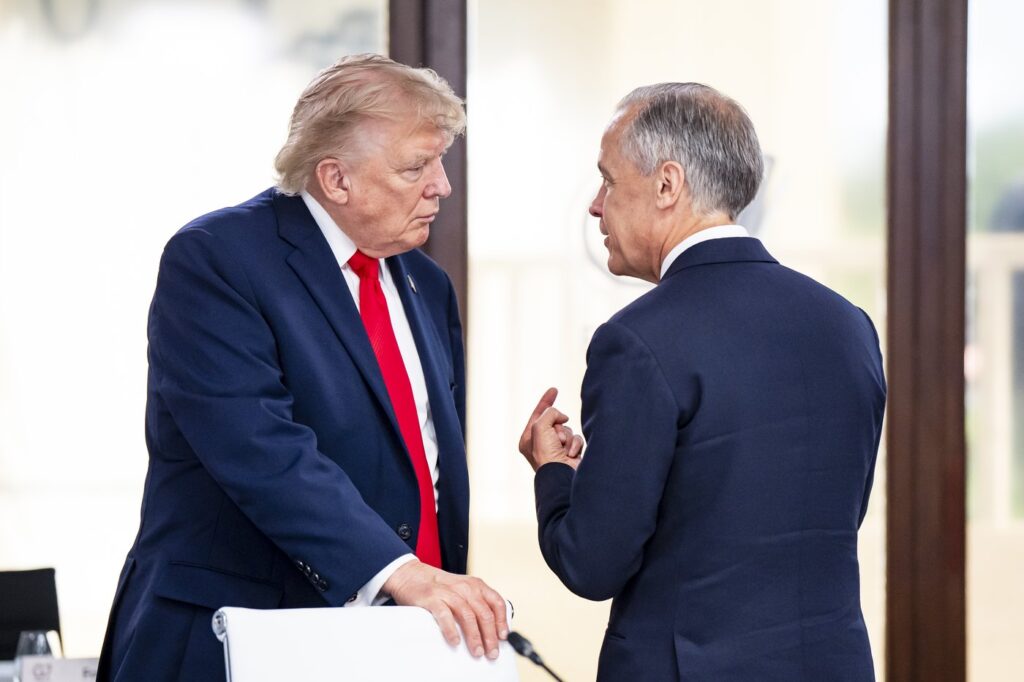
On Monday, President Donald Trump signed executive orders to impose a striking 50 percent tariff on a variety of Canadian products, further intensifying trade tensions between the United States and its northern neighbor. The White House issued a fact sheet asserting that these actions aim to hold Canada accountable for what it describes as its ongoing discrimination against U.S. commerce, which has placed an undue burden on hardworking Americans.
The newly imposed tariffs are scheduled to take effect within 30 days and will impact a broad range of goods, including hockey sticks, wine, and cement. A senior White House official, speaking on the condition of anonymity, indicated that this measure is a direct response to several issues, notably Canada’s provincial bans on U.S. liquor, Canada's supply-managed dairy system, and the quota restrictions on certain U.S. vehicles.
Notably, these tariffs will be distinct from many of Trump’s previous levies, as they will not include exemptions for products complying with the Canada-U.S.-Mexico Agreement (CUSMA). The White House has clarified that the new tariffs will not affect energy, potash, fish, critical minerals, or other goods currently subjected to separate sector-specific tariffs imposed by Trump.
In reaction to the tariffs, Canadian Prime Minister Mark Carney expressed Canada's commitment to strengthening its economic position domestically and supporting Canadian workers, farmers, businesses, and families. He stated, “This trade dispute has raised costs for families, particularly in the U.S.” Carney also indicated that Canada is prepared to engage constructively with the U.S. to resolve outstanding trade issues for the benefit of both nations' citizens.
Previously, Carney mentioned holding discussions with Trump regarding broader trade matters and acknowledged that while there are significant issues to address, Canada is also pursuing positive trade relationships with several other countries. He emphasized the importance of fortifying Canada’s economic foundation as a priority.
The White House official emphasized that the Trump administration maintains that only two countries—China and Canada—have retaliated against U.S. tariffs. To date, Canada has implemented wide-ranging retaliatory tariffs against Trump’s earlier tariffs but has since rolled back many of these duties to facilitate improved trade relations.
In a related matter, several Canadian provincial liquor boards imposed bans on American alcohol sales in response to Trump’s tariffs. While provinces like Saskatchewan and Alberta have lifted restrictions on U.S. alcohol imports, major markets such as Ontario and Quebec have yet to resume purchases of American liquor. The provincial liquor bans have become a point of contention for the Trump administration, with reports indicating that Canadian imports of U.S. alcoholic beverages had plummeted by around 81 percent from March 2025 to February 2026 compared to the previous year.
The automobile industry has also felt the impact of Trump’s 25 percent tariffs, which have heavily affected Canadian manufacturers. The White House criticized Canada for implementing tariff-free quotas on vehicles imported from the U.S. that were produced by automakers relocating operations outside Canada. The official statement pointed out that these quotas compel U.S. auto companies to invest in production in Canada rather than the United States.
Canada's supply-managed dairy system has long been a contentious issue in trade discussions between the nations. The White House noted that Canada's tariff-rate quotas on U.S. cheese imports are significantly more restrictive than those set for similar imports from the European Union.
It has been reported that the Trump administration was preparing to enact these new duties using Section 338 of the Tariff Act of 1930, a legal provision that has never been applied in this manner before. This statute reportedly allows the president to impose tariffs if a country disadvantages U.S. exporters relative to their foreign competitors. While the law does not specify conditions for the removal of duties, the administration is reportedly taking a measured approach to the implementation.
The recently announced tariffs are not directly related to Trump’s earlier threats to increase tariffs over issues concerning wildfire smoke emanating from Canada. Furthermore, Ontario Premier Doug Ford expressed an eagerness to reinstate the sale of American alcohol once CUSMA is renewed. He emphasized the need to finalize trade agreements and insisted that if the tariffs were to proceed, Canada should retaliate “tariff for tariff, dollar for dollar” to protect its interests.








