

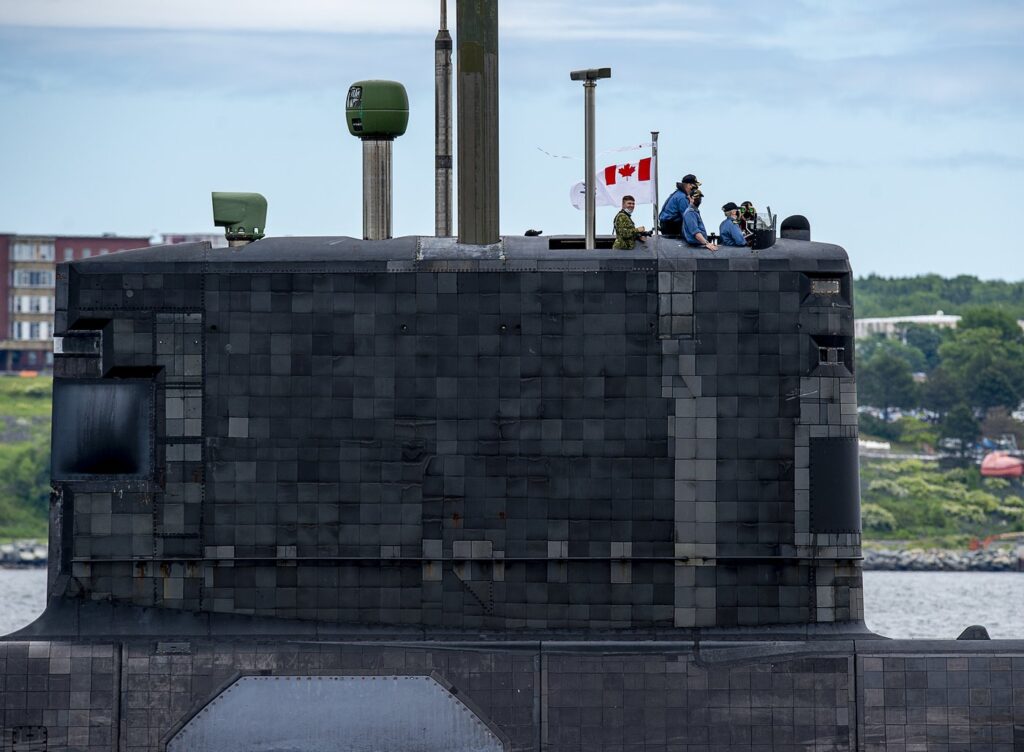
The federal government of Canada has announced a significant development regarding its submarine fleet, awarding Babcock Canada a six-year extension on its servicing contract for the Royal Canadian Navy's Victoria-class submarines. This extension is valued at $1.1 billion, which reflects the government's commitment to ensuring the operational readiness and maintenance of its current submarine fleet.
The updated contract encompasses options that allow for continued in-service support of the submarines through to the end of their operational life. This provision is particularly important as the Royal Canadian Navy prepares for the transition to a new fleet of submarines. The Victoria-class submarines, which are currently in service, are expected to be retired by the mid-2030s, making the ongoing support critical for national defense and naval operations.
Earlier this month, Prime Minister Mark Carney revealed that Canada has selected its preferred bidder for the next generation of submarines. The chosen partnership consists of a German-Norwegian team, with the German shipbuilder ThyssenKrupp Marine Systems (TKMS) at the forefront. This partnership is positioned to potentially deliver as many as four of its 212CD submarines to Canada by the year 2034, marking a critical advancement in the country’s naval capabilities.
At present, one of the active Victoria submarines, the HMCS Corner Brook, is currently deployed at sea. It is participating in the Rim of the Pacific (RIMPAC) international naval exercise, a significant multilateral military exercise that involves various allied nations. This exercise is taking place off the coast of Hawaii and serves to enhance interoperability and strengthen alliances among participating nations.
The extension of the servicing contract with Babcock Canada illustrates the Canadian government's proactive approach to maintaining its naval fleet while simultaneously planning for future capabilities. As the Royal Canadian Navy moves toward modernizing its underwater warfare capabilities, this investment in support services is crucial to ensure that the existing fleet remains effective until new submarines come into service.








