

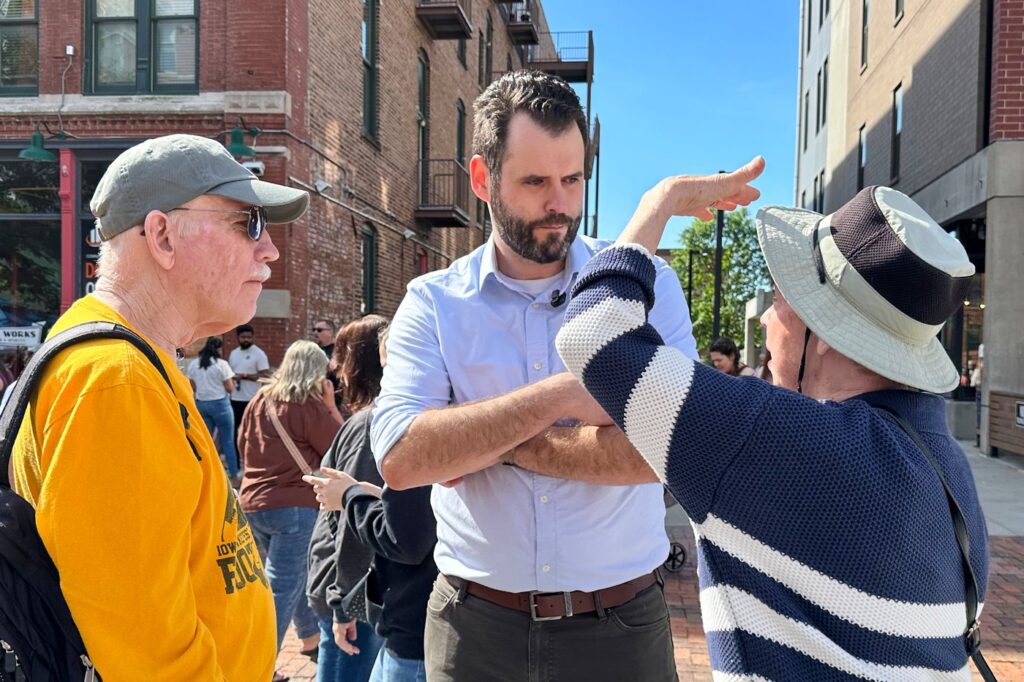
Iowa Democrats are gearing up for the U.S. Senate primary scheduled for Tuesday, aiming to identify a candidate who stands the best chance of flipping a Republican-held seat in the upcoming November elections. The race features two prominent state lawmakers: State Rep. Josh Turek and State Sen. Zach Wahls, both of whom are vying for the nomination to succeed retiring Sen. Joni Ernst. With Iowa's political landscape having shifted significantly since former President Barack Obama’s victory in 2012, the stakes in this primary are notably high.
Democratic voters in Iowa, who have struggled to find successful statewide candidates in recent years, have been cautious in their decision-making. The last federal Democrat elected statewide was Barack Obama in 2012, and currently, all six members of Iowa's federal delegation are Republicans. This ongoing trend has prompted voters to deliberate deeply on which candidate could emerge successfully in a general election context, especially against a Republican candidate like U.S. Rep. Ashley Hinson, who is also campaigning for the GOP nomination.
The primary’s significance is further underscored by the commitment of a Republican-aligned political group, which has pledged a substantial $29 million to defend the seat, suggesting an aggressive effort from GOP supporters to maintain their hold on this position.
Turek and Wahls have articulated their distinct platforms. Turek, a four-time wheelchair basketball Paralympian, believes his compelling personal story and focus on economic populism will resonate with independent and moderate Republican voters. He emphasizes critical issues such as securing a livable wage, access to healthcare, and clean drinking water, steering clear of divisive cultural issues often employed by Republicans to distract from pressing economic concerns. He asserts that to win in a state like Iowa, Democrats must champion the interests of workers and the middle class.
Conversely, Wahls presents himself as the candidate willing to challenge the status quo within both Democratic and Republican leadership. His message of authenticity and willingness to defy established norms aims to reclaim the trust of disillusioned voters, including those who previously supported Obama before shifting to Trump. Wahls has criticized Turek for not distancing himself from the Democratic establishment, particularly Sen. Chuck Schumer. He argues that voters are looking for candidates who represent real values and are not afraid to confront leadership in Washington.
As the primary date approaches, uncertainties remain. Some Iowa Democrats express their difficulties in choosing between the two candidates, noting their strong qualifications and shared values. Voter opinions are split on which candidate might be more effective in winning over independent voters and moderates who could prove decisive in November.
Supporters for both candidates have expressed faith in their respective choices based on several factors, including perceived strength in attracting crossover votes. However, there remains a palpable sense of skepticism about the viability of either Democrat in a state that has leaned Republican in recent elections. With roughly 30,000 Democrats having already voted in early balloting, the primary is poised to be competitive and emblematic of the broader challenges facing the Democratic Party in Iowa.
As voters prepare for the primary, many are relying on their instincts, keenly aware of the uphill battle that lies ahead in a state where Democrats currently number approximately 200,000 fewer than registered Republicans. The outcomes of these internal party debates could significantly shape the future of the Democratic Party in Iowa and its chances in the general election against the GOP later this year.








