

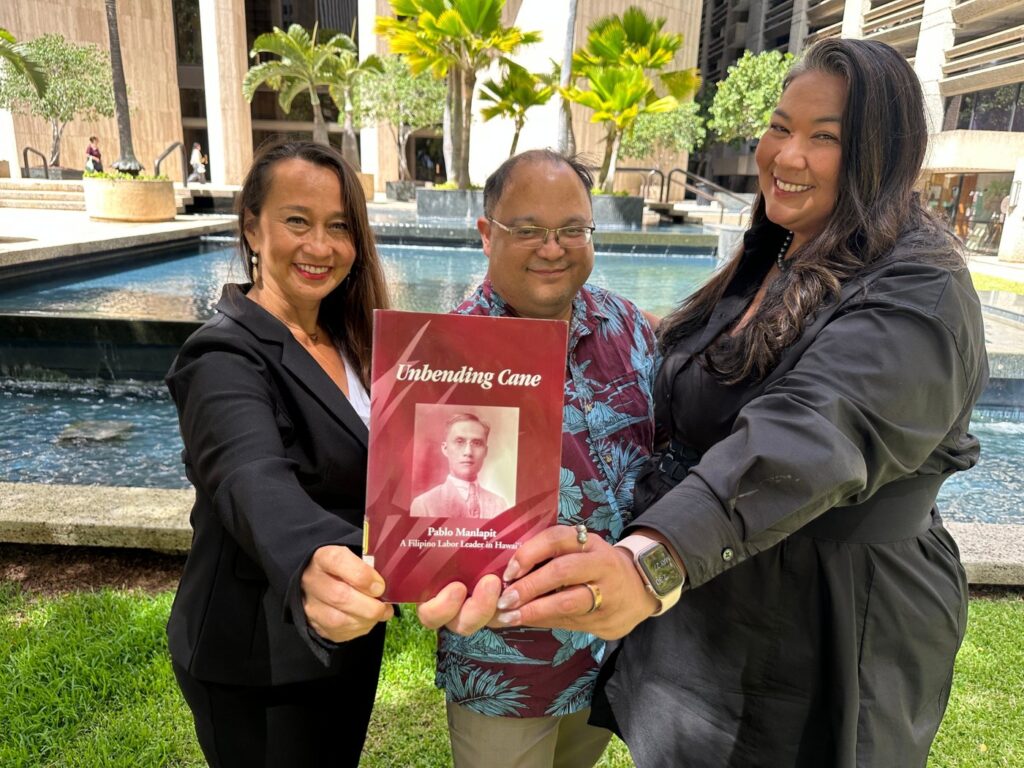
HONOLULU (AP) — Before the significant strike organized by Filipino American agricultural workers in California, Pablo Manlapit was actively organizing Filipino laborers in Hawaii. Migrating to Honolulu in 1910 to work on sugar plantations, Manlapit saw the exploitation of fellow Philippine-born workers, known as “sakadas.” A decade later, he became Hawaii's first Filipino lawyer and led efforts to establish a Filipino labor union that demanded equal pay and an eight-hour workday.
Manlapit made notable strides in labor organizing by persuading Japanese workers, who were receiving higher wages, to join the cause. However, his activism led to his involvement in the tragic 1924 Hanapepe Massacre on Kauai, where 16 strikers and four police officers lost their lives. The aftermath of this event stifled any momentum that the labor movement had garnered at the time.
Eventually imprisoned and exiled to California, Manlapit was later deported, dying in relative obscurity in 1969. Recently, he has been recognized as a trailblazer by a group of Filipino lawyers in Hawaii, who were not previously familiar with his contributions. The Hawaii Filipino Lawyers Association aims to overturn Manlapit’s conspiracy conviction, believing that this symbolic gesture will help elevate his historical significance. They argue that Manlapit’s story, along with the broader history of Asian American and Pacific Islander contributions in Hawaii, remains largely unknown across the U.S. mainland.
Daniel Padilla, the association's president, noted, “It’s a story that needs to be told.” He highlighted that, for many second-generation Filipinos, such narratives are often overshadowed by the broader labor movement in California. This initiative has gained traction following recent revelations about allegations against prominent Mexican American labor leader César Chavez, prompting reflection on the vital role Filipinos played in the U.S. farmworker movement.
The Hawaii Filipino Lawyers Association intends to clear Manlapit’s name as a way of restoring recognition to a movement that included many voices. Kevin Nadal, president of the Filipino American National Historical Society, emphasized that Filipino Americans, particularly those in Hawaii, have often been overlooked by historians. Nadal himself discovered Manlapit while researching for a Filipino American Studies encyclopedia in 2020.
Historically, the laborers from the Philippines who worked in Hawaii’s plantations contributed significantly to the Filipino community becoming one of the largest ethnic groups in the state. Hawaii saw the emergence of its first and only governor of Filipino descent, Ben Cayetano, who reflected on the impact these laborers had on his life despite his initial disconnect from his Filipino roots.
Contemporary efforts are being made to honor the legacy of the sakadas and figures like Manlapit. Becky Gardner, a sakada descendant and attorney, initiated “Sakada Day” to commemorate the arrival of the first contract laborers from the Philippines. Her personal journey of connecting with her heritage led her to uncover records of her great-grandfather, which made her feel included in Hawaii's historical narrative.
The Hawaii Filipino Lawyers Association is currently investigating Manlapit’s 1924 conviction, seeking legal avenues for posthumous clearance. They are looking into establishing a fellowship at the University of Hawaii’s law school to facilitate a legal examination of his case. Kainani Collins Alvarez, a former public defender turned family-law firm owner, is applying her legal background to aid this cause, emphasizing the importance of setting the historical record straight.
Notably, Manlapit was not present during the violence of the 1924 Hanapepe Massacre, and the association aims to exonerate him by uncovering evidence of his innocence. Nadal asserted that successfully overturning Manlapit’s conviction would not only provide a sense of justice but also invigorate the understanding that the pursuit of justice is a viable outcome for marginalized communities. This movement seeks to inspire future generations to recognize and celebrate heroes like Manlapit, illustrating the profound legacy of Filipino organizing in American history.








