

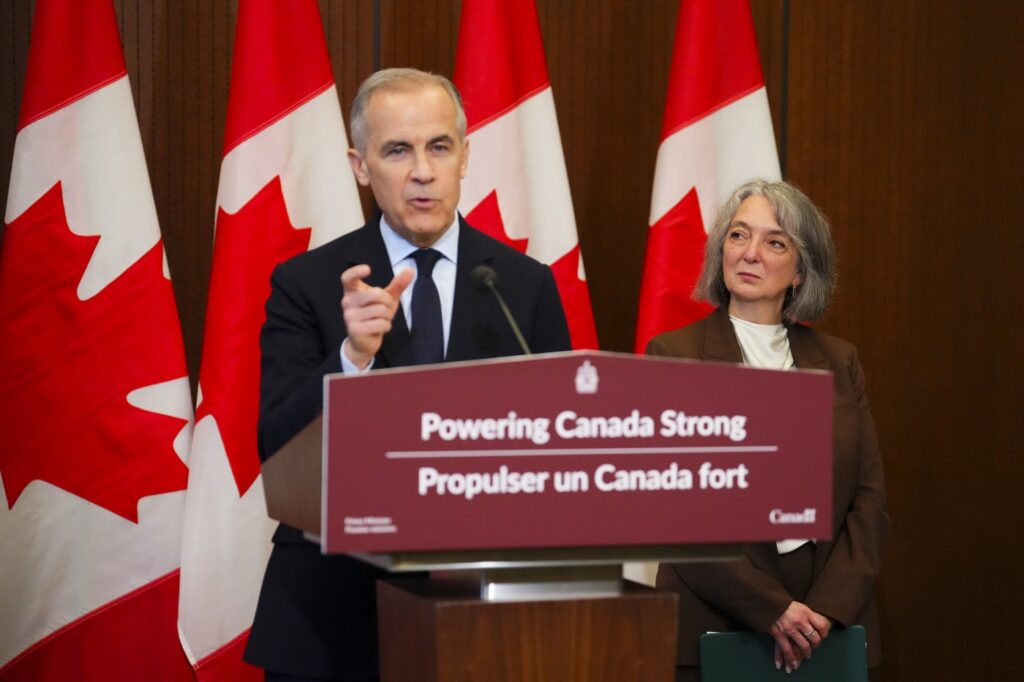
The federal government of Canada is under increasing scrutiny regarding its awareness of the impact that recent policy modifications may have on the country's greenhouse gas emissions. During a parliamentary committee hearing on May 30, 2026, Environment Minister Julie Dabrusin faced challenging inquiries about this issue, particularly from Bloc Québécois MP Patrick Bonin.
Bonin pressed Dabrusin on whether the government had conducted any modelling to illustrate how it intends to achieve its emissions reduction targets, especially given a series of climate policy rollbacks in the past year. He questioned, "Do you have an expert, or anyone who can show us that you’re advancing on climate change and not backtracking like (other experts) say? Do you have figures to show that?"
In response, Dabrusin cited the government's methane regulations issued in December as a step taken to lower emissions. However, when Bonin continued to challenge her regarding the totality of the government's policy changes, she referenced the national inventory report published in April, which contains data from 2024 but predates the Carney government and its policy shifts.
Later in the hearing, Deputy Minister of Environment Canada, Mollie Johnson, acknowledged the department's current efforts to analyze the effects of recent decisions on emissions. Johnson stated, "So that’s what we’re working on right now, in order to take what has been happening, and the decisions that have been made over the past period of time, and putting that together so that we can come forward and deliver a comprehensive modelling."
A senior government official, who spoke to The Canadian Press on condition of anonymity, explained that one of the hurdles in producing modelling, whether before or after the announcement of new measures, stems from the lack of detailed information in these announcements. For example, the government's recently unveiled electricity strategy promised to introduce energy-saving retrofits for up to one million households but did not provide enough specifics for Environment Canada to incorporate into its models.
Prime Minister Mark Carney has faced accusations of undermining Canada’s climate initiatives. Former Liberal Environment Minister Steven Guilbeault recently announced his resignation from Parliament, citing concerns about the government’s shifting climate direction. Carney's administration has taken controversial steps, including repealing the consumer carbon price immediately upon taking office, discontinuing the electric vehicles sales mandate, and relaxing the federal industrial carbon price backstop.
While the government has promised to implement measures aimed at reducing emissions—such as a national electricity strategy that includes deploying natural gas plants—no modelling has been provided to demonstrate the anticipated effects of these changes on overall emissions.
The government did release a progress report in December, mandated under the Net-Zero Emissions Accountability Act, indicating that Canada might achieve only a 28% emissions reduction from 2005 levels by 2030 at best. This projection falls short of Canada's commitment under the Paris climate agreement to reduce emissions by 40-45% by the same year. Earlier this month, Carney affirmed Canada's commitment to the Paris targets, but he did not outline a clear path to achieve them.
Additionally, a study released by the Canadian Climate Institute in February indicated that Canada is currently not on track to meet any of its climate targets, including the interim emissions reduction target for 2026 and the long-term goal of net-zero emissions by 2050. Tim Gray, executive director of Environmental Defence, stated, "There’s no evidence that we’ve been presented with the scale of gutting of climate ambition that there’s any pathway to meet near-term or long-term emission reduction commitments." He criticized Dabrusin's testimony at the committee hearing, arguing that she was defending untenable decisions without backing them with evidence.
Caroline Brouillette, executive director of Climate Action Network Canada, added that the intention behind the Net-Zero Emissions Accountability Act was to ensure continual government assessments to guide policymaking. She criticized the centralization of decision-making in the current administration and noted that many critical decisions were being made without the input of relevant departments, complicating the government's ability to construct a coherent climate policy.
This situation underscores the tensions between the government’s assertions of commitment to climate targets and its recent policy decisions, which many environmental advocates view as contradictory and detrimental to Canada's climate ambitions.








