

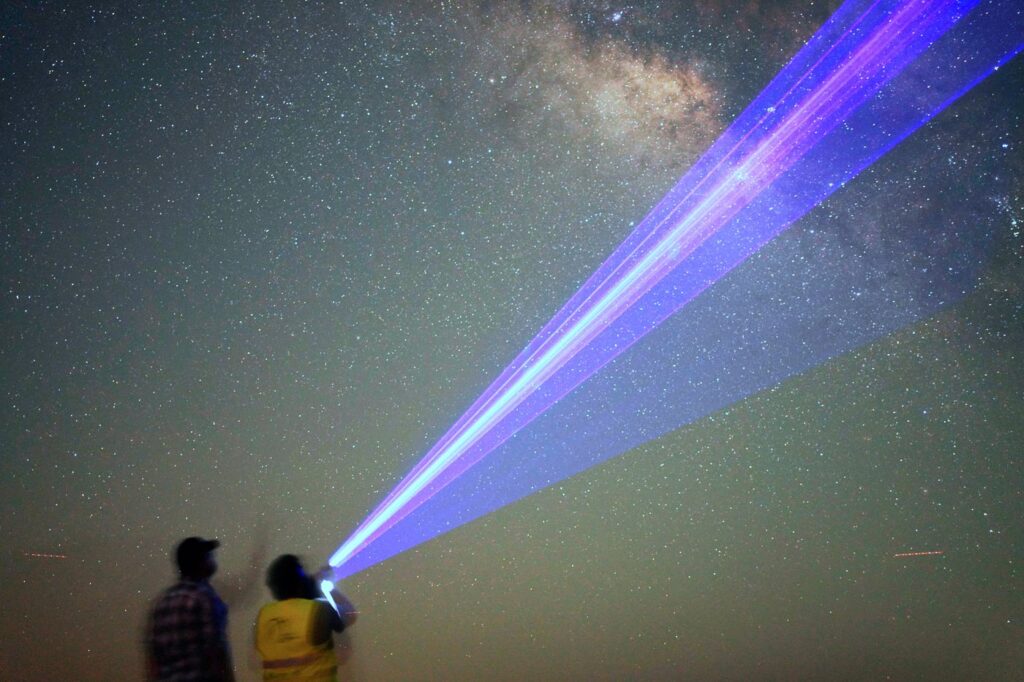
The United Arab Emirates (UAE) has transformed significantly over recent decades, evolving into a prominent hub for commerce and tourism, primarily driven by its oil wealth. However, this rapid modernization has resulted in the loss of a clear view of the night sky, which once served as a guide for the Bedouins navigating the vast desert expanses of the Empty Quarter.
In an effort to help individuals reconnect with the stars, volunteers from the Dubai Astronomy Group have been conducting nighttime excursions to the Al Quaa Desert, one of the darkest locations remaining within the Emirates. Sheeraz Awan, the general manager of the astronomy group, expressed the importance of stargazing, stating, "It causes us to appreciate our existence in this galaxy." These excursions provide a unique opportunity for participants to view the Milky Way, which has become increasingly obscured by light pollution in urban areas.
The UAE is among the world's most light-polluted countries, alongside other Gulf nations where populations are predominantly concentrated in major urban centers. A 2016 study revealed that 99% of the UAE’s population could not see the Milky Way from their homes due to artificial lights. This excessive illumination includes everything from street lights to the spectacular LED displays on iconic structures like Dubai's Burj Khalifa, the tallest building globally. Plans are also underway in Abu Dhabi to develop a $1.7 billion entertainment venue similar to Las Vegas's Sphere.
Authorities in Abu Dhabi have acknowledged the issue, implementing a "Dark Sky Policy" in 2024 to combat light pollution across the emirate. Although Dubai has seen an increase in LED billboards and displays, it too has areas like Al Qudra Lakes, which offer some respite from the overwhelming light pollution.
Accessible by vehicle, the Al Quaa Desert is located approximately 100 kilometers (62 miles) southeast of Abu Dhabi. The route involves traveling along a major highway toward Al Ain and venturing onto an unpaved road leading deep into the desert. While some overhead road lights are present, the desert itself remains largely untouched by urban illumination.
During a weekend excursion in late May, volunteers gathered participants in the Al Quaa Desert, a prime location for stargazing. Despite some light from nearby infrastructure, attendees experienced one of the last comfortable weather weekends before the extreme summer temperatures in the UAE, which can reach around 45 degrees Celsius (113 degrees Fahrenheit). Families from diverse backgrounds, including Arabic, English, and Russian speakers, spread out on carpets and gazed at the sky as the half-moon set and the Milky Way became visible.
During this stargazing event, Awan pointed out various celestial features, using a laser pointer to highlight the Milky Way, which evoked gasps and excitement from the audience. Many participants engaged with telescopes, discovering individual stars, while others learned how to capture long-exposure photographs of the galaxy with their mobile phones. As the night progressed, the beauty of a meteor shower added to the awe of the dark sky.
The experience allowed attendees to engage with the cosmos in a way similar to the Bedouins of the past, fostering a sense of appreciation for the night sky. Awan reminded the stargazers, "When we look at this Milky Way, we're kind of involved in an activity, which is not new. It's something that people throughout time have been engaged in." As the event concluded, participants gradually made their way back to their cars, returning to the illuminated highways and cities of the UAE.








